Home
envelope
ՀայերենРусскийEnglish

Main Navigation (Eng)

  • Admission
    • Undergraduate admission
    • Master’s degree admission
    • Postgraduate admission
    • Foreign Students
    • Preparatory courses
    • Work Carried out with Applicants
    • YSU STEM High School
  • Education
    • Guide Book for First Year Students
    • Educational programs
    • Granting qualification of a pedagogue
    • Center for Academic Writing
    • Continuing education
    • Academic Calendar
  • Science
    • Open science
    • Conferences
    • Library
    • Grants
    • Publishing House
    • Doctoral Thesis Defence Councils
    • HRS4R
  • News and events
    • Events
    • Activities
    • News
    • Newsletter
    • Announcement
    • Photo gallery
    • Video gallery

Secondary Navigation (Eng)

  • About YSU
    • YSU Management
    • YSU Symbols
    • YSU International Cooperation
    • Quality assurance
    • YSU History Museum
    • Vacancies
    • FAQ
  • Structure
    • YSU Faculties and Educational Centers
      • Faculty of Geography and Geology
      • Faculty of Theology
      • Faculty of Oriental Studies
      • Faculty of European Languages and Communication
      • Faculty of Journalism
      • Faculty of Informatics and Applied Mathematics
      • Faculty of Law
      • Faculty of Biology
      • Faculty of Armenian Philology
      • Faculty of International Relations
      • Faculty of History
      • Institute of Physics
      • Faculty of Russian Philology
      • Faculty of Sociology
      • Faculty of Economics and Management
      • Faculty of Philosophy and Psychology
      • Faculty of Chemistry
      • Faculty of Mathematics and Mechanics
      • Pedagogy and Education Development Center
      • Center for European Studies
      • Institute of Pharmacy
      • Information Technologies Educational and Research Center
      • Chair of Civil Defense
      • Chair of Physical Education and Sports
    • Column Wrapper
      • YSU STEM High School
      • YSU Ijevan Branch
    • Scientific Centers and Laboratories
      • American Studies Center
      • Psychology Research Center
      • Research Laboratory of Applied Sociology
      • Center for Mathematical and Applied Research
      • Institute for Armenian Studies
      • Institute for Social and Humanitarian Studies
      • Research Center for Chemistry
      • Research Institute of Biology
      • Research Institute of Physics
      • Research Center for the Institute of Pharmacy
    • Scientific and Educational Centers
      • Observatory
      • Scientific and Educational Center for Control and Monitoring of the Quality of Medicines
      • Specialized cabinet-laboratory for the Design of Very Large Integrated Circuits (Synopsis)
      • Legal Clinic
      • Center for Applied Psychology
      • Research Center-Library of Greek Studies
      • Innovation Center for Microbial Biotechnology and Biofuels
      • Russian Center
      • Center for Russian Studies
      • Distance Learning Laboratory of Sociology
    • Column Wrapper
      • Banner
    • Administrative Divisions of YSU
      • Academic Secretary
      • Center for Doctoral Education
      • General Division
      • YSU History Museum
      • Department of Energy System Operation
      • Financial Analysis Department
      • Human Resources Department
      • Center for Admissions and Affairs with Applicants
      • Vehicle Fleet
      • Business Incubator
      • Byurakan Industrial Practice Base
      • Medical Center
      • Science Policy Department
      • Procurement Planning Department
      • Dilijan Sports and Health Center
      • YSU Archive
      • Publishing House
      • Legal Service
      • Marketing Department
      • International Cooperation Office
      • Tsaghkadzor training and production base
      • Cultural Center
      • Fire Safety Service
      • Alumni and Career Center
      • Hankavan Industrial Practice Base
      • Accounting Department
      • Center for Quality Assurance
      • Department for Special Affairs
      • Guest House
      • Student Dormitory
      • Educational-Methodological Department
      • Marie and Sarkis Izmirlian Library
      • Center for Strategic Planning
      • Rectorate
      • Rector's Office
      • Department of Territory Improvement and Landscape Design
      • Information Technology Department
      • Department of Organization and Control of Economic Activities
  • Structure
  • Alumni and Career
    • Alumni Community
    • Career Center
    • Friends of YSU
  • Student life
    • YSU Student Scientific Society
    • YSU Student Council
    • Art and Culture
ՀայերենРусскийEnglish
envelope

Main Navigation (Eng)

  • Admission
    • Undergraduate admission
    • Master’s degree admission
    • Postgraduate admission
    • Foreign Students
    • Preparatory courses
    • Work Carried out with Applicants
    • YSU STEM High School
  • Education
    • Guide Book for First Year Students
    • Educational programs
    • Granting qualification of a pedagogue
    • Center for Academic Writing
    • Continuing education
    • Academic Calendar
  • Science
    • Open science
    • Conferences
    • Library
    • Grants
    • Publishing House
    • Doctoral Thesis Defence Councils
    • HRS4R
  • News and events
    • Events
    • Activities
    • News
    • Newsletter
    • Announcement
    • Photo gallery
    • Video gallery

Secondary Navigation (Eng)

  • About YSU
    • YSU Management
    • YSU Symbols
    • YSU International Cooperation
    • Quality assurance
    • YSU History Museum
    • Vacancies
    • FAQ
  • Structure
    • YSU Faculties and Educational Centers
      • Faculty of Geography and Geology
      • Faculty of Theology
      • Faculty of Oriental Studies
      • Faculty of European Languages and Communication
      • Faculty of Journalism
      • Faculty of Informatics and Applied Mathematics
      • Faculty of Law
      • Faculty of Biology
      • Faculty of Armenian Philology
      • Faculty of International Relations
      • Faculty of History
      • Institute of Physics
      • Faculty of Russian Philology
      • Faculty of Sociology
      • Faculty of Economics and Management
      • Faculty of Philosophy and Psychology
      • Faculty of Chemistry
      • Faculty of Mathematics and Mechanics
      • Pedagogy and Education Development Center
      • Center for European Studies
      • Institute of Pharmacy
      • Information Technologies Educational and Research Center
      • Chair of Civil Defense
      • Chair of Physical Education and Sports
    • Column Wrapper
      • YSU STEM High School
      • YSU Ijevan Branch
    • Scientific Centers and Laboratories
      • American Studies Center
      • Psychology Research Center
      • Research Laboratory of Applied Sociology
      • Center for Mathematical and Applied Research
      • Institute for Armenian Studies
      • Institute for Social and Humanitarian Studies
      • Research Center for Chemistry
      • Research Institute of Biology
      • Research Institute of Physics
      • Research Center for the Institute of Pharmacy
    • Scientific and Educational Centers
      • Observatory
      • Scientific and Educational Center for Control and Monitoring of the Quality of Medicines
      • Specialized cabinet-laboratory for the Design of Very Large Integrated Circuits (Synopsis)
      • Legal Clinic
      • Center for Applied Psychology
      • Research Center-Library of Greek Studies
      • Innovation Center for Microbial Biotechnology and Biofuels
      • Russian Center
      • Center for Russian Studies
      • Distance Learning Laboratory of Sociology
    • Column Wrapper
      • Banner
    • Administrative Divisions of YSU
      • Academic Secretary
      • Center for Doctoral Education
      • General Division
      • YSU History Museum
      • Department of Energy System Operation
      • Financial Analysis Department
      • Human Resources Department
      • Center for Admissions and Affairs with Applicants
      • Vehicle Fleet
      • Business Incubator
      • Byurakan Industrial Practice Base
      • Medical Center
      • Science Policy Department
      • Procurement Planning Department
      • Dilijan Sports and Health Center
      • YSU Archive
      • Publishing House
      • Legal Service
      • Marketing Department
      • International Cooperation Office
      • Tsaghkadzor training and production base
      • Cultural Center
      • Fire Safety Service
      • Alumni and Career Center
      • Hankavan Industrial Practice Base
      • Accounting Department
      • Center for Quality Assurance
      • Department for Special Affairs
      • Guest House
      • Student Dormitory
      • Educational-Methodological Department
      • Marie and Sarkis Izmirlian Library
      • Center for Strategic Planning
      • Rectorate
      • Rector's Office
      • Department of Territory Improvement and Landscape Design
      • Information Technology Department
      • Department of Organization and Control of Economic Activities
  • Structure
  • Alumni and Career
    • Alumni Community
    • Career Center
    • Friends of YSU
  • Student life
    • YSU Student Scientific Society
    • YSU Student Council
    • Art and Culture
  1. Main
  2. News
  3. Historical development of army structure: brief overview
January 28, 2026 | 10:16
Society
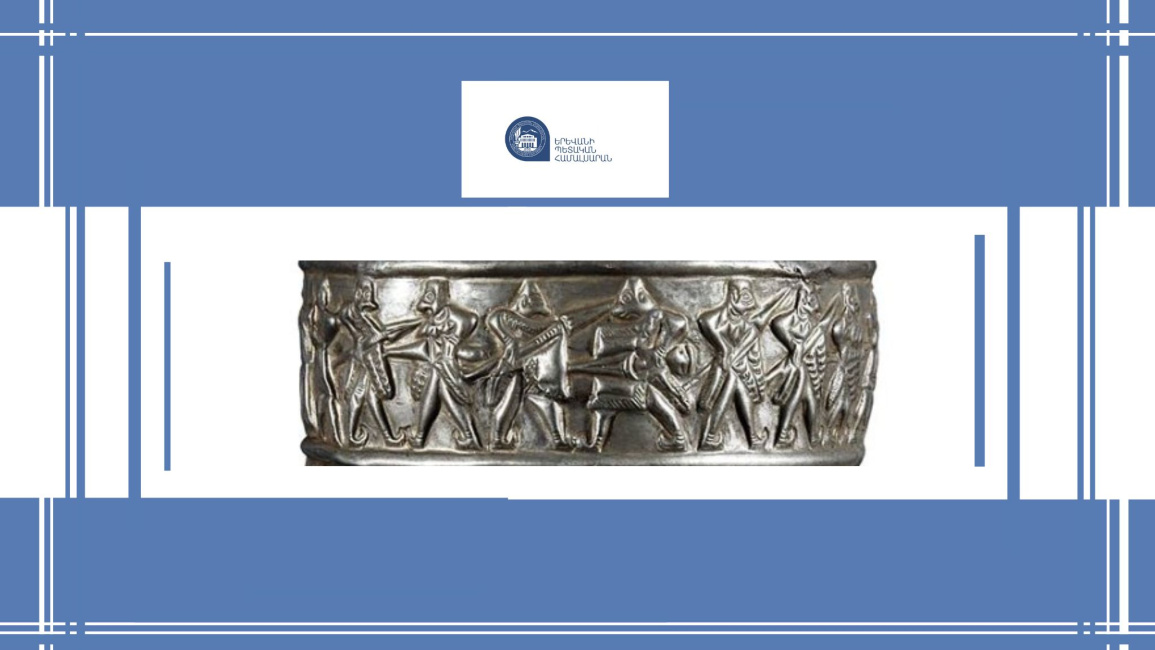
Historical development of army structure: brief overview

In parallel with the natural process of peoples transitioning to settled life, the specialization of occupations, and the development of societies, the organization of the army has transformed from century to century. Structural and qualitative changes in armies, the improvement of weapons, and the emergence of new types of armaments have largely been determined by transformations in social systems and the world order, as well as by continuous scientific and technological progress.

…May there be peace…
Daniel Varuzhan


HISTORICAL OVERVIEW


THE ARMY

In primitive society, all free males capable of bearing arms were warriors.

In Ancient India and Ancient Egypt, warriors evolved into special hereditary castes.

In Armenia, the army consisted of the royal regiment, infantry, cavalry, and war chariots. The army was headed by the commander-in-chief. In subsequent centuries, Tiridates III, restructuring the army according to the model of the Roman Empire, divided command of the forces among four military commanders.

In the Spartan state, the entire population was involved in military affairs. The aim of Spartan education and upbringing was to prepare physically developed, resilient, courageous warriors with strong willpower, devoted to the slave-owning system.

Among the city-states of Ancient Greece, in Athens the armed forces consisted of free citizens who were called to arms during wars, while in peacetime they were very small in number. These forces were intended mainly for guard duties. In times of peace, they simultaneously functioned as military schools for young men.

With the prolongation of wars and the gradual decline of the martial spirit among the populace, for example, in the Hellenistic republics the civic militia was gradually replaced by mercenaries, who became the main source of the army. Mercenarism later occupied a significant place in medieval Europe, manifesting itself differently in various countries.

Due to a shortage of citizens, mercenarism became a necessity in Carthage. The Carthaginians themselves were merchants, and the accumulation of vast capital allowed them to purchase military forces both in Africa (where the state was located) and in much of Europe.

In Ancient Rome, all citizens—both patricians and plebeians—had the right to bear arms. At the end of the 6th century BC, the poorest citizens were exempted from compulsory military service and were called to arms only in cases of extreme necessity. Even then, throughout their service they received reward from the government.

Neither in Ancient Greece nor in Ancient Rome did permanent armies exist. Citizens were called to bear arms only in times of war and were discharged once peace was restored.

Significant changes in Roman military organization occurred due to Gaius Marius. He staffed the army exclusively with individuals who voluntarily wished to serve, most of whom were representatives of the poorest social strata—the proletarians. This reform contributed to the emergence of a distinct military class for whom warfare became a profession. Thus, the foundations of a standing army were laid. During the imperial period of the Roman state, military service was maintained even in peacetime, with soldiers receiving regular pay. The ancient Roman principle whereby the army could be composed only of Roman citizens gradually ceased to operate. This later led to negative consequences: in the absence of legal rules governing succession to the throne, the army itself elevated emperors to power.  

The structure of medieval European armies was profoundly influenced by the feudal system, which led to significant structural changes. Having lost its former military importance, the militia gave way to heavily armed cavalry. For centuries in Europe, cavalry dominated the battlefield and achieved military success in single combat.

Over time, the strengthening of subordinate feudal lords led to the weakening of royal authority in Europe. In times of crisis, monarchs often resorted to the assistance of mercenaries. During this period, even wandering armies appeared in Western Europe, offering their services to whoever promised the greatest profit. In peacetime, these armies frequently engaged in banditry and armed robbery.

In the Arab Caliphate, from the 9th century onward, the ghulam forces—troops composed of mercenaries and slaves—emerged.

In Kievan Rus', the army consisted of the prince's retinue, which was permanent, and the militia, which was assembled only during wartime.

Combat initially took place on land, later at sea, and in modern times also in aerial, underground, and underwater domains.

TYPES OF WEAPONS
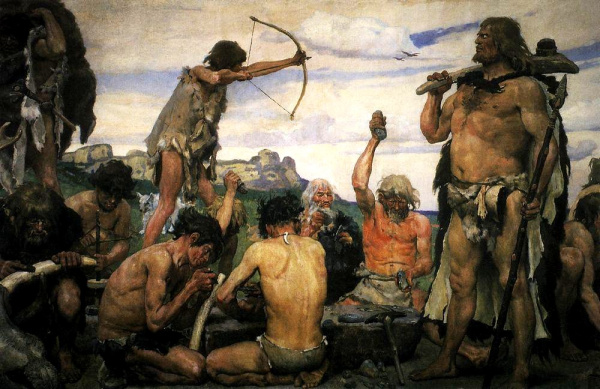
In prehistoric times, humans used clubs, stone-tipped wooden spears, slings, and, later, bows and arrows and stone axes. After the discovery of metal, "cold weapons" were developed, including bronze and iron-tipped spears, halberds, swords, and daggers. When the Chinese discovered gunpowder in the 8th century, firearms emerged, followed in the 9th century by the first cannon, later by the arquebus, and in 1521 by the musket—a smoothbore firearm with a matchlock mechanism.

In the 17th century, the flintlock musket was developed, later replaced by the rifled musket and paper-cased bullet, which reduced the weight of weapons and increased their rate of fire. In the 1870s, the breech-loading rifle was introduced. Subsequently, in 1884 Paul Vieille developed smokeless powder, in 1888 Alfred Nobel invented ballistic powder, and in 1892 Dmitri Mendeleev created pyrocollodion powder. This period also saw the development of metal-cased cartridges and unified ammunition. By the 1890s, the first submarines were constructed; in 1903, airplanes; in 1916, tanks and self-loading rifles.

Alongside the development of new types of weapons and the qualitative changes in troop composition and organization, warfare itself continuously evolved. It is closely linked to the productive forces and industrial relations of society and depends on both the economic capabilities of the state and the social-political system.

Military theory and practice advanced significantly during World War II (1939–1945) and in the postwar period, driven by the proliferation of nuclear weapons, the improvement of conventional armaments, and the creation of new weapon types.

Technological progress, economic rearmament, and transformations in social structures and the world order have periodically accelerated the military "arms race" between states. In this context, the following ranking shows the military firepower of the world's nations as of 2025, according to the Global Firepower (GFP) ranking:  

  1. United States

  2. Russia

  3. China

  4. India

  5. South Korea

  6. United Kingdom

  7. France

  8. Japan

  9. Turkey

  10. Italy

For the 2025 GFP ranking, a total of 145 countries were evaluated. The PowerIndex (PwrIndx) is determined based on more than 60 individual factors, including the number of military units, funding, logistical capabilities, geography, armored vehicles, naval forces, natural resources, personnel numbers, transportation and infrastructure development, currency reserves, purchasing power, and more.


INTERESTING FACTS


  • The Ministry of Defense of the Republic of Armenia was established on January 28, 1992. Before that, on January 30, 1991, the Council of Ministers of Armenia adopted a decision to create a Committee for the Coordination of the Work of Military Departments under the Council of Ministers, chaired by Vazgen Sargsyan.

  • The first ceremonial military oath in the newly independent Republic of Armenia took place on April 22, 1992.

  • In his Armenian Explanatory Dictionary, Stepanos Malkhasyants gives, among the definitions of the word "army," the following meaning: "Rows of mounds in gardens, where vines are planted on top." 

  • The smallest army in the world is that of San Marino, with 11 personnel in service.

  • Iceland, Monaco, Costa Rica, and Liechtenstein have no standing army.

  • In Luxembourg, the armed forces number 450 personnel, yet the country's annual military budget reaches $370 million, allocating approximately $800,000 per soldier per year.

  • During World War I, pigeon No. 888 was awarded the rank of colonel by the British in recognition of its exceptional service. It was also given a military funeral with honors.

  • The Armenian village of Chardakhlu has been the birthplace of 2 marshals, 12 generals, and 7 Heroes of the USSR.

  • The largest cannon in the world was built in Germany. It weighed over 1,300 tons and could target a maximum range of 25 kilometers.

  • Braille writing initially had a military purpose, allowing soldiers to exchange information silently and without light. Due to the slow and difficult process of learning it, Braille fell out of military use but later became widely adopted for civilian purposes.

  • NATO has its own phonetic alphabet, also known as the ICAO phonetic alphabet.

  • NATO's annual official budget is approximately €200 billion, though annual losses are reported to amount to several hundred million euros.

  • In ancient Armenia, the sons of noble families were educated under the supervision of nobles one rank lower. During their entire training, they lived in the household of their mentor. This system ensured that future commanders became intimately familiar with the needs and conditions of their subordinates, while also receiving political education. It instilled deep respect for the head of the noble house (the father) and reinforced a sense of family loyalty. These two elements were essential for transmitting dynastic spiritual heritage to future generations and for upholding family honor. 

Compiled from various sources

Satenik Badalyan
ShareFacebookTelegram

Latest News

ԵՊՀ-ն ընդլայնում է համագործակցությունը Ջավահառլալ Ներուի համալսարանի հետ

29.01.2026

Historical development of army structure: brief overview

28.01.2026

Knowledge, languages and international ties: YSU student Tatyana Davtyan's educational experience in Italy

26.01.2026
Show All

Announcement

Erasmus+ International Credit Mobility: University of Nova Gorica, Slovenia

01.23.2026 - 01.30.2026

Erasmus+ International Credit Mobility: University of Nova Gorica, Slovenia

01.23.2026 - 01.30.2026

Erasmus+ International Credit Mobility։ University of Economics in Bratislava, Slovakia

01.21.2026 - 02.04.2026
Show All

Quick access

  • Intranet
  • E-learning
  • Mulberry
  • Online applications
  • Phone book
  • Registrar
  • Documentation

Footer(ENG)

  • Main pages
    • Admission
    • Education
    • Science
    • News
  • Information
    • Frequently asked Questions
    • Vacancies
    • Search for educational programs
    • For the applicants
    • For the students
  • About YSU
    • YSU management
    • YSU symbols
© Yerevan state university 2026
Address: Republic of Armenia, Yerevan, 0025, 1 Alex Manoogian (+37460) 710000 info@ysu.am