March 10, 2026 | 16:01
Museum
Culture
Student
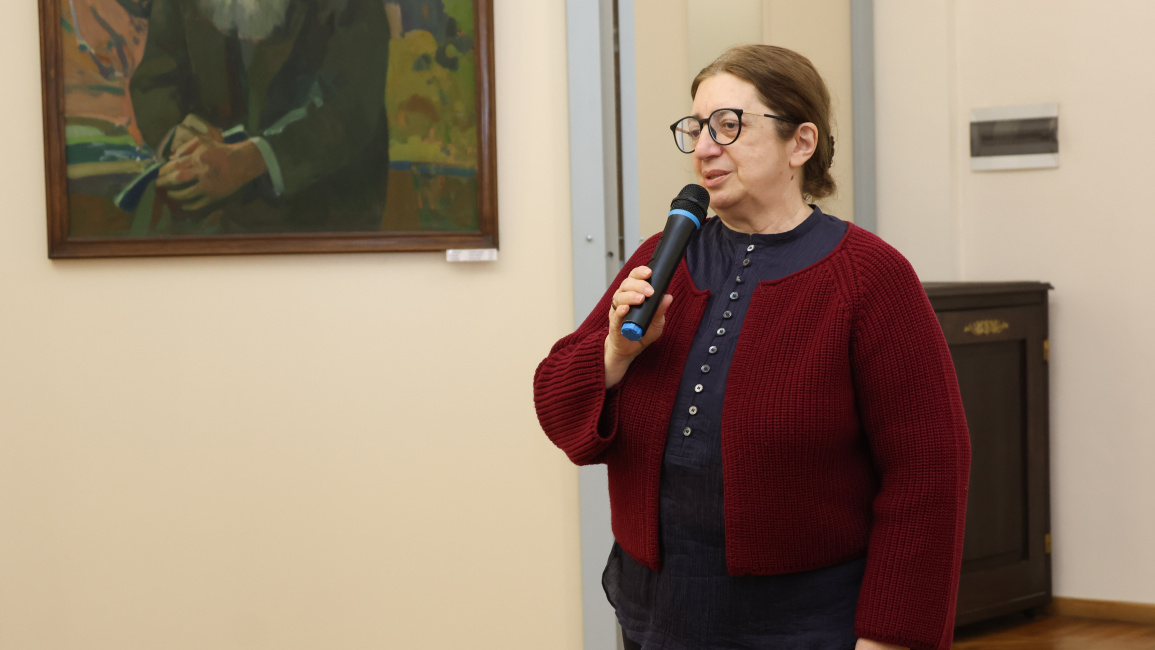
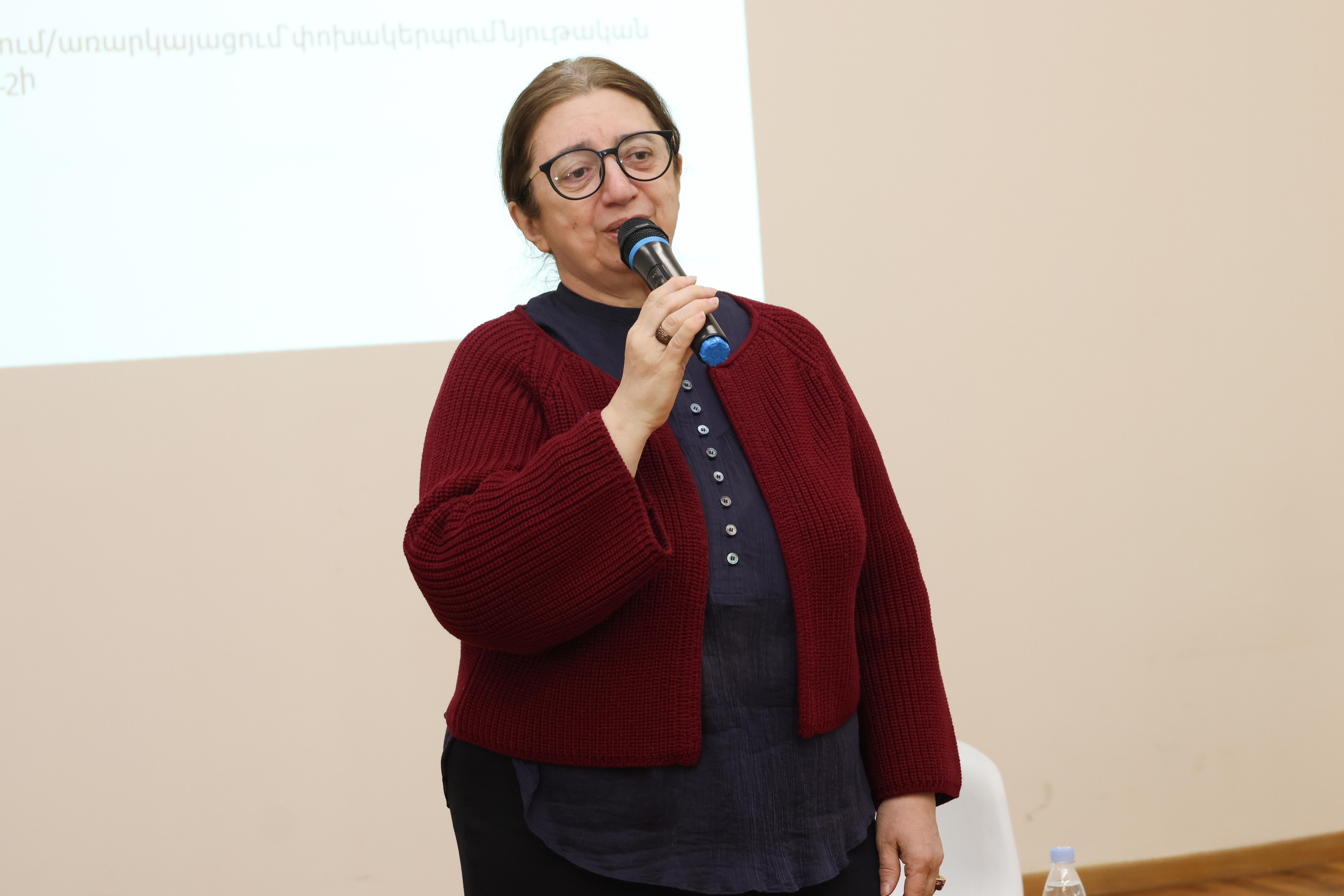
The lecture was delivered by YSU professor and folklorist Alvard Jivanyan, who detailed the unique characteristics of the fairy tale as a form of intangible cultural heritage and examined its "presence" within the museum environment.
According to Professor Jivanyan, the fairy tale is a vital component of intangible culture. She noted that for folk tales, a museum cannot serve as a traditional preservation space, as these narratives are born and live through oral tradition. Nevertheless, fairy tales and museums share numerous points of intersection.
"A fairy tale is a piece of intangible culture. When we speak about folk tales, a museum acts more as an archive. However, across different cultural spheres, the tale is frequently reborn in entirely new forms," Jivanyan remarked.
A key focus of the lecture was intersemiotic translation—the process by which a literary text is transformed into other art forms. Professor Jivanyan explained how fairy tales are reimagined through ballet, opera, and theater. In these cases, the linear text is translated into a different system of signs, including music, choreography, and visual iconography.
She observed that similar transformations can also be found in various works of art—such as sculptures, commemorative coins, and illustrations—that are frequently featured in museum collections. Thus, passing through various cultural "metamorphoses", the fairy tale eventually secures its place within the museum environment.
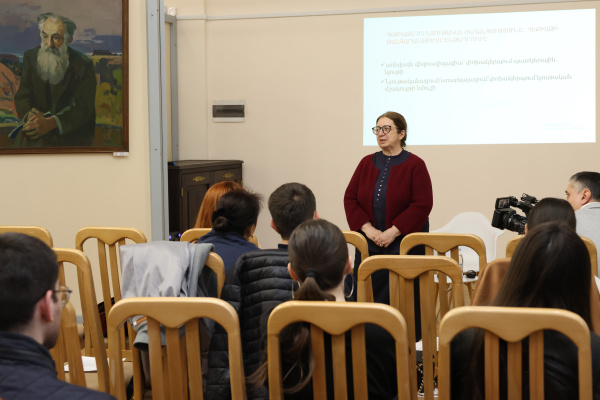
The speaker also addressed the relationship between fairy tales and time, noting that they mainly refer to the past. "You will hardly encounter a fairy tale that tells a story about the future; in such cases, we are already dealing with science fiction or fantasy, rather than a classical fairy tale," she noted.
The lecture also highlighted an interesting symbolic image found in Armenian and neighboring cultures: the "Doll of Patience". In these tales, the heroine often confides her sorrows to a symbolic figure made of clay or cloth. The doll "listens" to her pain and her trials, a motif Jivanyan links to the profound cultural concept of patience.
The "apples" mentioned in the lecture title are not accidental either. In Armenian fairy tales, the apple often appears as a symbol of conclusion, famously captured in the formula: "three apples fell". This symbolic image reflects the long cultural journey of the fairy tale.
In her closing remarks, Professor Jivanyan emphasized that the fairy tale has moved far beyond the boundaries of the literary text. It has become a vast paratextual space within children's culture, manifesting not only in books but also in toys, souvenirs, and even the vibrant packaging of confectionery.