March 18, 2026 | 11:34
Science
Education
International cooperation
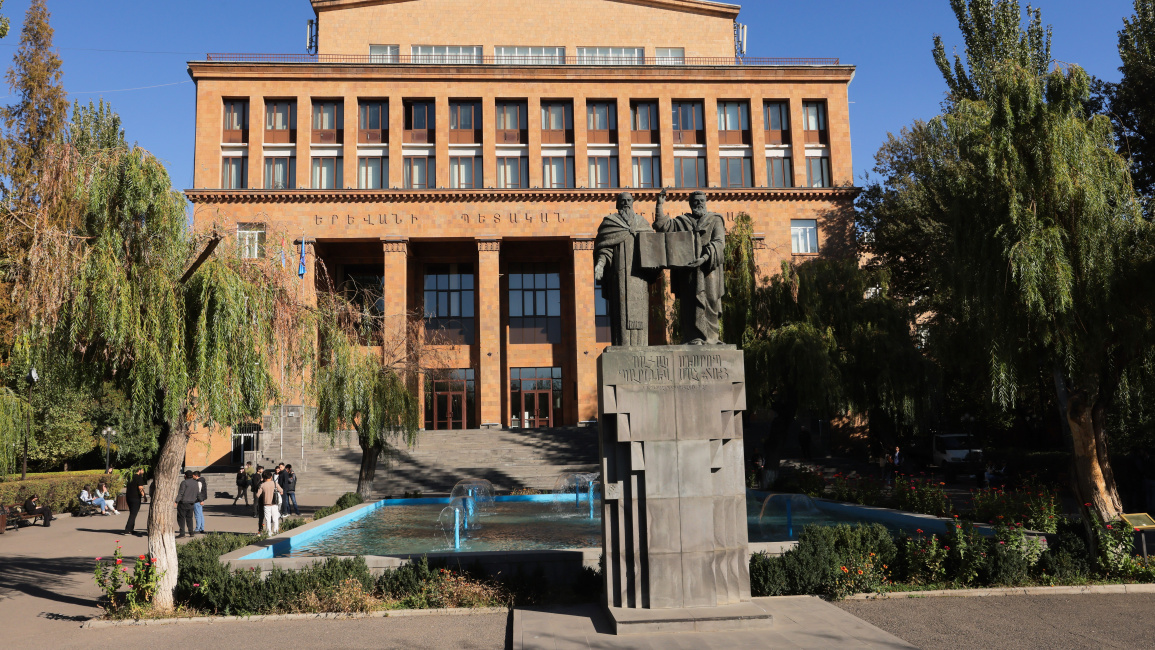
In 2024, YSU ranked 415th among 688 universities with a total score of 16.9. In 2025, it improved its position to 412th among 685 universities, earning a score of 17.2. Although the university appeared lower in the 2026 ranking due to the inclusion of a significantly larger pool of institutions, its overall score increased by 34.9% compared to 2025—a notable acceleration over the 1.8% growth recorded the previous year (Table 1).
Year | Rank | Total Universities | Overall Score | Year-on-Year Score Change (%) |
|---|---|---|---|---|
2024 | 415 | 688 | 16.9 | – |
2025 | 412 | 685 | 17.2 | 1.8% |
2026 | 487 | 958 | 23.2 | 34.9% |
Table 1. YSU in QS European University Rankings (2024–2026)
YSU's overall QS score is determined by a comprehensive set of performance indicators, including:
Academic Reputation
Employer Reputation
Faculty Student Ratio
International Research Networks
Citations Per Paper
Papers Per Faculty
International Faculty Ratio
International Student Diversity
Inbound and Outbound Exchange Student Ratios
Sustainability
Employment Outcomes
In 2026, the university's Academic Reputation indicator rose to 21.7 points—a 43.7% increase over the previous year—following relative stability in 2024 (15.5) and 2025 (15.1). Employer Reputation also demonstrated substantial growth, reaching 16.9 points in 2026, after remaining nearly unchanged in 2024 and 2025 (9.9 and 9.5, respectively).
The Faculty Student Ratio remained largely stable between 2024 and 2026; it stood at 77.8 in 2024, rose to 81.4 in 2025, and declined slightly to 80.1 in 2026.
The International Research Network indicator reached 11.2 points in 2026, a significant increase from the 4.2 points recorded the previous year. This growth demonstrates that the university is not only expanding its circle of international partners but also deepening these collaborations, as evidenced by a consistent increase in co-authored scientific publications.
YSU's research performance indicators also demonstrated an upward trend between 2024 and 2026. The Citations per Paper indicator remained steady at 1.1 in both 2024 and 2025, before rising to 1.8 in 2026. Comparatively, the Papers per Faculty indicator held at 3.3 during 2024 and 2025, but rose to 4.8 in 2026. This growth reflects both an increase in the total volume of scholarly output and a significant rise in research productivity among the university's academic staff.
Over the past year, YSU has seen a marked increase in its international faculty and student populations, underscoring the university's ongoing internationalization. In 2026, the International Faculty Ratio climbed to 10.9 points, up from 5.5 the previous year. Similarly, International Student Diversity rose to 9.8 points from 5.0 in 2025. These figures represent a robust growth in international participation across both the academic staff and the student body.
YSU has also recorded significant growth in student mobility. The Inbound Exchange Student ratio, which stood at 5.2 points in 2024, surged to 23.6 in 2025 and reached 41.8 points in 2026, reflecting a substantial increase in international student engagement. Meanwhile, the Outbound Exchange Student ratio, which stood at 50.0 points in 2024 before a decline to 17.1 points in 2025, reached 32.5 points in 2026.
Additionally, the university's Sustainability indicator saw exponential growth over the past year, climbing from a baseline of 1.0 point in 2025 to 16.4 points in 2026.
According to the QS ranking results, YSU's Employment Outcomes indicator saw a consistent growth from 77.8 points in 2024 to 98.6 points in 2026. The most significant surge occurred in 2025, with an 18.7-point jump representing a 24% year-over-year increase. By 2026, the indicator had nearly reached its maximum potential, peaking at 98.6 points.
Overall, the QS Europe University Rankings results indicate that, while indicators in some areas remain relatively low, YSU recorded an overall improvement across key evaluation areas in 2026. The international engagement indicator is still relatively low, yet a growth trend is present, while the university's research indicators, despite certain progress, continue to require further improvements. The Sustainability indicator is also relatively low, which underscores the necessity for further steps. Simultaneously, significant progress has been observed in the Academic Reputation, Employer Reputation, Faculty Student Ratio, international mobility, and Employment Outcomes.
Notably, among the three Armenian higher education institutions that participated in the ranking, YSU was the only one to secure a position on the final list.