February 09, 2026 | 15:43
Education
Society
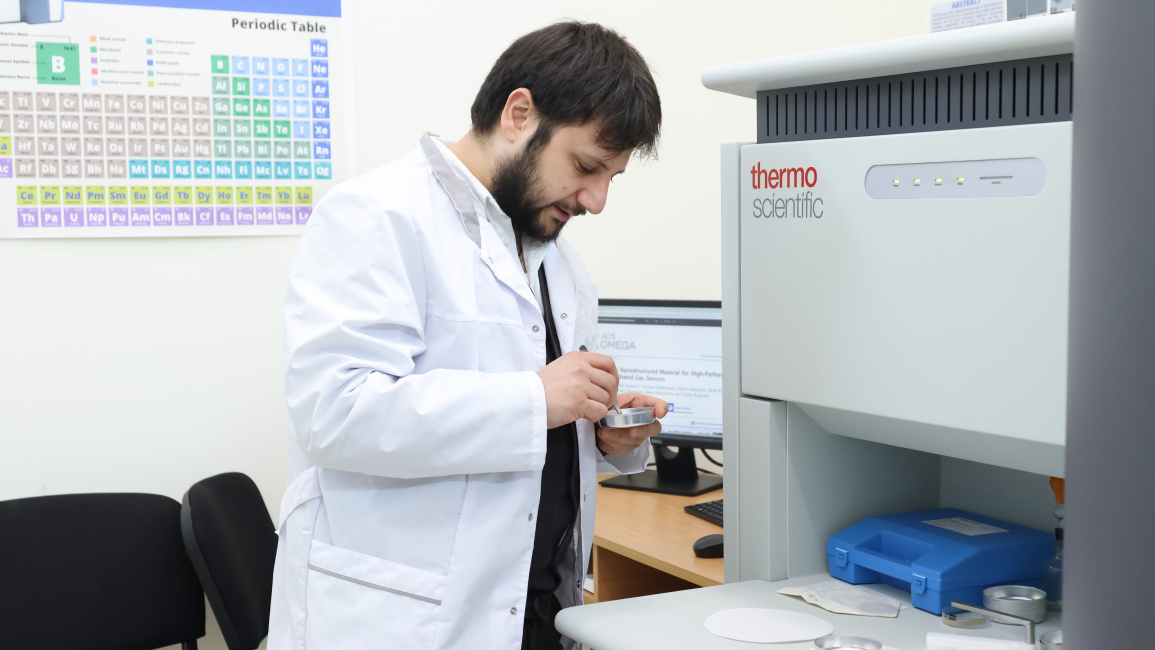
"If we take a careful look at the history of science and the culture that has evolved around it, we can see that almost every scientific discipline, over time, turns into a tangible outcome—whether a product or a commercialization initiative. Everything that surrounds us today, particularly in the field of advanced technologies, once existed as scientific research, experimentation, or a scholarly article, which decades—and sometimes even centuries—later transformed into devices, practical solutions, and even achievements that reached outer space. For an experimental physicist in particular, the path through which scientific work becomes a product has always been especially appealing; this is the main source of motivation," Gevorg emphasized, speaking about his primary reasons for participating in the program, given that his professional field is physics.
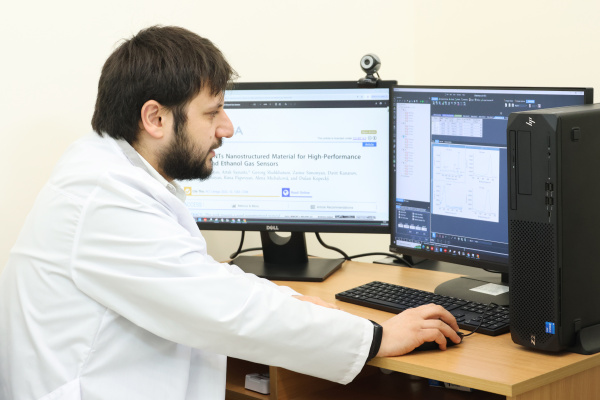
Referring to the practical application of the knowledge gained, he noted that even before the launch of the program, his research group had already developed prototypes, and is now preparing for the next stage of development.
According to him, before participating in the program, it might have seemed that transforming the results of scientific work into a product and entering the market was not a particularly complex process. However, throughout the courses it became clear that this path requires new—and often unfamiliar—knowledge, skills, and information, the need for which had not previously been fully recognized. In this regard, the transition from a scientific paper to a business, in his assessment, is far from simple.
– Gevorg, your project, "Design of High-Efficiency Methane Sensors", focuses on the development of methane sensors. What problems does it aim to address, why is methane detection particularly important at low concentrations, and what new approaches or solutions do you propose?
– In recent years, the work of our research group has focused on the synthesis and fabrication of various gas sensors, including methane sensors. Methane is a hazardous gas, and its detection—especially at low concentrations—is a priority task. At first glance, one might assume that methane detectors are already widely available in residential settings and question whether further scientific research is necessary. However, it should be noted that the parameters of existing sensors still do not meet current requirements, and scientific research aims to improve the characteristics of such sensors and detectors. In addition, as outlined in our project, we aim to develop an integrated sensor system that will operate in conjunction with 'smart systems' (IoT). We anticipate that in the near future we will have a finalized product that will differ from the prototype in terms of improved parameters and its ability to integrate with other devices.
"They will operate with improved performance parameters, demonstrate higher sensitivity to methane and gas, and be more energy-efficient."
– Can you provide a specific example of how the sensors will address the challenges or promote innovative approaches?
– One applicable segment is automotive gas filling stations. From this perspective, the tools currently in use do not meet the necessary standards. Օur research shows that there are even gas stations where such sensors and monitoring systems are absent. Determining methane concentration in these areas—whether it falls within permissible limits—is a matter of primary importance.
– In which sectors is the application of these sensors envisaged (industry, environment, energy, agriculture, etc.)?
– The examples you mentioned are indeed very relevant, as sensor applicability can be clearly seen in those very sectors—industry, environmental monitoring, and energy.
– How do you plan to organize the procurement of necessary materials, production, and commercialization of the finished product as an operational business chain?
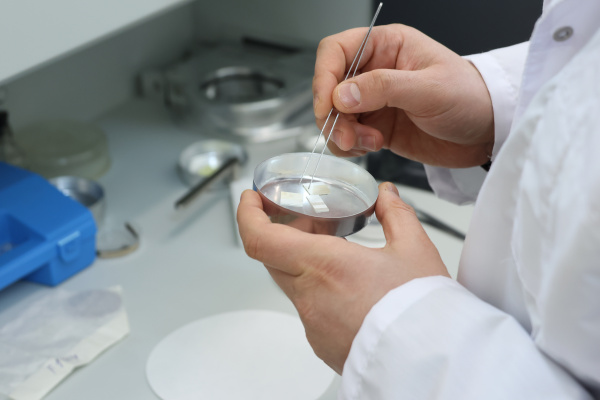
– When conducting experimental and laboratory work, we procure the required materials, primarily from abroad (Europe, China, and other regions). However, it is clear that this scale is insufficient when transitioning to a production phase, whether in the near or medium term, and alternative mechanisms must be employed. If we are fully prepared to organize the production stage, the involvement of investors and business mechanisms will become necessary. No matter how much experience we have or how many courses we attend, a researcher ultimately remains a researcher, and continuing the journey alone at the next stage would be quite challenging. At this point, support from the business sector is essential. That said, even today we implement this closed cycle through our grant programs and available financial resources—procurement of materials, fabrication of sensors, testing, and their integration with detectors and electrical circuits.
– Gevorg, what steps do you plan to take to translate the project results into research applications and practical use? Do you also intend to develop your project as a business with monetization potential?
– Yes, we do have such plans, and it is precisely participation in the Mini MBA that is driving the transition of the sensors from the research phase to production and mass-market sales. Given the experimental focus of our work, we are also carrying out the "Experimental Development Projects" grant program of the RA MoESCS Higher Education and Science Committee. This further indicates that we have no alternative but to turn the project into a production chain and a business.
Below are brief questions summarizing the winner's experience and key takeaways from the Mini MBA program.
– Mini MBA in one word.
– Opportunity.
– Most useful skill acquired during the program.
– Financial literacy.
– Biggest discovery during the program.
– People (instructors and participants).
– Theory or practice?
– Practice (grounded in theory).
– Teamwork or individual approach?
– Teamwork.
– Five weeks: fast or effective?
– Effective.
– Science + business =
– Technological milestones.
– Next step after Mini MBA.
– As always, into action!