February 20, 2026 | 10:41
Research
Publications and scientific journals

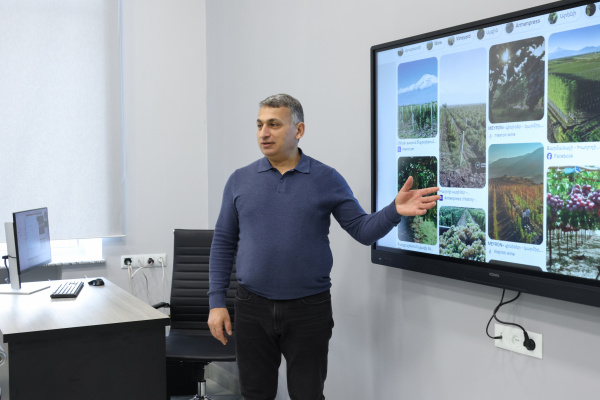
The research conducted by Narek Harutyunyan focuses on assessing the impact of climate change on viticulture in the Vayots Dzor region and establishing mechanisms for risk management.
The YSU associate professor presented the effects of climate change on viticulture, strategies for mitigating potential negative consequences, and reviewed the progress and challenges of viticulture development in Armenia.
Climate change has a dual impact on crop yields
As part of the study, a spatiotemporal analysis of agroclimatic resources was conducted, using indicators such as cumulative active temperatures, the number of days with temperatures above +30°C, absolute minimum temperatures, and precipitation during the vegetation period. The effects of relief, elevation, slope steepness, and slope orientation on the spatial organization of vineyards were also evaluated.

It was determined that climate change leads to rising temperatures, decreased precipitation, and increased evapotranspiration. These factors exacerbate drought conditions and elevate the risks of adverse weather phenomena, negatively affecting both the quantity and quality of grape yields. At the same time, the increase in cumulative active temperatures facilitates the expansion of viticulture into higher-altitude areas (up to approximately 2,000 meters) and enables the cultivation of valuable grape varieties.
Thus, climate change has a dual impact: it increases production risks on one hand while creating new development opportunities on the other, necessitating adaptive measures and effective risk management strategies.
Mitigating the negative effects of climate change through resistant varieties, improved irrigation, and optimal slope use
Under climate change conditions, the reduction of viticulture risks can be achieved through the following key measures:
Selection and introduction of grape varieties resistant to climatic stress,
Implementation of protective agrotechnical measures to reduce damage from adverse weather phenomena,
Efficient management of water resources and improvement of irrigation systems,
Assessment of climate-related risks and introduction of insurance mechanisms,
Spatial optimization of vineyards on more favorable high-altitude and sun-exposed slopes.
These measures contribute to increasing the resilience of the sector and ensuring sustainable development.
Favorable microclimatic conditions for viticulture in Vayots Dzor
Viticulture in Vayots Dzor has a history spanning millennia, as evidenced by the Areni-1 cave complex, considered one of the oldest known wine-making centers in the world, dating back to the 4th millennium BCE.
Vayots Dzor is a typical mountainous region with a system of interconnected and diverse microclimatic conditions, creating a favorable environment for viticulture. This combination of natural factors makes the region a representative and scientifically significant subject for agroecological research.

Such studies are important not only from a scientific and methodological perspective, with potential practical applications for assessing agroecological conditions in other mountainous regions, but also for scientifically substantiating pathways for the adaptation of viticulture in Vayots Dzor under climate change and developing effective management solutions.
Evidence-based findings on viticulture development
Based on the spatiotemporal evaluation of agroclimatic resources, the following main findings were recorded:
A steady increase in mean air temperatures and cumulative active temperatures,
A relative decrease in precipitation and increased evapotranspiration during the growing season, contributing to a deepening moisture deficit,
Southern, eastern, and western slopes have more favorable thermal and light conditions, whereas northern slopes offer relatively limited opportunities for viticulture,
The potential for spatial expansion of viticulture into higher-altitude zones, up to approximately 2,000 meters above sea level, was identified,
Agroclimatically favorable areas for viticulture were delineated and mapped.
These findings show that climate change results in both production risks and new development opportunities, requiring adaptive and scientifically justified management approaches.
Pathways to sustainable development in the sector
The study's findings indicate that the agroclimatic conditions in Vayots Dzor are undergoing significant transformation due to climate change, with a dual nature. Rising temperatures, reduced precipitation, and increased evapotranspiration contribute to a deepening moisture deficit and intensify production risks in viticulture. Simultaneously, the increase in cumulative active temperatures and the microclimatic diversity of the mountainous terrain create opportunities for spatial expansion and the cultivation of high-value grape varieties, particularly in higher-altitude zones.
Therefore, sustainable development of the sector is achievable only through climate risk evaluation, the implementation of adaptive agrotechnologies, and rational spatial management, allowing for the mitigation of negative consequences and the effective use of emerging agroclimatic potential.
New varieties, growing enterprises, and international trade challenges
Viticulture is one of Armenia's strategically important sectors in agriculture and food production, directly linked to local economic stability and the recognition of Armenian products in international markets. In recent years the sector has witnessed multifaceted development, characterized by the following directions:
Expansion of production volumes and varietal diversity: Gradual expansion of grape cultivation in Armenia includes the introduction of new varieties, diversifying wine production. The Areni variety, an Armenian grape type, has gained international recognition and enhanced industrial competitiveness.
Increase in producers and technological modernization: The number of small- and medium-sized viticulture and winemaking enterprises has grown steadily, combined with the modernization of production processes using contemporary technologies and management methods, improving both quality and efficiency.
Expansion of exports and international recognition: Armenian wines are successfully showcased at international exhibitions and wine festivals, promoting global recognition and integration into external markets.
Technological innovation: Many producers focus on producing high-quality wines by combining traditional and modern winemaking technologies, enhancing both competitiveness and sustainable industry development.
Development of wine tourism: Armenian viticulture is linked to established wine-making and gastronomic traditions, boosting domestic consumption and wine tourism, supported by hospitality and cultural programs such as the annual Areni Wine Festival and Yerevan Wine Days, enhancing sector visibility and economic impact.
Economic Impact and Sectoral Challenges: Viticulture and winemaking remain priority areas of agricultural policy. However, the sector continues to face several challenges, including market diversification, sustainable capital investment, overcoming international trade restrictions, and effectively integrating technological innovations.
Currently, Armenian viticulture is in an active phase of development and restructuring, marked by the expansion of varietal diversity, modernization of production, integration into international markets, emphasis on high-quality products, and the combination of cultural and industrial practices. The sector holds significant economic, social, and cultural potential as a strategic field, with its development aimed at ensuring industrial sustainability, high-quality production, and international recognition.