February 18, 2026 | 12:07
Education
Society
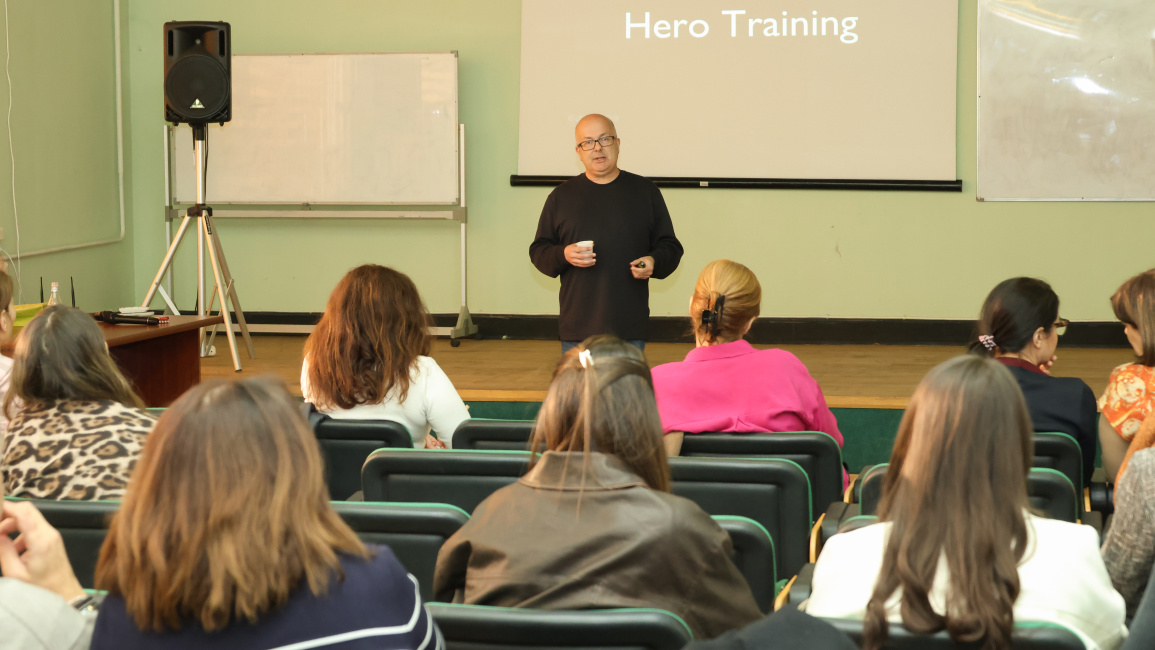
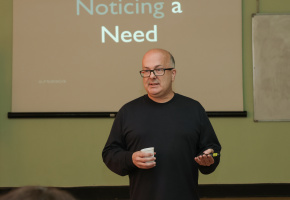
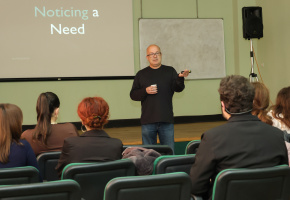
Matt Langdon, who has twenty years of experience in teaching, advocating heroism and civic courage, and is the author of the book "The Hero Handbook", began his lecture with the question: Who is a hero?
"When people hear the word 'hero', they often think of superheroes or famous figures. But that's not who I mean. I'm not talking about idols or simply successful people. For me, a hero is someone who does something heroic. It may sound simple, even a bit naive, but the key idea is this: heroism is born in action. A person can take a brave and moral step today and be a hero, and tomorrow be just an ordinary person. In other words, being a hero is not a permanent title — it is a choice and an action made in a particular moment," said M. Langdon.
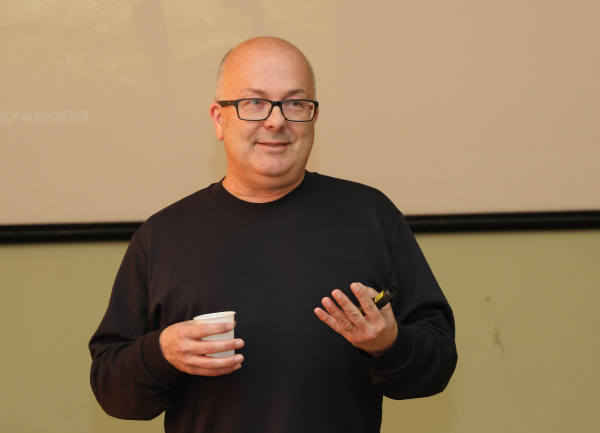
The lecture did not continue with classical definitions, but with a reinterpretation of the concept of the hero. The speaker emphasized that the definition they propose does not tie heroism to status or public recognition. In their view, a hero is someone who chooses to act in a specific situation. And ultimately, it is not our identity that determines what we do; rather, it is what we do that shapes our identity.
According to M. Langdon, heroism is often linked to risks or sacrifices, yet what matters most is one's moral stance. The hero he speaks of is not merely a bystander. He does not ignore what he sees; he responds, takes action, and is ready to assume responsibility.
During the lecture, he also spoke about the psychological reasons behind passivity in everyday life — the bystander effect, the diffusion of responsibility, and the role of fear. He presented practical tools that can help people overcome these mechanisms by developing moral courage and civic engagement not only in extraordinary moments, but in ordinary, everyday situations as well.
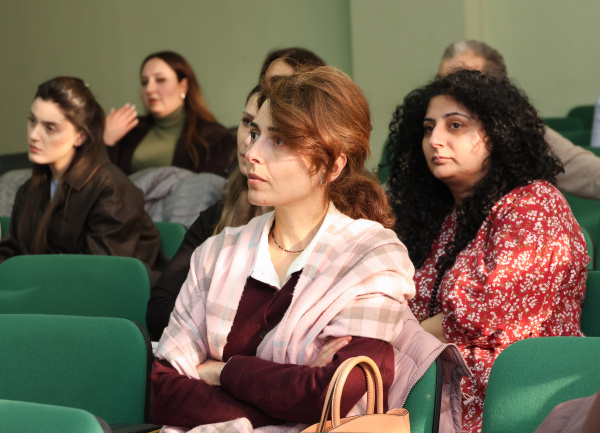
Drawing on examples from different countries, the speaker discussed how heroism can be understood in everyday life. He also presented practical methods used in different contexts, highlighting the national characteristics reflected in each of them.
Thus, the discussion focused not on telling stories about heroes, but on viewing heroic behavior as a practical skill that can be learned and applied.
The lecture evolved into an interactive discussion, with participants actively asking questions and sharing their thoughts and experiences.
The initiative was carried out through the collaboration of the YSU Continuing Education Center, the Chair of Personality Psychology at the Faculty of Philosophy and Psychology, and the Armenian Scientific Association of Psychologists.