April 03, 2026 | 10:02
Partners
Research
International cooperation
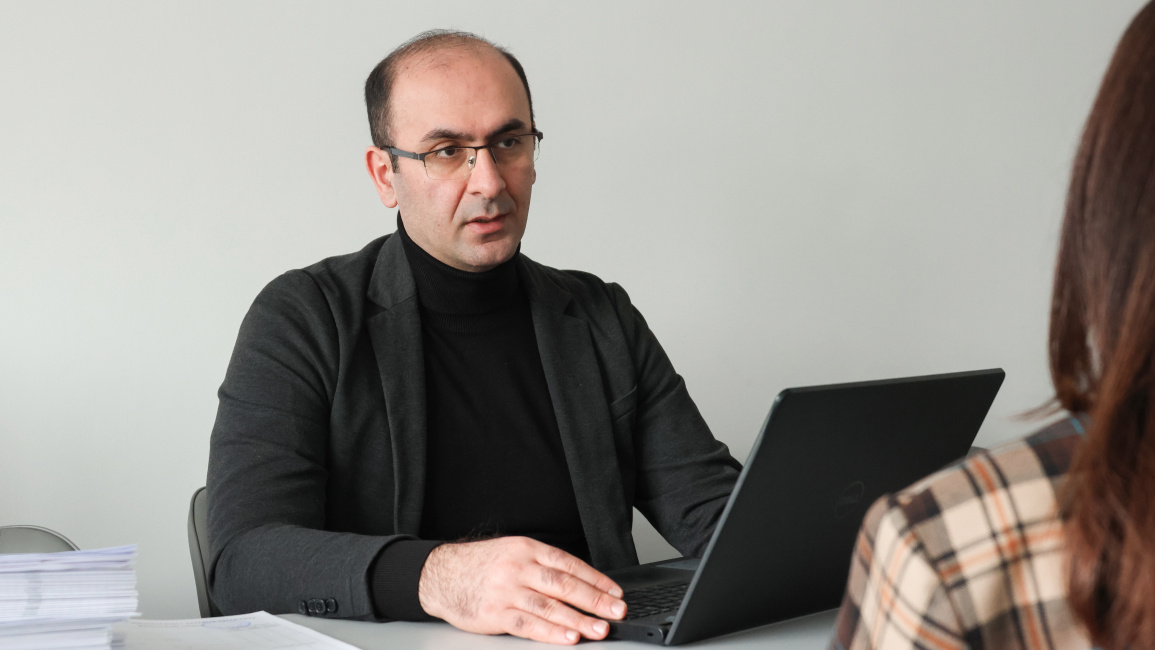
We spoke with Associate Professor Gor Aleksanyan, Deputy Dean of the YSU Faculty of Geography and Geology, about the project's timeline, the selection of geoheritage sites, and the features of the upcoming mobile application.
Q: Mr. Aleksanyan, the faculty is collaborating with universities in Poland, Czechia, and Georgia. How did the idea of a joint project with universities across three countries come about?
A: I should first note that Silesian University of Technology in Poland had previously implemented an interuniversity program on geoheritage in collaboration with the Technical University of Ostrava in Czechia. I learned about this program when Krzysztof Labus from Silesian University of Technology visited our faculty to give lectures. During our discussions, he presented the program in detail, and we decided to implement a similar initiative in Armenia.
We formed a consortium, developed the project's content, and YSU, as the coordinating partner, applied to the International Visegrad Fund's competition. The project was subsequently selected for funding.
The competition required the involvement of at least one Eastern Partnership country, which led to collaboration with the Georgian Technical University. Another requirement was participation from two Visegrad Group member countries, which, in our case, are Poland and Czechia.
Q: What is the project's timeline, and what are its phases?
A: The project will run for 18 months, from April 1, 2026, to September 30, 2027, and is structured in three phases.
The first phase, which will conclude on December 31, 2026, focuses on the main research work. During this period, at least 15 geoheritage sites in both Armenia and Georgia will be selected, their significance for each country assessed, and a comprehensive list compiled.
For each site, a detailed description will be prepared, including its location, accessibility, associated services, attractiveness, and other relevant information. All data will be available in Armenian, English, and Georgian.
In the second and third phases, an electronic guide and a mobile application will be developed based on the collected data, presenting the selected geoheritage sites of Armenia and Georgia.
Q: Will the app provide only technical details (e.g., how to reach the site), or will it include historical context as well?
A: The app will include factual information as well as interesting legends and stories about each site, turning it into a tourism product. While Armenia’s historical and cultural heritage sites are already promoted as tourist attractions, geoheritage tourism remains underdeveloped. Therefore, it is important to encourage visitors to come to Armenia not only for historical and cultural attractions but also to experience its unique geoheritage.
I should note that we are also working with our Polish and Czech partners to develop the content structure of both the electronic guide and the mobile application.
Q: Is there a preliminary list of sites for the app?
A: The final list is still being determined. Priority will be given to geoheritage sites near the Armenia–Georgia border. Nevertheless, if we identify sites that are farther away but extremely valuable for representing Armenia or Georgia, they will also be included.
Q: Can you give examples of border-region sites?
A: For example, in Armenia, the Getnandzav cave tunnel, with its distinctive geological structure and layers of lava, represents a typical geoheritage site and has strong potential to attract tourists. In Georgia, the Vardzia cave complex is noteworthy; although it was naturally formed, it was historically inhabited by humans and thus shows signs of human modification.
The main focus of the project will be on natural features such as caves, gorges, and karst formations that showcase the region's uniqueness.
Q: Could you clarify which sites are considered geoheritage?
A: The term "geo" refers to both geological and geographical features. For example, the Symphony of Stones is a typical geological heritage. In this project, we consider geoheritage in both geological and geographical terms — anything naturally occurring that occupies a specific area. Sites such as Lake Parz, Lake Gosh, and even Lake Sevan are geoheritage from a geographical perspective. When selecting sites, our emphasis will be on lesser-known but significant locations rather than widely recognized ones.
Thus, we distinguish two main groups: geological objects and territorial units of living nature.
Q: Will this project help develop a new tourism direction in Armenia?
A: Yes, this project represents an important step in establishing this new direction in tourism, as measures are currently being taken in Armenia to develop geo-tourism. Tourism of any type grows when information about a site is accessible and infrastructure exists to support visits. This project provides the first step — making the sites recognizable through accessible information.
Q: Will the mobile app be developed in Armenia?
A: The app will be developed by our Polish and Czech partners.
The online kickoff meeting of the "Geoheritage Inventory, E-Guide, and Mobile App for Sustainable Tourism (Armenia and Georgia)" project took place on April 1. Participants included Diana Karapetyan, Head of the Marketing and Promotion Department of the Tourism Committee of the Republic of Armenia; Seyran Suvaryan, Head of the Service Chair of the YSU Faculty of Geography and Geology; Gor Aleksanyan, Project Coordinator; Arsen Aproyan, Head of the Grants Coordination Department of the YSU International Cooperation Office; representatives of the project's partner universities: Olga Suskeria (Georgian Technical University), Krzysztof Labus (Silesian University of Technology), and Martin Klempa (Technical University of Ostrava); and Eva Mereniks, representative of the International Visegrad Fund.