April 15, 2026 | 14:20
Partners
International cooperation
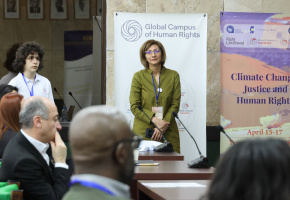
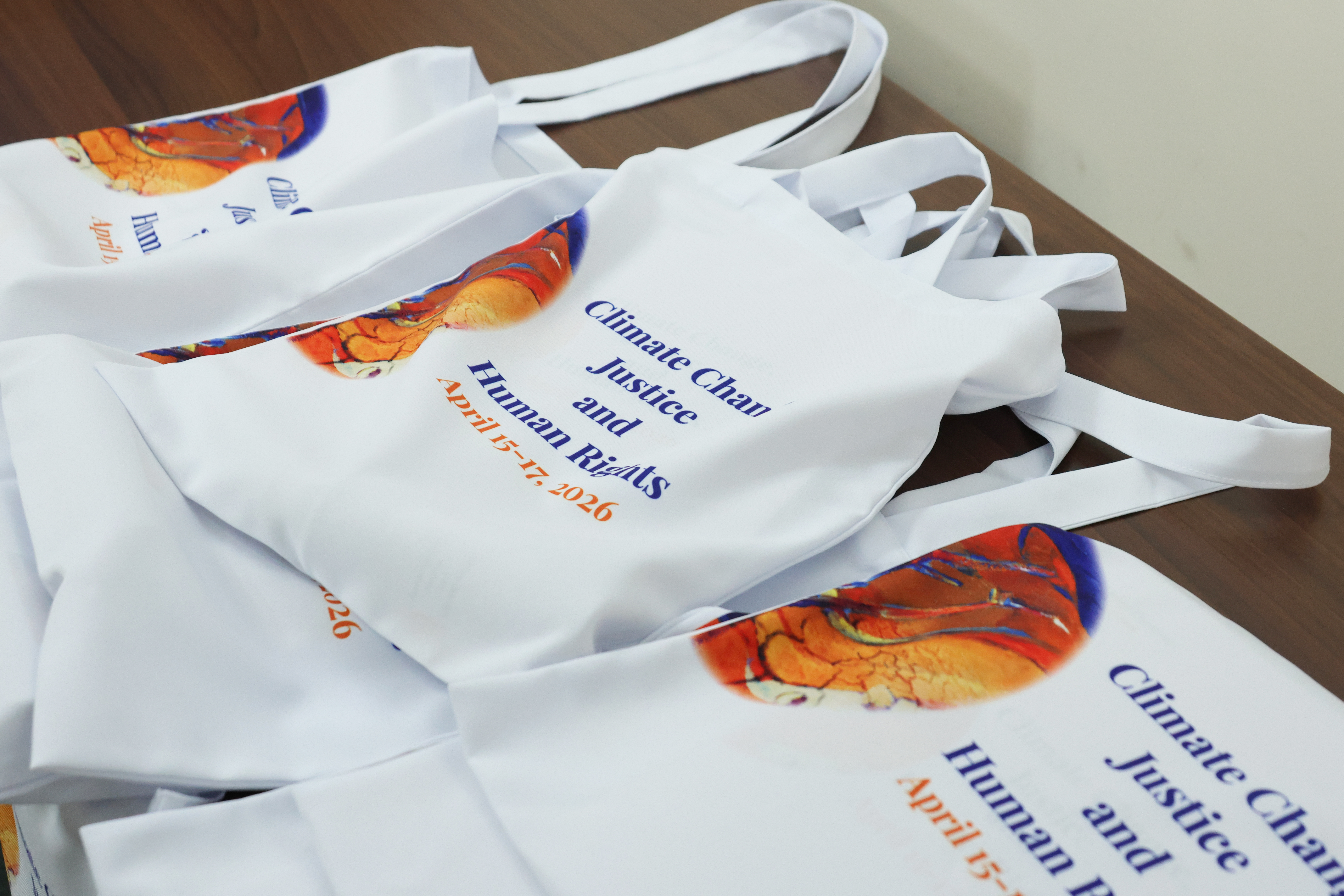
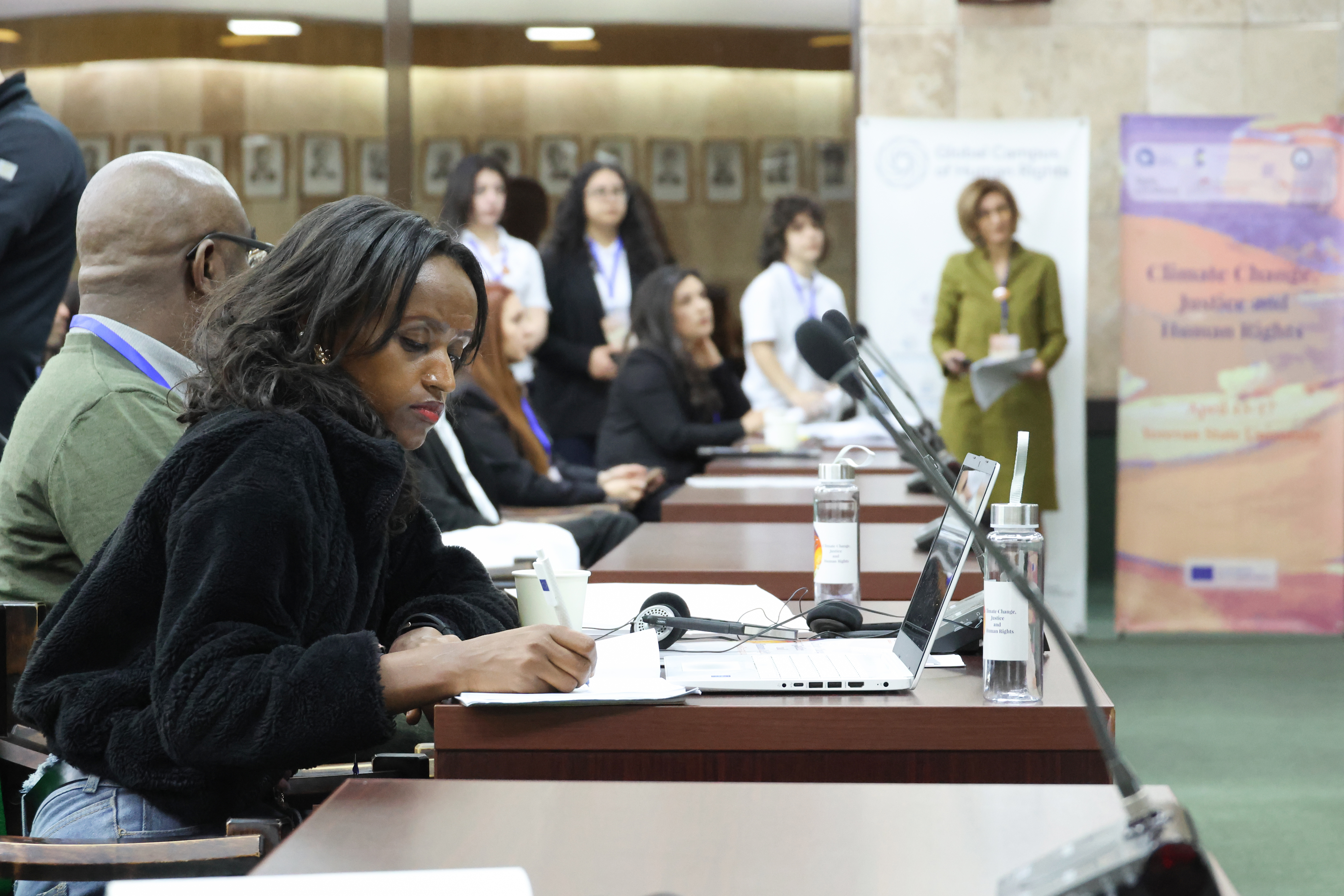
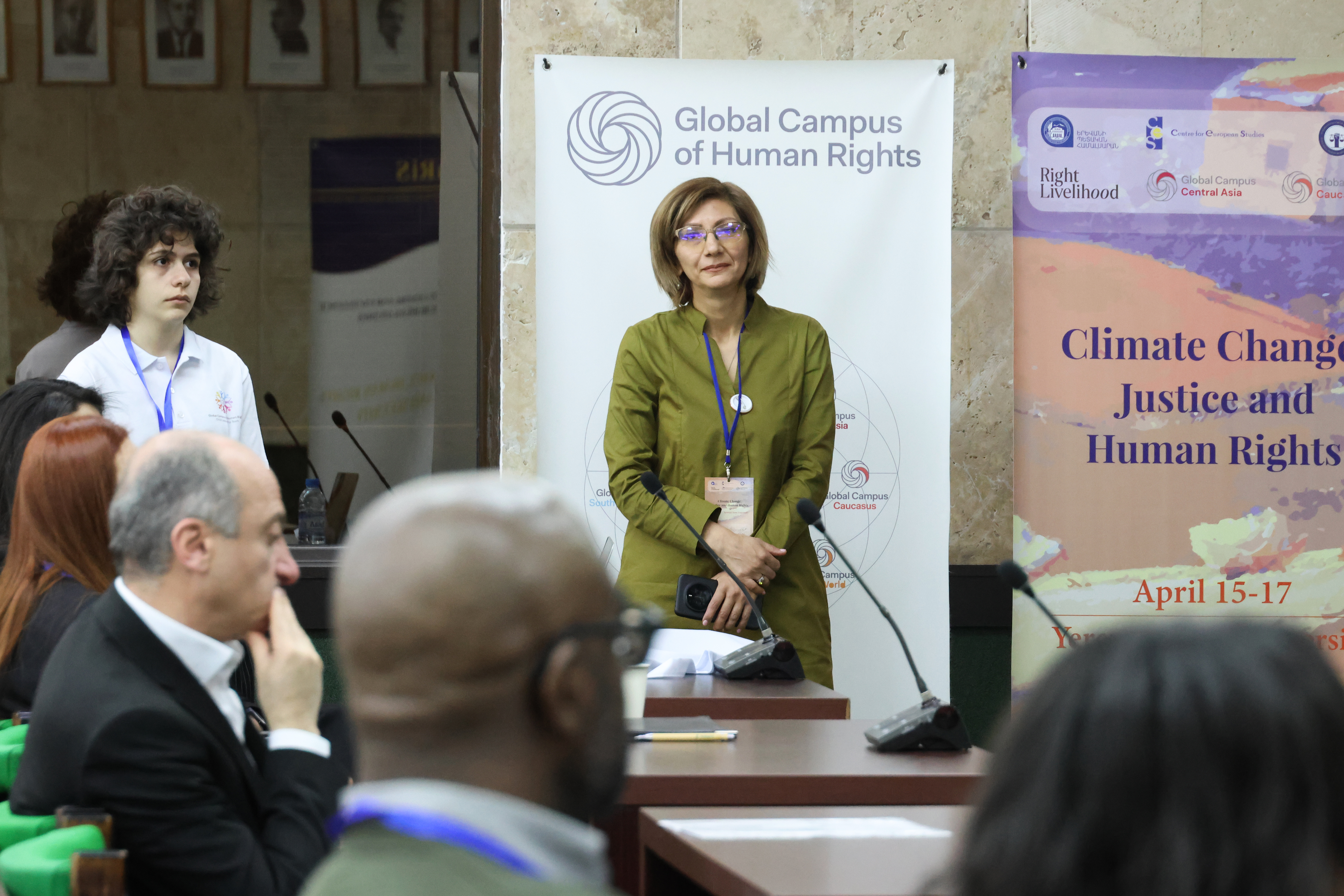
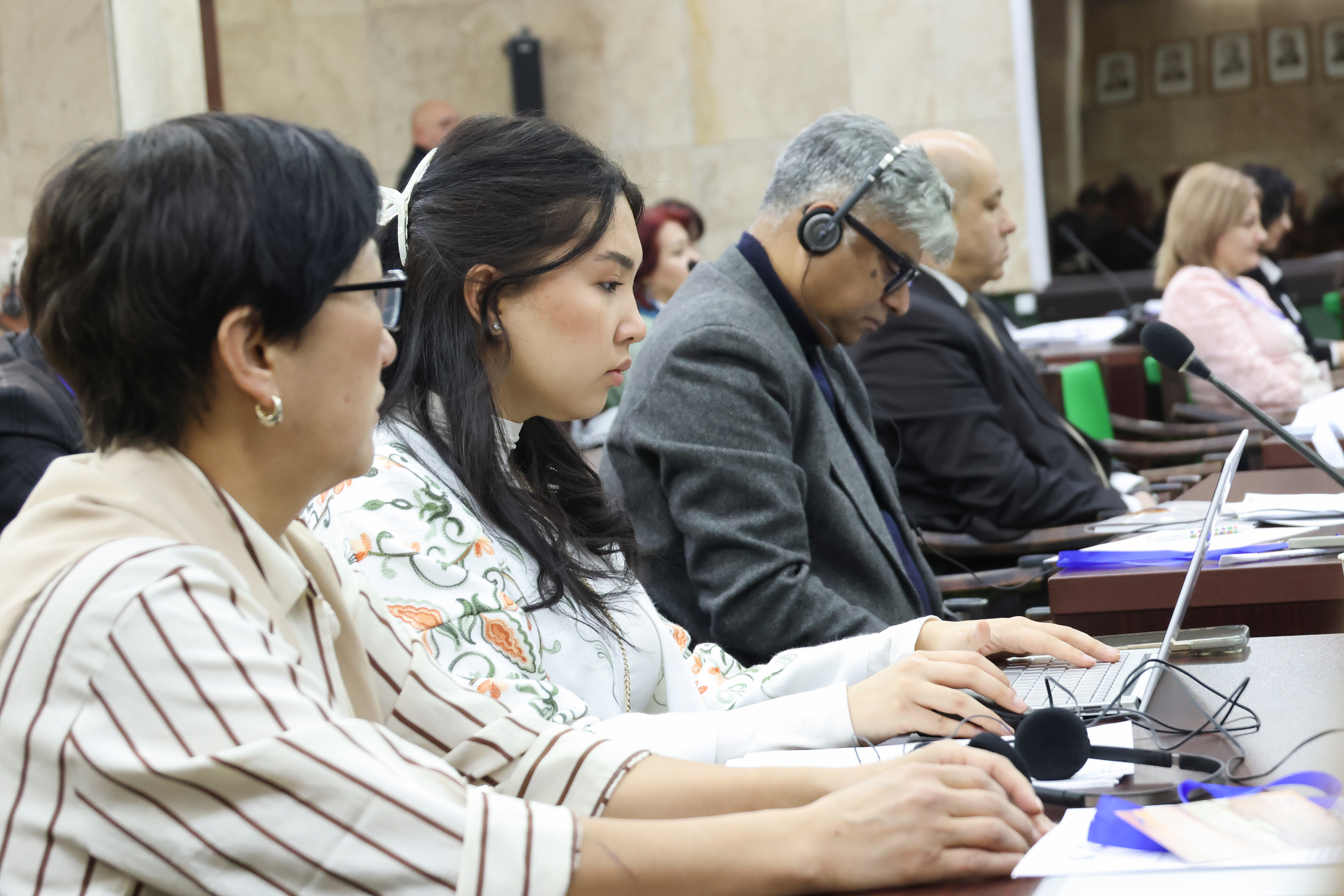
The conference focuses on climate justice, with discussions addressing the impact of climate change on human rights, governance, accountability and security.
Particular attention is being paid to the disproportionate effects of climate change on marginalized groups, children and future generations. Participants have emphasized the importance of justice-based policies to address these imbalances and ensure sustainable development.
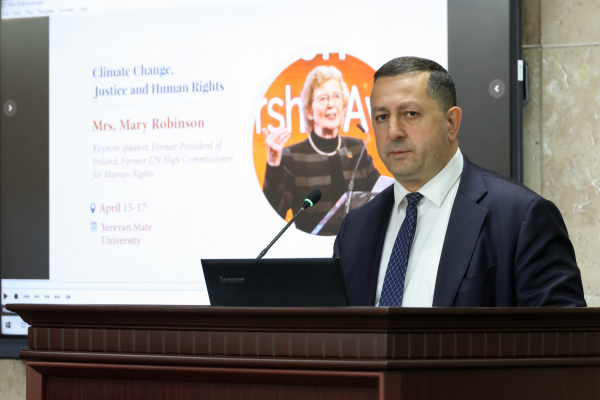
YSU Rector Hovhannes Hovhannisyan noted that the conference is an important platform bringing together representatives from various sectors to discuss one of the most pressing challenges of our time—climate change. He noted that climate change is no longer viewed solely as an environmental issue, but has become a key component of global political, social, economic and humanitarian agendas.
According to the rector, its consequences affect societies and social groups unevenly, particularly vulnerable populations, children, displaced persons and impoverished communities, making climate justice a matter of practical urgency.
"The broad thematic scope of the conference creates an opportunity for meaningful dialogue, where science, policy and public responsibility can complement one another. This initiative will foster not only the exchange of academic ideas, but also the development of new partnerships and stronger trust among representatives from different countries and sectors," he said.
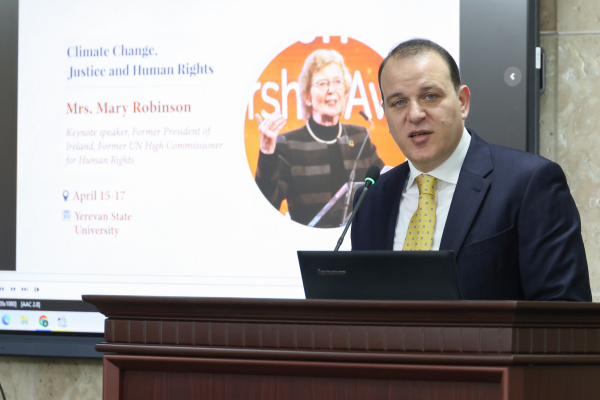
Vladimir Martirosyan, Director of the YSU Center for European Studies, noted that the event is one of the most successful outcomes of cooperation between the center and its partners. He expressed hope that the conference will prove both effective and practically valuable for various segments of society, including academia, students, and professionals working on children's rights and climate change.
Vaclav Sterba, Deputy Head of the Cooperation Section of the EU Delegation to Armenia, highlighted the resilience of Armenia and its people in overcoming challenges. He noted that during a recent visit to border communities in the Syunik and Vayots Dzor provinces, including the village of Khachik, residents had long lived under serious security pressures. According to him, while discussions have increasingly shifted toward peace, concerns have evolved to focus more on socio-economic issues such as water scarcity, irrigation systems and living conditions.
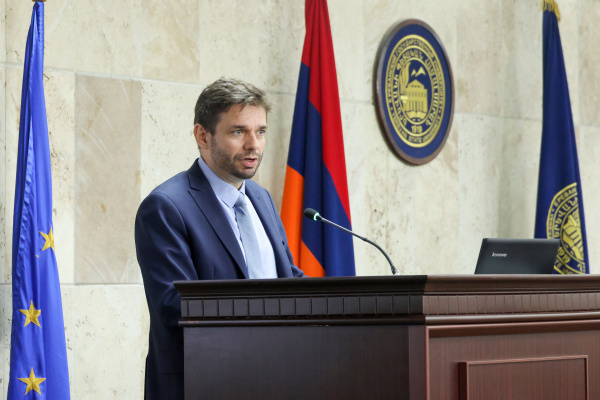
"Despite these challenges, people continue to live in their communities, showing strong will and a sense of responsibility. Such examples illustrate why it is essential to address the interconnected issues of climate change, human rights and security in Armenia," he said, adding that similar concerns may be relevant to other communities as well.
Manfred Nowak, Secretary General of the Global Campus of Human Rights, noted that climate change, justice and human rights have become deeply interconnected core issues. He explained that the Global Campus is one of the largest university networks for human rights education, bringing together more than 100 universities and training young people across regions in human rights, democracy, the rule of law and sustainable development.
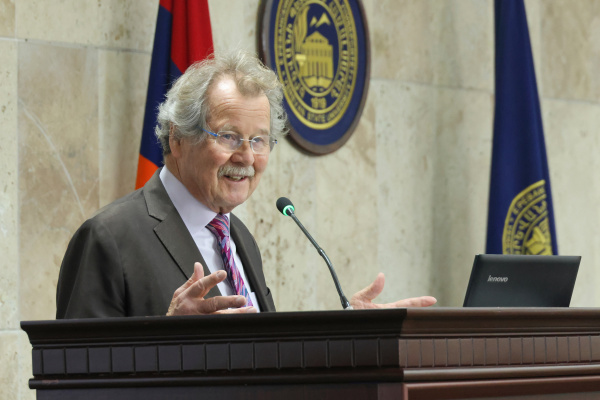
Nowak also highlighted long-standing cooperation with international partners and stressed the importance of integrating children's rights into educational programs, noting that children are increasingly involved in decision-making processes.
He further pointed out that human rights and environmental issues, once treated separately, are now converging to shape a new legal and policy agenda, gradually leading to the development of mechanisms for legal responsibility and accountability.
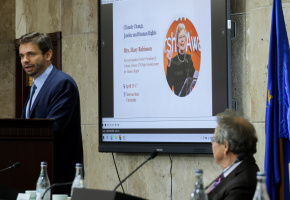
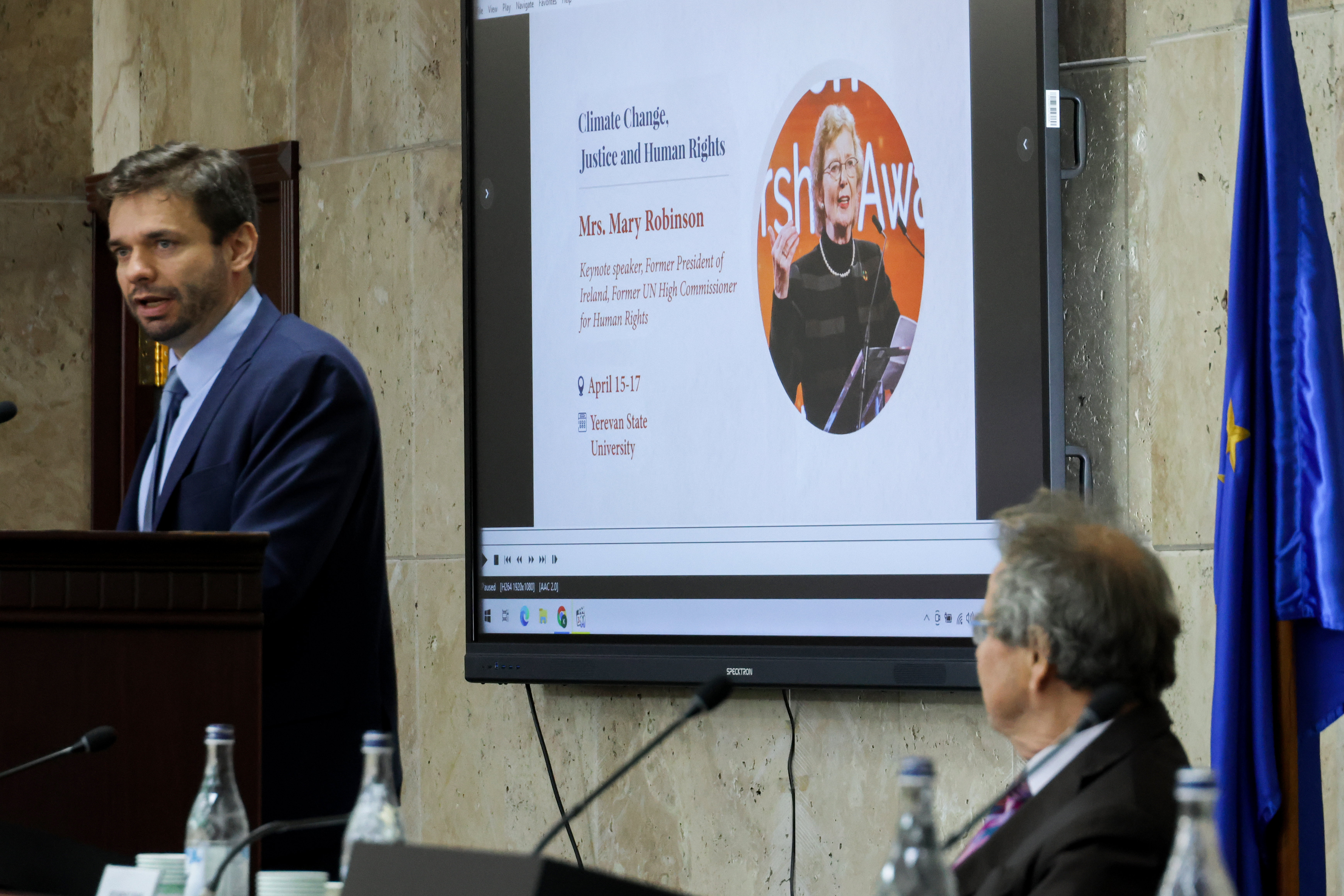
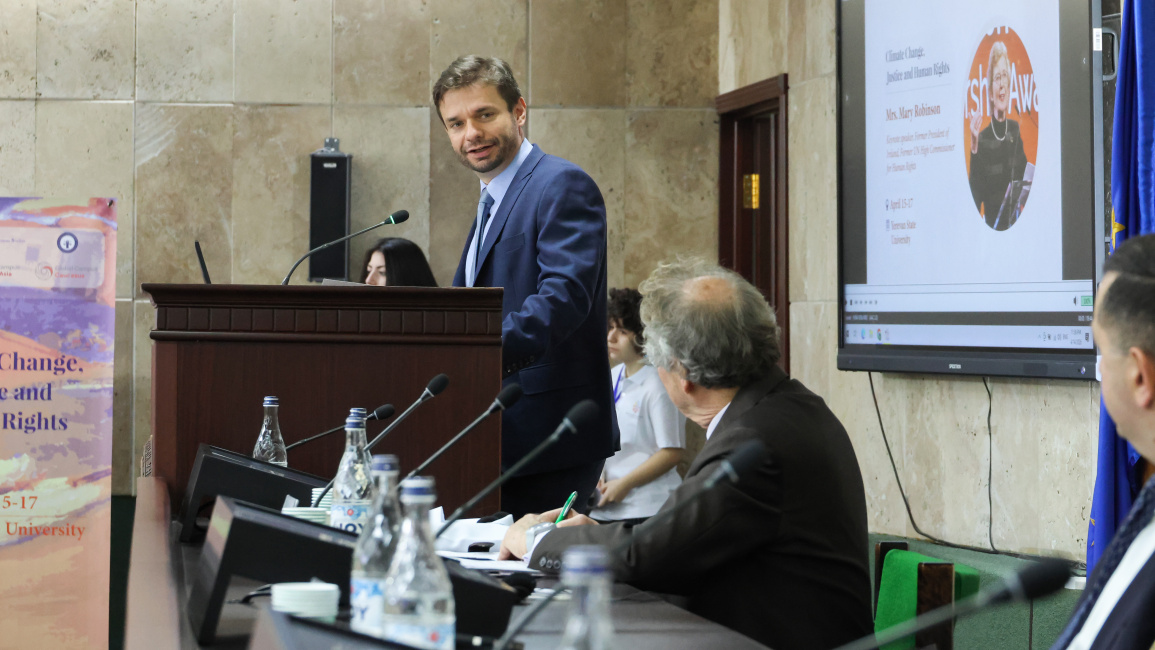
During the conference, participants also viewed a video address by Mary Robinson, former President of Ireland and former UN High Commissioner for Human Rights, who spoke about the interconnection between climate justice and human rights, emphasizing the importance of global solidarity and responsibility.
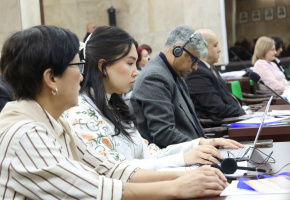
The event features a series of panel discussions and expert presentations dedicated to climate justice, accountability and global inequalities. The first panel focused on the interlinkages between environmental protection, human rights and sustainable development.
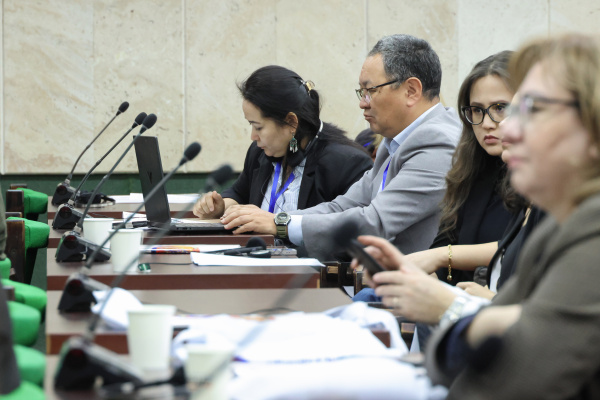
Subsequent sessions explored the relationship between climate change, environmental degradation and human rights, covering topics such as air pollution, climate risks, eco-anxiety, and public participation in environmental decision-making.
In the coming days, the conference will present theoretical, empirical and comparative research on climate change and human rights, climate justice, security, and regional and international cooperation. Discussions will also address intergenerational justice and the importance of forward-looking governance.
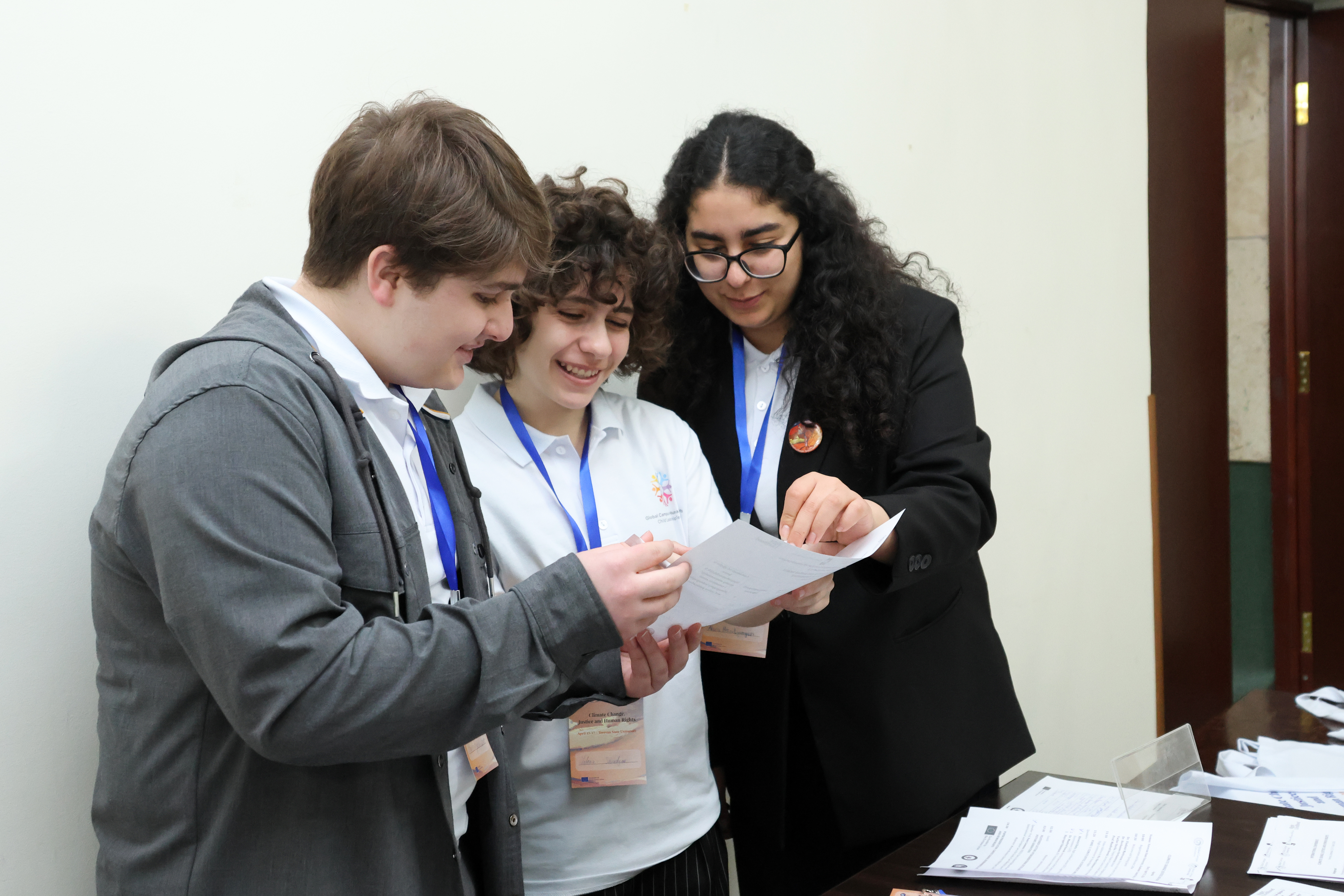
Participants described the conference as an important platform for sharing experience, fostering new partnerships, and advancing both academic and policy dialogue on climate justice.
The conference is organized within the framework of the Right Livelihood "Climate and Conflicts: Redress and Prevention" project, implemented by the Global Campus Caucasus (Center for European Studies, Yerevan State University) in cooperation with the Global Campus Central Asia and the Jean Monnet Centre of Excellence in European Studies: Democracy, Human Rights and Security (DeHuRiS).