May 19, 2026 | 10:30
Research centers and institutes
Research
Publications and scientific journals

The research on the detection of fish sanguinicolosis was carried out in collaboration between scientists from Yerevan State University and Armenian National Agrarian University.
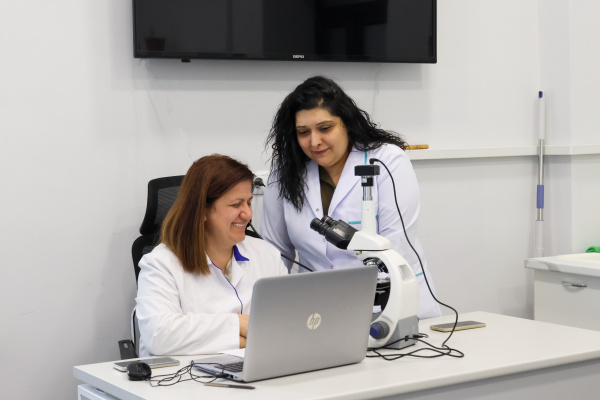
According to Anna Grigoryan, Assistant Professor at the Chair of Human and Animal Morphology and Physiology at the YSU Faculty of Biology and co-author of the article, the primary objective of the study is to prevent the spread of the infection, as it can lead to large-scale fish mortality.
What is sanguinicolosis and why is it dangerous?
According to YSU researcher Anna Grigoryan, sanguinicolosis is a parasitic disease caused by trematodes, also known as blood flukes.
"These parasites live in the blood of fish and damage blood vessels throughout the body, particularly affecting the heart, gills, and kidneys. The worms lay eggs in fish tissues, after which the larvae hatch and exit into the water by penetrating the tissues of the fish's organs. They then enter freshwater snails, which serve as intermediate hosts, where they continue their development. The parasites have both definitive and intermediate hosts," she explained.
She added that although the parasite is not dangerous to humans, it reduces fish quality and leads to the decline of fish populations.
"Hemorrhaging in muscles and internal organs, as well as swelling and deformation of the gills, are observed in infected fish, which disrupts respiration and slows growth. This infection can cause significant economic losses for fish farms," she said.
Highlighting that 85 out of 200 examined fish, mainly Prussian carp, were diagnosed with sanguinicolosis, Anna Grigoryan noted: "Young fish are particularly vulnerable to the disease. Infection rates among juvenile fish reached 77.5%, while the rate among mature fish was significantly lower at 12.5%."
Scientific novelty
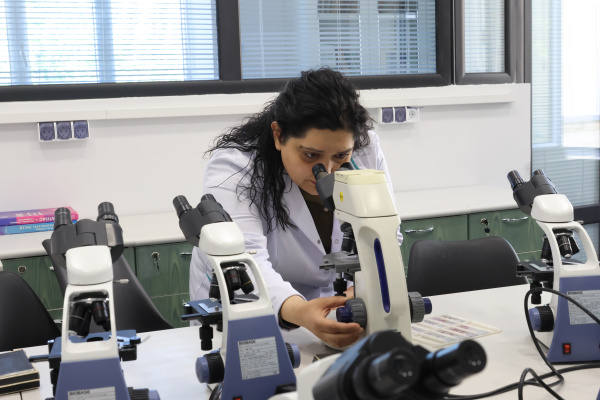
Histological studies of various fish organs were conducted at the YSU Faculty of Biology in cooperation with researchers from the Armenian National Agrarian University. The studies revealed the presence of parasites even in the intestinal walls and swim bladders of fish. According to Anna Grigoryan, this finding is considered a scientific novelty.
Measures to prevent infection spread and economic losses

The YSU researcher emphasized that the article also outlines measures to prevent the spread of the disease, including continuous monitoring of the infection, controlling the spread of snails that serve as intermediate hosts in reservoirs, and disinfecting fishing nets and hooks, which may act as vectors for transmission.
Joint research on the issue is ongoing.
The study was initiated by Anush Hakobyan, Associate Professor and parasitologist at the Armenian National Agrarian University. Alongside researchers from ANAU, the project also involved scientists from the YSU Faculty of Biology, including Anna Karapetyan, Head of the Chair of Human and Animal Morphology and Physiology; Anna Grigoryan, Assistant Professor at the same chair; and Tamara Abgaryan, junior researcher at the Laboratory of Human and Animal Integrative and Adaptive Physiology.