June 01, 2026 | 14:56
Science
Research
International cooperation
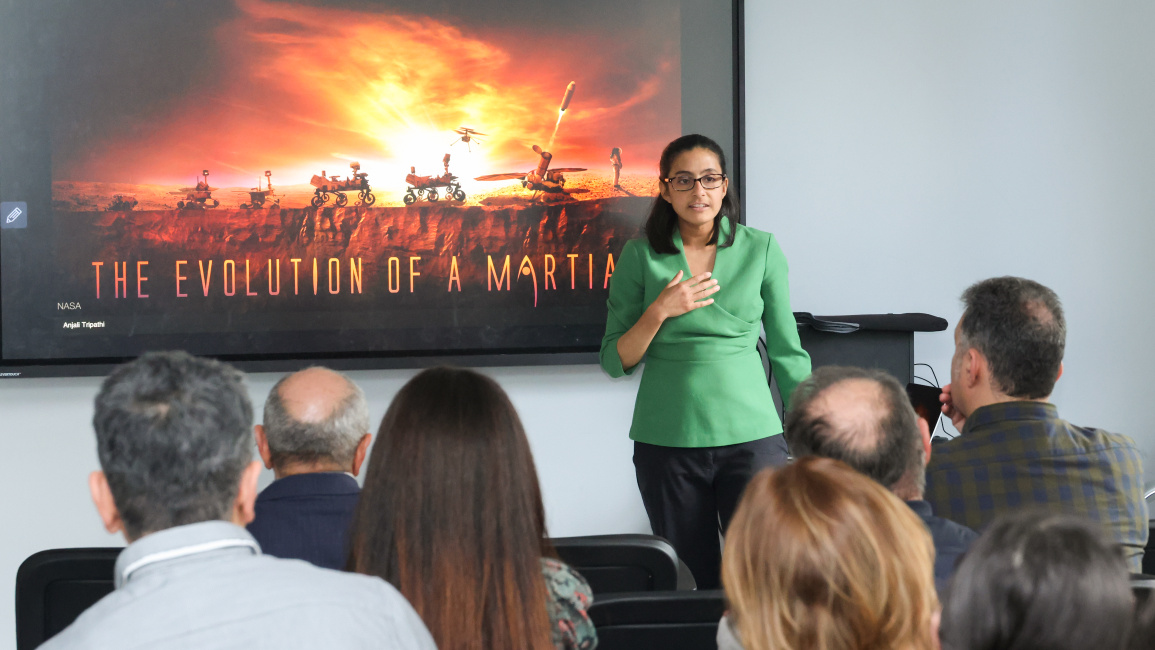
Dr. Tripathi's research focuses on the formation and evolution of planetary systems, while her work in science communication is dedicated to making astronomy accessible to broader audiences.
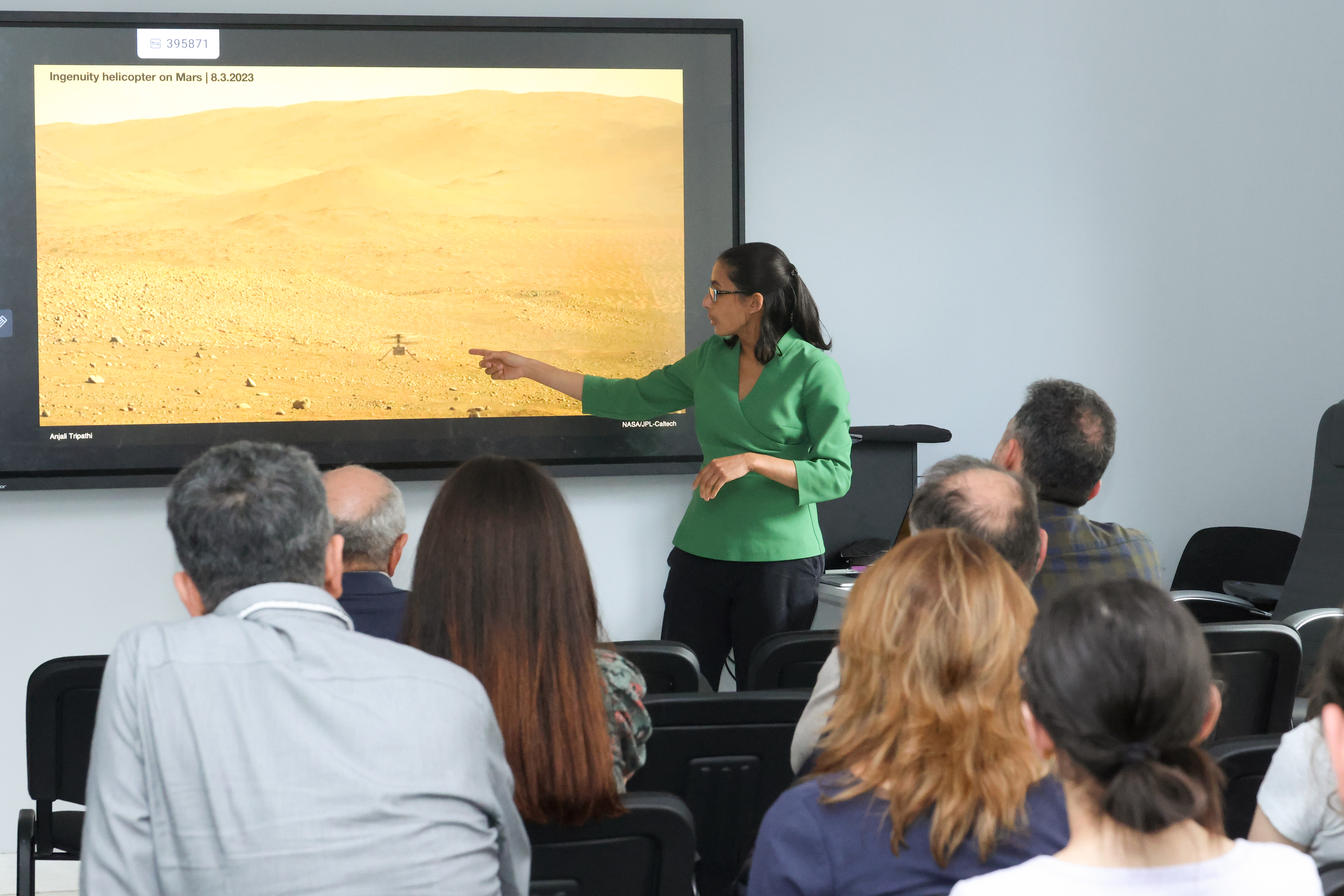
Introducing the Jet Propulsion Laboratory, Dr. Tripathi noted that the institution is engaged in the robotic exploration of the solar system and that a significant number of Armenian specialists are among its staff.
"When people talk about exploration of Mars, they tend to associate it with human landings and crewed missions. For me, however, the paramount goal is the search for life in the universe, and that very approach shapes our strategy for Mars exploration — determining what to explore and how. One of the guiding principles behind all of this is to follow the water, because while life may exist in many forms, we know that water is essential to life as we know it on Earth," she said, adding that Mars remains a focal point because of its relative proximity to Earth and its surface conditions that may be conducive to life. "Venus, of course, is closer to Earth in size, but its atmosphere is deeply hostile to life."
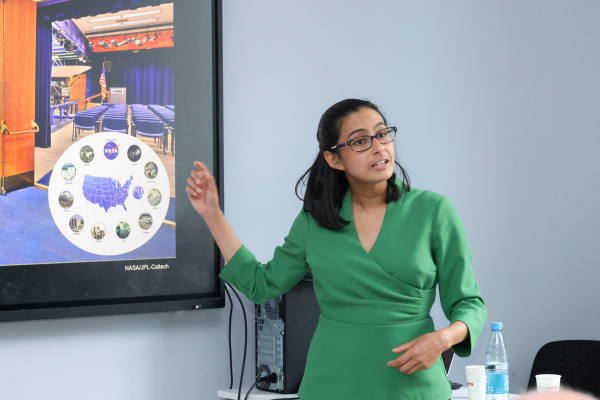
The search for water in the outer reaches of the solar system has led scientists to remarkable discoveries.
According to Dr. Tripathi, tracing the path of water reveals that the outer solar system is home to numerous icy bodies, beneath the surfaces of which oceans may exist.
"For example, NASA's Cassini mission studied Enceladus, a moon of Saturn, where plume-like jets were discovered erupting from the surface — indicating the possible presence of a subsurface saline ocean that could, in turn, create conditions favorable to life. More recently, in 2024, NASA launched the Europa Clipper mission, which is currently en route to Jupiter's moon Europa and is expected to arrive within the coming years," said Dr. Tripathi, adding that the mission aims to determine whether a vast ocean exists beneath Europa's icy surface and to assess its potential for harboring life. "There are also other significant destinations currently under active study or planned for future missions, including Uranus and various other moons."
A software tool available on NASA's well-known platform eyes.nasa.gov was developed in part with the help of one of Dr. Tripathi's Armenian colleagues.
"This is one of the tools we created for the public — to explore exoplanets and access information about them. Users can view the night sky and click on any object to get a lot of information. By the way, my Armenian colleague who assisted in developing this tool studied at the Faculty of Informatics and Applied Mathematics at Yerevan State University," Dr. Tripathi said.
Speaking about transits, she explained the phenomenon whereby a planet or other object periodically passes in front of the sun, partially blocking its light.

"It is similar to an eclipse — due to a specific geometric alignment, the light dims periodically. The TRAPPIST-1 system, for instance, orbits a red dwarf star — a small, relatively cool and highly active star prone to frequent flares, making it an environment considered unfavorable for life," she noted.
Dr. Tripathi is currently working on future missions that will enable the direct imaging of exoplanets orbiting other stars with comparable precision. She noted that more than 6,000 exoplanets have been confirmed to date, and emphasized that a mission planned for approximately 2040 will be dedicated to locating and photographing potentially habitable planets.
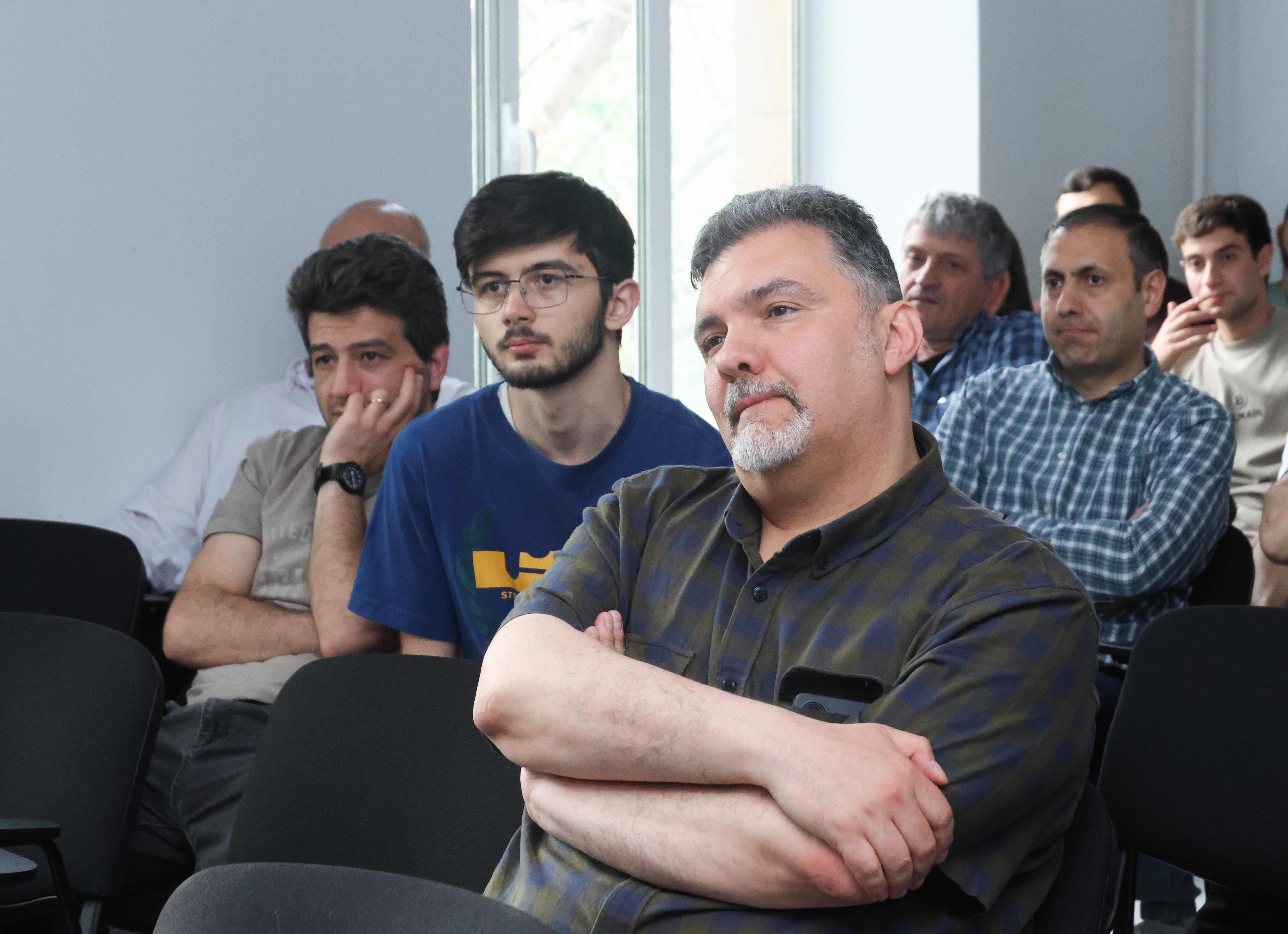
During a question-and-answer session with faculty and students, Dr. Tripathi added that roughly 45 Earth-sized planets residing within habitable zones are currently known. She also noted that while the search focuses on water, the possibility of life built on alternative chemical basis is not excluded — though current measurement methodologies are centered on detecting water.
Beyond her scientific work, Dr. Tripathi has earned wide recognition for her contributions to science communication and public engagement. She has also played a role in shaping science and climate policy through her work at the White House Office of Science and Technology Policy.