July 15, 2026 | 10:58
Education
Research centers and institutes
Research


The National Youth Index is intended to function as an interconnected data system that will make it possible not only to assess conditions across different areas of young people's lives, but also to track changes over time.
The index is a composite assessment tool designed to bring together data on different areas of young people's lives within a single framework. It may incorporate both statistical indicators and young people's own perceptions and assessments, providing a comprehensive picture of their needs, opportunities and development trends. Its periodic application will also allow results to be compared and changes to be monitored over time.

The draft methodological framework presented at the workshop includes eight thematic areas and around 60 preliminary indicators. These are intended to reflect the main factors affecting young people's quality of life by combining official data, research findings and young people's own assessments and perceptions.
The development of the National Youth Index was initiated by the Ministry of Education, Science, Culture and Sport of the Republic of Armenia, with support from the United Nations Population Fund.
Deputy Minister of Education, Science, Culture and Sport Artur Martirosyan, Acting Head of the UNFPA Armenia Country Office Anna Barfyan, and YSU Vice-Rector for International Cooperation, Development and Innovation Mikayel Hovhannisyan delivered opening remarks at the workshop held to validate the methodological framework.
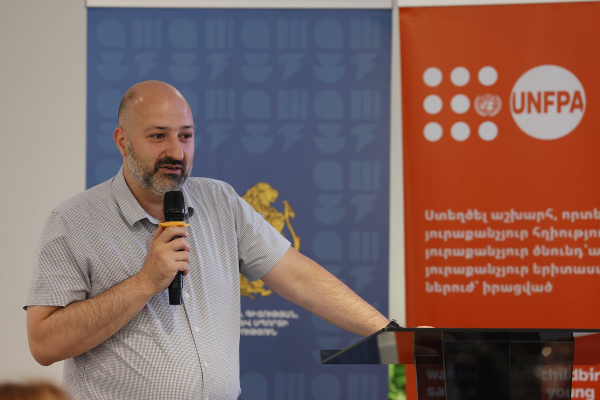
"Assessing young people's needs and opportunities requires not only separate statistical data, but also a unified methodology that makes it possible to see the interconnected picture and track changes over time. It is also important to incorporate young people's perceptions and assessments into this process. For YSU, participation in such an initiative is an opportunity to apply its research capacity to public policy development and help ensure that future decisions are based on reliable and comparable data," Hovhannisyan said.
According to Martirosyan, the development of the index is consistent with a data- and research-based approach to public policymaking.
"We need comprehensive and interconnected data that summarize both the current situation and public perceptions of it, while also allowing us to measure them over time," the deputy minister said.
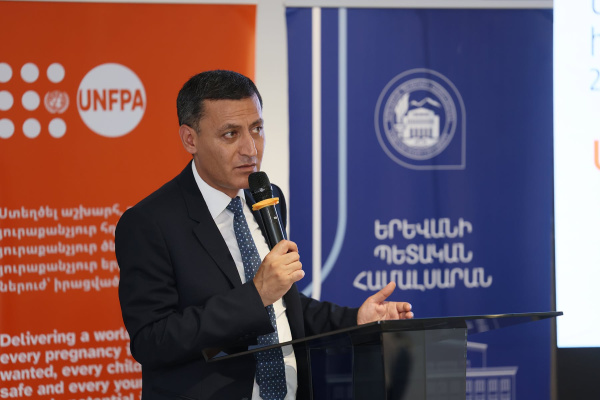
He said the index would enable national and local authorities to assess young people's needs more accurately, develop targeted policies and monitor their effectiveness. It could also serve as a practical guide for civil society, international organizations and other bodies implementing youth programs.
Martirosyan highlighted the importance of involving the YSU Center for Demographic Research and Education in the process, emphasizing the need to develop the university's research capacity and institutional ability to conduct sector-specific studies.
Speaking about the initiative, Barfyan said: "A data-driven approach helps us understand young people's actual needs and direct investment to where it will have the greatest impact. This is particularly important today, when the country faces serious demographic challenges and investment in every young person's health, education, skills and employment is an important step towards Armenia's economically and socially stable present and future. We consider it crucial that the results of the index do not remain confined to research, but are translated into policy decisions, programs and investment priorities."

The workshop brought together around 30 representatives of government institutions, the academic and expert community, international organizations, youth organizations and regional youth centers.
The discussion was conducted in the interactive World Café format. Participants reviewed the thematic areas and indicators proposed in the draft, identified existing gaps and potential overlaps, and put forward proposals for improving and finalizing the methodological framework.
The draft methodological framework for the National Youth Index will be revised and completed on the basis of the proposals and observations collected.