September 17, 2026 | 15:18
Volunteering, practice and internship
Education
Culture

Archaeological complex: Little studied but vast
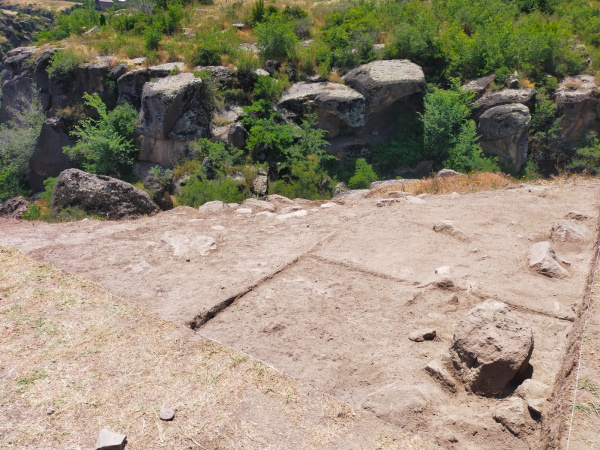
Mkhitar Tadevosyan, a master's student in the "Archaeology and Ethnography" program, noted that the Kakavaberd archaeological complex, located in the village of Kakavadzor, is an extensive site featuring traces of a fortified settlement, burial remains, caves, rock carvings, and other structures.
"Our team conducted excavations in an area where remains of a defensive wall are visible. We uncovered a room-like structure that appears to have a doorway, a corridor and a room. The area contained mixed bones, a fragment of a human skull, while the layers were mixed with ash, possibly indicating traces of a fire," he said.
According to the student, the site remains relatively understudied, and further excavations may reveal new sections of the complex.
Finds from different periods and distinctive ornaments
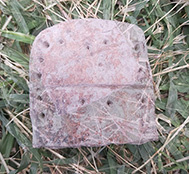
According to Mkhitar, the excavated materials belong to different chronological groups. The finds included numerous ceramic objects, osteological material, and stone and bone tools.
"One of the distinctive objects is a broken fragment of a ceramic item with small depressions on its surface; it was most likely part of an ornament. Other finds include a bronze ring, an earring shaped like a snake's head, beads of various sizes, a bone tool, possibly a needle, as well as a fragment of a human skull," he said.
International team and modern technologies in field
The YSU student took part in the excavations as part of an expedition that included three American archaeologists and local specialists.
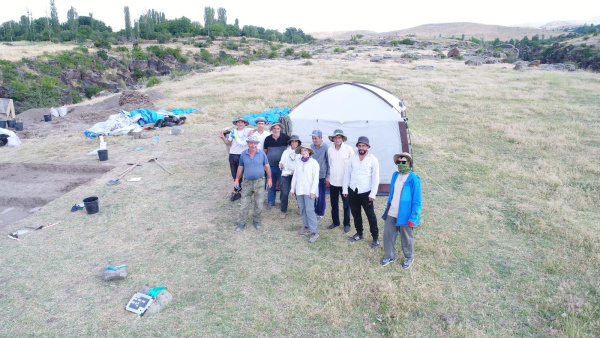
"Excavations mainly involved digging tools, including specialized archaeological tools such as small trowels. Each tool requires a particular technique during excavation. A drone was used for photography, while a surveying instrument was used to determine the depth of the layers and the elevation of objects. A magnetometer was also used to collect certain data on the presence of magnetic metals. I am working with these instruments, except for the magnetometer, for the second time. Methodologically, the work progressed slowly, but each layer was carefully recorded, and different archaeological contexts were gradually revealed," he said.
"Archaeology and Ethnography" program: multidisciplinary field
Mkhitar noted that his chosen profession is a developing field.
"While studying in the 'Archaeology and Ethnography' program, I realized that, unlike other disciplines, it is a multidisciplinary field with many different branches, offering extensive opportunities for choice and professional development," he said.
After completing his master's degree, he plans to continue working in archaeology.