August 31, 2026 | 14:00
Education
Society
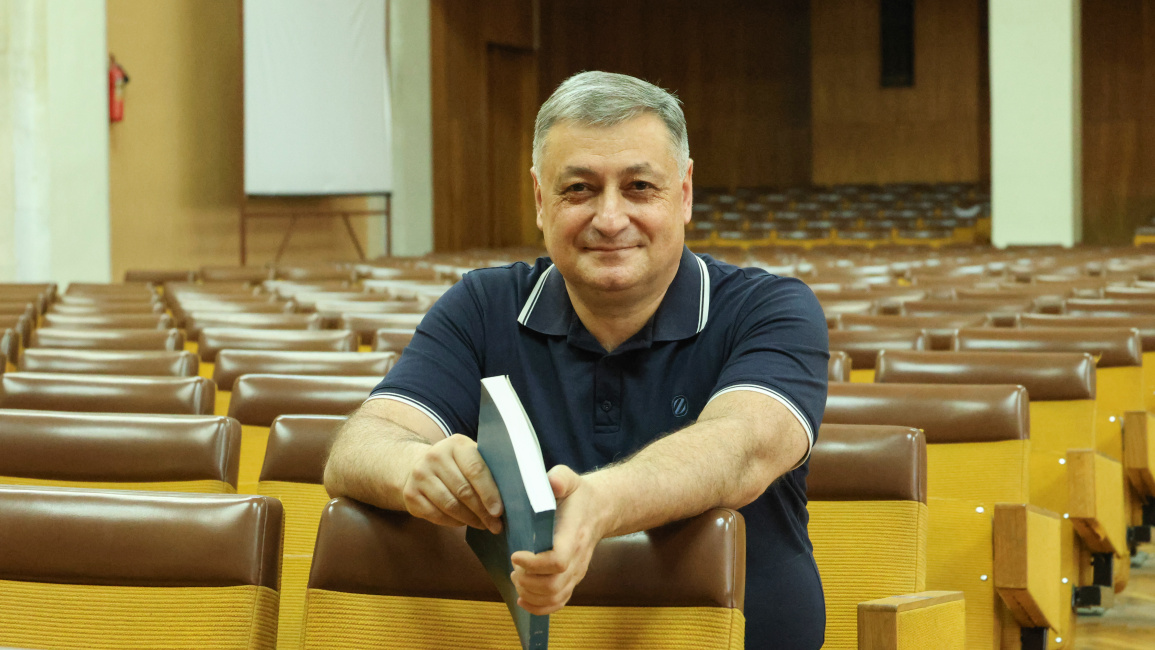
The winner of the social sciences category in YSU's annual Teaching Excellence Award competition spoke about his work as a lecturer, his responsibility to students and the values he seeks to pass on to them.
Portrait of lecturer
Hovhannes Hovhannisyan, Associate Professor at the Chair of History, Theory, and Logic of Philosophy at the YSU Faculty of Philosophy and Psychology, began his professional career while still a university student, gaining work experience alongside his studies. He worked at the Institute of Philosophy and Law of the National Academy of Sciences of Armenia and at several research and educational institutions, while also teaching at various educational establishments.
He began teaching at YSU in 1996, after defending his PhD dissertation. Since then, the classroom has become the main setting in which he expresses himself both academically and personally.
– Mr Hovhannisyan, do you remember your first class as a lecturer? How did you feel? How has your attitude towards teaching changed over the years?
– I taught my first class at YSU when I was a fifth-year student. I stood in for my lecturer, who had to miss class that day for a valid reason... It went well.
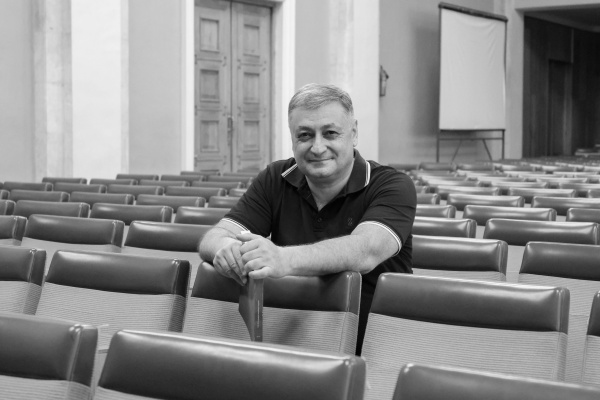
I have always prepared for class, and I still do. When I first began teaching, however, I was more self-confident and bold. Over the years, youthful self-confidence and ambition have given way to, or perhaps been overtaken by, greater insight and a more thoughtful approach to the work.
– What has kept you in the classroom all these years?
– The understanding that education is where the future is forged. What we have in our education system today is what we will have in life years from now. In that sense, I attach great importance to the work of lecturers and teachers. I also find satisfaction in sparking students' interest and meeting their need for knowledge.
– What does it mean to be a good lecturer? In your view, what quality does a modern lecturer need most?
– To have deep professional knowledge and a gift for teaching, and to be a well-rounded mentor and an exemplary individual for students. Without underestimating traditional values, I consider it important to keep pace with the times and stay abreast of professional and technological developments.
– How do you try to make complex academic topics understandable and interesting for students?
– When a lecturer has a deep command of the subject, it is not difficult to make it clear and interesting to the listener through concrete examples, visual tools and questions drawn from the listener's own field. The task becomes even more effective when the lecturer understands the structure of thought and the patterns by which knowledge develops.
– What have you learned from students over the years?
– To stay young and not lose the capacity for genuine wonder.
– Looking back on your journey, which achievements do you consider the most important?
– My children, loved ones, friends and colleagues, the works I have published, and my professional and public reputation.
Lecturer behind the award
For Hovhannes Hovhannisyan, the Teaching Excellence Award is not only recognition, but also an ongoing responsibility - an obligation to maintain the standard he has set for his work and continue raising it. He believes recognition of this kind is not an endpoint, but a new stage in which the lecturer's mission becomes even more pronounced in both professional and human terms.
– Mr Hovhannisyan, in your view, how is excellence in teaching measured?
– By students' intellectual satisfaction and their desire to deepen and build on the knowledge they have gained.
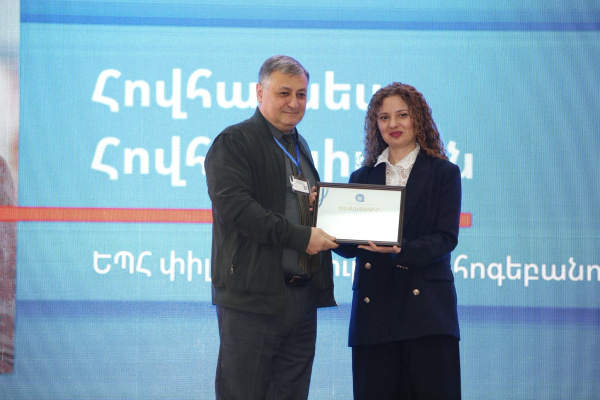
– What responsibility does receiving YSU's Teaching Excellence Award place on you?
– Not to lower the bar I have set and, as far as possible, to raise it.
– Which principles do you never compromise in the classroom?
– Respect for the classroom and the principle of valuing students' intellectual interests.
– How have you maintained your interest in teaching over the years?
– I do not particularly think about it. Probably the main factor is that I love my profession and what I do.
– How have modern technologies changed the teaching process?
– Computer technologies, smart boards, information technologies and networks, and AI tools have expanded — and continue to expand — the possibilities for both learners and educators immeasurably.
– What is your greatest achievement as a lecturer?
– My students from different years, their appreciation, respect and esteem. And my colleagues as well.
– In your view, what is a lecturer's most important mission at a university?
– To help shape knowledgeable and responsible members of society.
– If you could pass on just one value to students, what would it be?
– Love for people and homeland. That seems to make two — humanism and patriotism. But no, they actually have the same root.
One day with Hovhannes Hovhannisyan
A lecturer's working day is often seen as a sequence of classes, but in reality it is a complex combination of research, teaching, class preparation and human interaction. Hovhannisyan's day begins within this same multilayered reality, where every detail has its place and significance.
– Mr Hovhannisyan, how does a typical working day begin for you?
– By putting the materials I prepared the evening before into my bag along with my laptop, reviewing the day's schedule and hurrying to work. Then the exchange of greetings with my students and colleagues signals the start of the working day.
– What is the most difficult part of being a lecturer?
– Finding enough time for research and fully pursuing my professional interests.
– And the most enjoyable?
– Interacting with my students and discussing professional topics with my colleagues.
– When do you feel that the day has been successful?
– When I accomplish what I planned - and something more.
– Which moments of the day at the university do you enjoy most?
– Entering the classroom in the morning and walking through the university courtyard in the evening.
– What has never changed in your working routine?
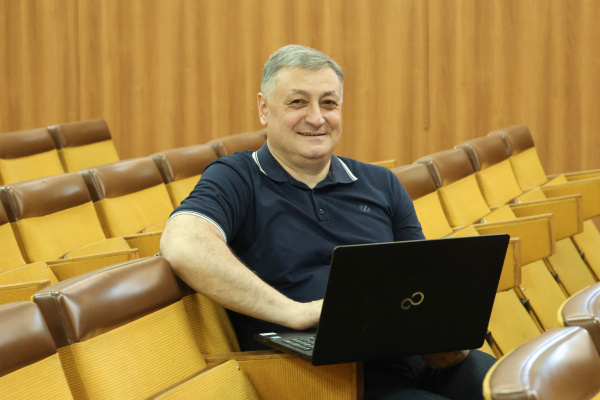
– The rhythm and how full the day is.
– How do you balance teaching, research and your personal life?
– There are, of course, times when I unintentionally devote more time and attention to one at the expense of the others. As a rule, however, these three areas are "forgiving" of one another and give each other energy.
– How do you relax or recharge after a working day?
– I like to relax at home with my family and meet close friends. From time to time, I also manage to attend art events.
– If you had to describe one of your days in three words, which would you choose?
– Effort, work, satisfaction.
Quick questions with Hovhannes Hovhannisyan
– Favourite topic to teach.
– Effective communication.
– Three words that describe you as a lecturer.
– Perhaps knowledgeable, respectful, engaging.
– Most important advice for students.
– Do not give in to difficulties, keep learning and do not become arrogant.
– Most important quality of a good lecturer.
– The breadth and depth of professional knowledge. Then, pedagogical qualities.
– Which question from a student makes you happiest?
– "How can I understand the question and master the topic?"
– Which word or phrase do you use most often during class?
– "Dear students."
– Favorite place at YSU.
– The area around the Main Building and the fountains.
– Which word best describes a student?
– Striving.
– A book you would recommend to students.
– Of course, first and foremost, textbooks and professional manuals. For further reading, for example, Immanuel Kant's "The Conflict of the Faculties".