Home
envelope
ՀայերենРусскийEnglish

Main Navigation (Eng)

  • Admission
    • Undergraduate admission
    • Master’s degree admission
    • Postgraduate admission
    • Foreign Students
    • Preparatory courses
    • Work Carried out with Applicants
    • YSU STEM High School
  • Education
    • Guide Book for First Year Students
    • Educational programs
    • Granting qualification of a pedagogue
    • Center for Academic Writing
    • Continuing education
    • Academic Calendar
    • Olympiad
  • Science
    • Open science
    • Conferences
    • Library
    • Grants
    • Publishing House
    • Doctoral Thesis Defence Councils
    • HRS4R
  • News and events
    • Events
    • Activities
    • News
    • Newsletter
    • Announcement
    • Photo gallery
    • Video gallery

Secondary Navigation (Eng)

  • About YSU
    • YSU Management
    • YSU Symbols
    • YSU International Cooperation
    • Quality assurance
    • YSU History Museum
    • Vacancies
    • FAQ
  • Structure
    • YSU Faculties and Educational Centers
      • Faculty of Geography and Geology
      • Faculty of Theology
      • Faculty of Oriental Studies
      • Faculty of European Languages and Communication
      • Faculty of Journalism
      • Faculty of Informatics and Applied Mathematics
      • Faculty of Law
      • Faculty of Biology
      • Faculty of Armenian Philology
      • Faculty of International Relations
      • Faculty of History
      • Institute of Physics
      • Faculty of Russian Philology
      • Faculty of Sociology
      • Faculty of Economics and Management
      • Faculty of Philosophy and Psychology
      • Faculty of Chemistry
      • Faculty of Mathematics and Mechanics
      • Pedagogy and Education Development Center
      • Center for European Studies
      • Institute of Pharmacy
      • Chair of Civil Defense
      • Chair of Physical Education and Sports
      • Information Technologies Educational and Research Center
    • Column Wrapper
      • YSU STEM High School
      • YSU Ijevan Branch
    • Scientific Centers and Laboratories
      • American Studies Center
      • Psychology Research Center
      • Research Laboratory of Applied Sociology
      • Center for Mathematical and Applied Research
      • Institute for Armenian Studies
      • Research Center for Chemistry
      • Research Institute of Biology
      • Research Institute of Physics
      • Research Center for the Institute of Pharmacy
    • Scientific and Educational Centers
      • Scientific and Educational Center for Control and Monitoring of the Quality of Medicines
      • Legal Clinic
      • Research Center-Library of Greek Studies
      • Russian Center
      • Center for Russian Studies
      • Distance Learning Laboratory of Sociology
    • Column Wrapper
      • Banner
    • Administrative Divisions of YSU
      • Academic Secretary
      • Center for Doctoral Education
      • General Division
      • YSU History Museum
      • Department of Energy System Operation
      • Financial Analysis Department
      • Human Resources Department
      • Center for Admissions and Affairs with Applicants
      • Vehicle Fleet
      • Business Incubator
      • Byurakan Industrial Practice Base
      • Medical Center
      • Science Policy Department
      • Procurement Planning Department
      • Dilijan Sports and Health Center
      • YSU Archive
      • Publishing House
      • Legal Service
      • Marketing Department
      • International Cooperation Office
      • Tsaghkadzor training and production base
      • Cultural Center
      • Fire Safety Service
      • Alumni and Career Center
      • Hankavan Industrial Practice Base
      • Accounting Department
      • Center for Quality Assurance
      • Department for Special Affairs
      • Guest House
      • Student Dormitory
      • Educational-Methodological Department
      • Marie and Sarkis Izmirlian Library
      • Center for Strategic Planning
      • Rectorate
      • Rector's Office
      • Department of Territory Improvement and Landscape Design
      • Information Technology Department
      • Department of Organization and Control of Economic Activities
  • Structure
  • Alumni and Career
    • Alumni Community
    • Career Center
    • Friends of YSU
  • Student life
    • YSU Student Scientific Society
    • YSU Student Council
    • Art and Culture
ՀայերենРусскийEnglish
envelope

Main Navigation (Eng)

  • Admission
    • Undergraduate admission
    • Master’s degree admission
    • Postgraduate admission
    • Foreign Students
    • Preparatory courses
    • Work Carried out with Applicants
    • YSU STEM High School
  • Education
    • Guide Book for First Year Students
    • Educational programs
    • Granting qualification of a pedagogue
    • Center for Academic Writing
    • Continuing education
    • Academic Calendar
    • Olympiad
  • Science
    • Open science
    • Conferences
    • Library
    • Grants
    • Publishing House
    • Doctoral Thesis Defence Councils
    • HRS4R
  • News and events
    • Events
    • Activities
    • News
    • Newsletter
    • Announcement
    • Photo gallery
    • Video gallery

Secondary Navigation (Eng)

  • About YSU
    • YSU Management
    • YSU Symbols
    • YSU International Cooperation
    • Quality assurance
    • YSU History Museum
    • Vacancies
    • FAQ
  • Structure
    • YSU Faculties and Educational Centers
      • Faculty of Geography and Geology
      • Faculty of Theology
      • Faculty of Oriental Studies
      • Faculty of European Languages and Communication
      • Faculty of Journalism
      • Faculty of Informatics and Applied Mathematics
      • Faculty of Law
      • Faculty of Biology
      • Faculty of Armenian Philology
      • Faculty of International Relations
      • Faculty of History
      • Institute of Physics
      • Faculty of Russian Philology
      • Faculty of Sociology
      • Faculty of Economics and Management
      • Faculty of Philosophy and Psychology
      • Faculty of Chemistry
      • Faculty of Mathematics and Mechanics
      • Pedagogy and Education Development Center
      • Center for European Studies
      • Institute of Pharmacy
      • Chair of Civil Defense
      • Chair of Physical Education and Sports
      • Information Technologies Educational and Research Center
    • Column Wrapper
      • YSU STEM High School
      • YSU Ijevan Branch
    • Scientific Centers and Laboratories
      • American Studies Center
      • Psychology Research Center
      • Research Laboratory of Applied Sociology
      • Center for Mathematical and Applied Research
      • Institute for Armenian Studies
      • Research Center for Chemistry
      • Research Institute of Biology
      • Research Institute of Physics
      • Research Center for the Institute of Pharmacy
    • Scientific and Educational Centers
      • Scientific and Educational Center for Control and Monitoring of the Quality of Medicines
      • Legal Clinic
      • Research Center-Library of Greek Studies
      • Russian Center
      • Center for Russian Studies
      • Distance Learning Laboratory of Sociology
    • Column Wrapper
      • Banner
    • Administrative Divisions of YSU
      • Academic Secretary
      • Center for Doctoral Education
      • General Division
      • YSU History Museum
      • Department of Energy System Operation
      • Financial Analysis Department
      • Human Resources Department
      • Center for Admissions and Affairs with Applicants
      • Vehicle Fleet
      • Business Incubator
      • Byurakan Industrial Practice Base
      • Medical Center
      • Science Policy Department
      • Procurement Planning Department
      • Dilijan Sports and Health Center
      • YSU Archive
      • Publishing House
      • Legal Service
      • Marketing Department
      • International Cooperation Office
      • Tsaghkadzor training and production base
      • Cultural Center
      • Fire Safety Service
      • Alumni and Career Center
      • Hankavan Industrial Practice Base
      • Accounting Department
      • Center for Quality Assurance
      • Department for Special Affairs
      • Guest House
      • Student Dormitory
      • Educational-Methodological Department
      • Marie and Sarkis Izmirlian Library
      • Center for Strategic Planning
      • Rectorate
      • Rector's Office
      • Department of Territory Improvement and Landscape Design
      • Information Technology Department
      • Department of Organization and Control of Economic Activities
  • Structure
  • Alumni and Career
    • Alumni Community
    • Career Center
    • Friends of YSU
  • Student life
    • YSU Student Scientific Society
    • YSU Student Council
    • Art and Culture
  1. Main
  2. News
  3. Nobel laureate Paul Krugman discusses changing global trade and its implications for small economies at YSU conference
October 14, 2026 | 11:11
Science
Conferences
International cooperation

Nobel laureate Paul Krugman discusses changing global trade and its implications for small economies at YSU conference

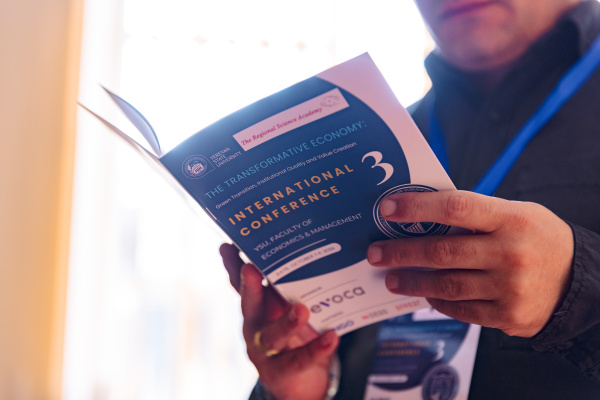
Nobel Prize-winning economist Paul Krugman delivered a virtual keynote address at the Third International Conference "Transformative Economy: Green Transition, Institutional Quality and Value Creation," held at Yerevan State University (YSU). He discussed changes in the global economy, emerging risks in international trade and opportunities for small economies, emphasizing that current shifts in international economic relations have less to do with the economic mechanisms of trade than with the purposes for which economic ties can be used.

Krugman's address and the subsequent question-and-answer session provided an opportunity to discuss current trends in international economic relations and countries' development prospects in a changing world. 

Economic interdependence as tool of influence

According to Krugman, current shifts in the global economy reflect not only the economic mechanisms of trade but also the purposes for which economic relationships can be used.

"Economic interdependence can be weaponized. Trade relationships can be used to achieve noneconomic objectives," the economist said, stressing that economic ties between countries can serve not only as a source of mutual benefit but also as instruments of political influence.

Global trade in changing environment

Krugman noted that the international trading system had long operated in an environment of relatively open markets and cooperation among major economic powers. That environment, however, is now changing.
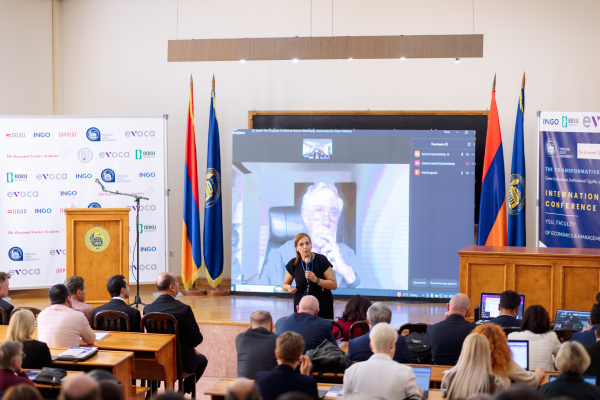
He emphasized that globalization should not be viewed as an inevitable consequence of technological progress. While deeper integration of the global economy once seemed natural and irreversible, recent developments suggest that the future of international trade depends heavily on political and economic cooperation between countries.

Under these circumstances, what matters is not only which markets countries can access but also how dependent they are on strategically important raw materials and supply chains.

To illustrate this point, Krugman discussed economic relations between the United States and China, emphasizing that their interdependence runs both ways. While the United States is an important market for China, China, in turn, plays a significant role in supplying rare earth elements essential to modern technological manufacturing.

Krugman explained that control over critical raw materials, energy, transport corridors or financial systems can become an important means of exerting influence in today's global economy.

At the same time, he noted that using economic dependence as a means of pressure has no lasting effect. When countries face such risks, they begin seeking alternatives by restructuring supply chains, developing domestic production capacity or reducing their dependence on particular resources.
What does this mean for small economies?

One of the central themes of Krugman's address was the future of small countries and economies in the changing global economic landscape.

According to Krugman, the success of small economies has depended heavily on an open global trading system. He cited Bangladesh as an example, noting that its economic development has relied substantially on exports and access to foreign markets.

During the question-and-answer session, Krugman discussed the broader patterns of development among small countries, while making clear that he was not offering a specific expert assessment of Armenia's economy. Nevertheless, he noted that one of the key lessons from international experience is that successful economic development has generally been associated with an outward-looking approach and integration into the global economy.

"The main lesson for every country is to try to become part of the global economy rather than limit itself to its domestic market," Krugman said.

He explained that countries should identify the sectors in which they can be competitive, build on those strengths and use them to gain access to wider markets.

Krugman also cautioned that this path has become more difficult. While international trade rules once provided a more predictable environment for rapid economic growth and industrialization, those assurances no longer exist.

Nevertheless, he stressed that global trade has not collapsed. It continues to function and even grow, meaning that countries still have opportunities to integrate into the global economy.
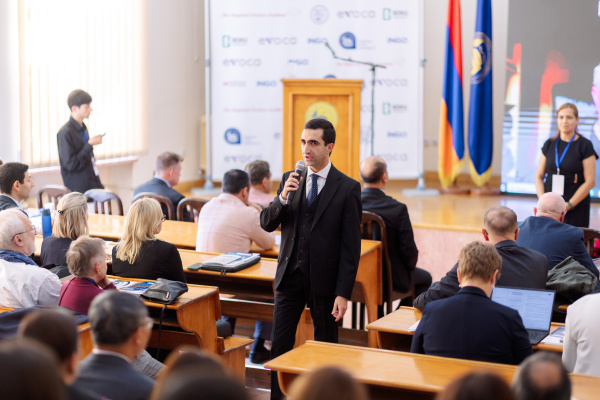
During the question-and-answer session, Karlen Khachatryan, Dean of the YSU Faculty of Economics and Management, asked Krugman whether the world was moving toward the formation of several major economic and political blocs in the long term, or whether the current profound changes and uncertainties would prove largely temporary, without fundamentally altering global relations.

"This question could be the subject of serious debate. What I can say with certainty is that we are not going back to the global economy and international trading system we had just a few years ago. We had gone through a process of building an international rules-based system, culminating in the establishment of the World Trade Organization. The WTO ruled on trade disputes between countries, and countries generally complied with those rulings. Today, however, we see that great powers are no longer willing to follow those rules in their trade policies. This means that smaller countries have a very strong incentive to reach agreements and seek the protection of one great power or another," Krugman said.

Krugman identified China, the United States and the European Union as major trading powers, while also pointing to other large economies, including India. However, he stressed that closer economic ties would not necessarily lead to the formation of rigid, opposing blocs. Countries, he said, would need to weigh a range of factors when determining their positions. 

In Krugman's view, countries will have to reconsider their choice of economic partners and decide which major centers of power they want to develop closer ties with. In many cases, these decisions will be shaped by existing trade relationships and geographical location. Economic considerations, however, will not always be decisive. Krugman pointed to Canada as an example. Given its trade ties and geographical position, Canada would naturally be expected to maintain close relations with the United States. Yet political developments suggest that the country is also seeking to strengthen its ties with Europe.

"We no longer live in the world of 2017"

Concluding his address, the Nobel laureate emphasized that international trade must now be viewed from several perspectives: as a source of economic benefits, a means of exerting influence and a potential source of conflict.

"We no longer live in the world of 2017. We must recognize that we are in a different, more tense international environment, and we need to think seriously about these pressures," Krugman said.

At the same time, he acknowledged the possibility of future cooperation, noting that although the international system may not return to its previous form, a shift toward a less confrontational and more cooperative environment remains possible.

Paul Krugman was among the keynote speakers at the Third International Conference "Transformative Economy: Green Transition, Institutional Quality and Value Creation," held at Yerevan State University. The event brought together economists, researchers, practitioners and policymakers from around the world to discuss the green transition, institutional quality, economic and digital transformations, and contemporary approaches to value creation.
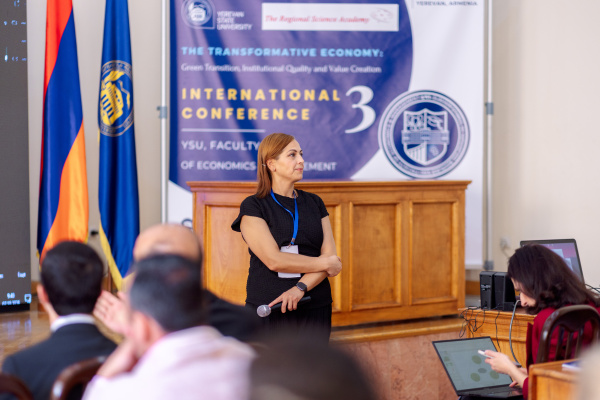
The session was moderated by Karima Kourtit, Executive Director of The Regional Science Academy (TRSA), from the Netherlands. Conference participants also joined the discussion with questions, while students had the opportunity to ask Krugman questions and speak with him directly.

The conference was jointly organized by the YSU Faculty of Economics and Management and The Regional Science Academy.

Welcoming the renowned economist, Karlen Khachatryan, Dean of the YSU Faculty of Economics and Management, thanked him for accepting the invitation to participate in the conference for the second consecutive year. The dean also expressed hope that Professor Krugman would visit Armenia in the near future and participate in the fourth edition of the faculty's international conference.


ShareFacebookTelegram

Latest News

Nobel laureate Paul Krugman discusses changing global trade and its implications for small economies at YSU conference

14.10.2026

How can women's participation and inclusion be promoted in Armenian academia?

13.10.2026

26th Italian Language Week opens at YSU, bringing together language, creativity and tradition

13.10.2026
Show All

Announcement

YSU Business Incubator announces applications for innovative program

10.15.2026 - 10.30.2026

Biodiversity of Fungi in Armenia: Advancing Towards COP17 — Autumn School and Intensive Workshop

10.12.2026 - 10.16.2026

From Conflict Analysis to Mediation: New Certificate Program Launches at YSU

10.08.2026
Show All

Արագ հասանելիություն

  • Intranet
  • E-learning
  • Mulberry
  • Online applications
  • Phone book
  • Registrar
  • Documentation

Footer(ENG)

  • Main pages
    • Admission
    • Education
    • Science
    • News
  • Information
    • Frequently asked Questions
    • Vacancies
    • Search for educational programs
    • For the applicants
    • For the students
  • About YSU
    • YSU management
    • YSU symbols
© Yerevan state university 2026
Address: Republic of Armenia, Yerevan, 0025, 1 Alex Manoogian (+37460) 710000 info@ysu.am