Home
envelope
ՀայերենРусскийEnglish

Main Navigation (Eng)

  • Admission
    • Undergraduate admission
    • Master’s degree admission
    • Postgraduate admission
    • Foreign Students
    • Preparatory courses
    • Work Carried out with Applicants
    • YSU STEM High School
  • Education
    • Guide Book for First Year Students
    • Educational programs
    • Granting qualification of a pedagogue
    • Center for Academic Writing
    • Continuing education
    • Academic Calendar
    • Olympiad
  • Science
    • Open science
    • Conferences
    • Library
    • Grants
    • Publishing House
    • Doctoral Thesis Defence Councils
    • HRS4R
  • News and events
    • Events
    • Activities
    • News
    • Newsletter
    • Announcement
    • Photo gallery
    • Video gallery

Secondary Navigation (Eng)

  • About YSU
    • YSU Management
    • YSU Symbols
    • YSU International Cooperation
    • Quality assurance
    • YSU History Museum
    • Vacancies
    • FAQ
  • Structure
    • YSU Faculties and Educational Centers
      • Faculty of Geography and Geology
      • Faculty of Theology
      • Faculty of Oriental Studies
      • Faculty of European Languages and Communication
      • Faculty of Journalism
      • Faculty of Informatics and Applied Mathematics
      • Faculty of Law
      • Faculty of Biology
      • Faculty of Armenian Philology
      • Faculty of International Relations
      • Faculty of History
      • Institute of Physics
      • Faculty of Russian Philology
      • Faculty of Sociology
      • Faculty of Economics and Management
      • Faculty of Philosophy and Psychology
      • Faculty of Chemistry
      • Faculty of Mathematics and Mechanics
      • Pedagogy and Education Development Center
      • Center for European Studies
      • Institute of Pharmacy
      • Chair of Civil Defense
      • Chair of Physical Education and Sports
      • Information Technologies Educational and Research Center
    • Column Wrapper
      • YSU STEM High School
      • YSU Ijevan Branch
    • Scientific Centers and Laboratories
      • American Studies Center
      • Psychology Research Center
      • Research Laboratory of Applied Sociology
      • Center for Mathematical and Applied Research
      • Institute for Armenian Studies
      • Research Center for Chemistry
      • Research Institute of Biology
      • Research Institute of Physics
      • Research Center for the Institute of Pharmacy
    • Scientific and Educational Centers
      • Scientific and Educational Center for Control and Monitoring of the Quality of Medicines
      • Legal Clinic
      • Research Center-Library of Greek Studies
      • Russian Center
      • Center for Russian Studies
      • Distance Learning Laboratory of Sociology
    • Column Wrapper
      • Banner
    • Administrative Divisions of YSU
      • Academic Secretary
      • Center for Doctoral Education
      • General Division
      • YSU History Museum
      • Department of Energy System Operation
      • Financial Analysis Department
      • Human Resources Department
      • Center for Admissions and Affairs with Applicants
      • Vehicle Fleet
      • Business Incubator
      • Byurakan Industrial Practice Base
      • Medical Center
      • Science Policy Department
      • Procurement Planning Department
      • Dilijan Sports and Health Center
      • YSU Archive
      • Publishing House
      • Legal Service
      • Marketing Department
      • International Cooperation Office
      • Tsaghkadzor training and production base
      • Cultural Center
      • Fire Safety Service
      • Alumni and Career Center
      • Hankavan Industrial Practice Base
      • Accounting Department
      • Center for Quality Assurance
      • Department for Special Affairs
      • Guest House
      • Student Dormitory
      • Educational-Methodological Department
      • Marie and Sarkis Izmirlian Library
      • Center for Strategic Planning
      • Rectorate
      • Rector's Office
      • Department of Territory Improvement and Landscape Design
      • Information Technology Department
      • Department of Organization and Control of Economic Activities
  • Structure
  • Alumni and Career
    • Alumni Community
    • Career Center
    • Friends of YSU
  • Student life
    • YSU Student Scientific Society
    • YSU Student Council
    • Art and Culture
ՀայերենРусскийEnglish
envelope

Main Navigation (Eng)

  • Admission
    • Undergraduate admission
    • Master’s degree admission
    • Postgraduate admission
    • Foreign Students
    • Preparatory courses
    • Work Carried out with Applicants
    • YSU STEM High School
  • Education
    • Guide Book for First Year Students
    • Educational programs
    • Granting qualification of a pedagogue
    • Center for Academic Writing
    • Continuing education
    • Academic Calendar
    • Olympiad
  • Science
    • Open science
    • Conferences
    • Library
    • Grants
    • Publishing House
    • Doctoral Thesis Defence Councils
    • HRS4R
  • News and events
    • Events
    • Activities
    • News
    • Newsletter
    • Announcement
    • Photo gallery
    • Video gallery

Secondary Navigation (Eng)

  • About YSU
    • YSU Management
    • YSU Symbols
    • YSU International Cooperation
    • Quality assurance
    • YSU History Museum
    • Vacancies
    • FAQ
  • Structure
    • YSU Faculties and Educational Centers
      • Faculty of Geography and Geology
      • Faculty of Theology
      • Faculty of Oriental Studies
      • Faculty of European Languages and Communication
      • Faculty of Journalism
      • Faculty of Informatics and Applied Mathematics
      • Faculty of Law
      • Faculty of Biology
      • Faculty of Armenian Philology
      • Faculty of International Relations
      • Faculty of History
      • Institute of Physics
      • Faculty of Russian Philology
      • Faculty of Sociology
      • Faculty of Economics and Management
      • Faculty of Philosophy and Psychology
      • Faculty of Chemistry
      • Faculty of Mathematics and Mechanics
      • Pedagogy and Education Development Center
      • Center for European Studies
      • Institute of Pharmacy
      • Chair of Civil Defense
      • Chair of Physical Education and Sports
      • Information Technologies Educational and Research Center
    • Column Wrapper
      • YSU STEM High School
      • YSU Ijevan Branch
    • Scientific Centers and Laboratories
      • American Studies Center
      • Psychology Research Center
      • Research Laboratory of Applied Sociology
      • Center for Mathematical and Applied Research
      • Institute for Armenian Studies
      • Research Center for Chemistry
      • Research Institute of Biology
      • Research Institute of Physics
      • Research Center for the Institute of Pharmacy
    • Scientific and Educational Centers
      • Scientific and Educational Center for Control and Monitoring of the Quality of Medicines
      • Legal Clinic
      • Research Center-Library of Greek Studies
      • Russian Center
      • Center for Russian Studies
      • Distance Learning Laboratory of Sociology
    • Column Wrapper
      • Banner
    • Administrative Divisions of YSU
      • Academic Secretary
      • Center for Doctoral Education
      • General Division
      • YSU History Museum
      • Department of Energy System Operation
      • Financial Analysis Department
      • Human Resources Department
      • Center for Admissions and Affairs with Applicants
      • Vehicle Fleet
      • Business Incubator
      • Byurakan Industrial Practice Base
      • Medical Center
      • Science Policy Department
      • Procurement Planning Department
      • Dilijan Sports and Health Center
      • YSU Archive
      • Publishing House
      • Legal Service
      • Marketing Department
      • International Cooperation Office
      • Tsaghkadzor training and production base
      • Cultural Center
      • Fire Safety Service
      • Alumni and Career Center
      • Hankavan Industrial Practice Base
      • Accounting Department
      • Center for Quality Assurance
      • Department for Special Affairs
      • Guest House
      • Student Dormitory
      • Educational-Methodological Department
      • Marie and Sarkis Izmirlian Library
      • Center for Strategic Planning
      • Rectorate
      • Rector's Office
      • Department of Territory Improvement and Landscape Design
      • Information Technology Department
      • Department of Organization and Control of Economic Activities
  • Structure
  • Alumni and Career
    • Alumni Community
    • Career Center
    • Friends of YSU
  • Student life
    • YSU Student Scientific Society
    • YSU Student Council
    • Art and Culture
  1. Main
  2. News
  3. How can women's participation and inclusion be promoted in Armenian academia?
October 13, 2026 | 15:22
Science
Research
Lifelong learning
How can women's participation and inclusion be promoted in Armenian academia?

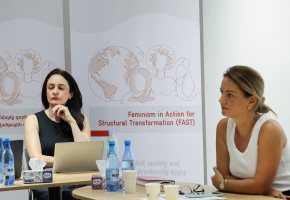
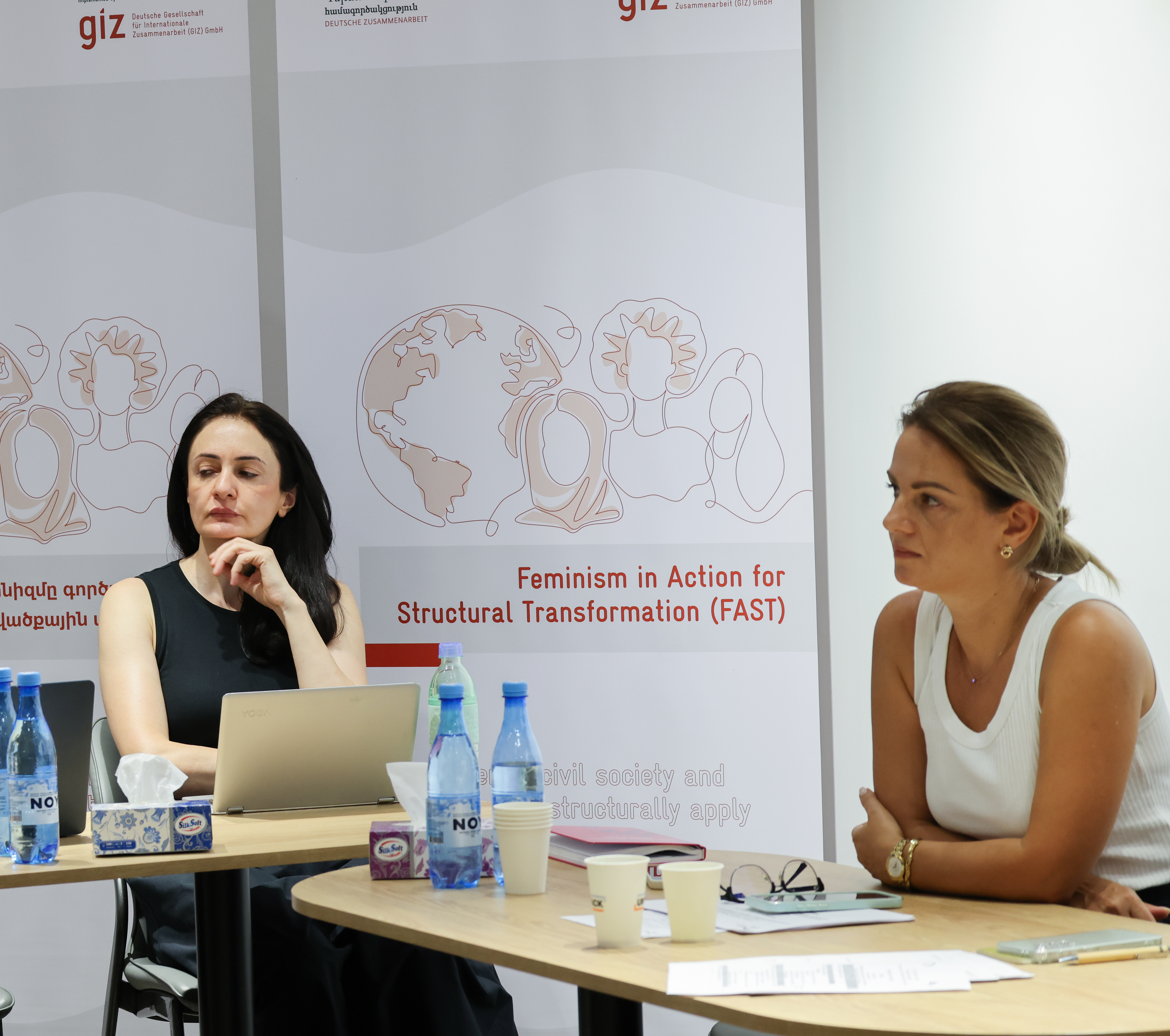
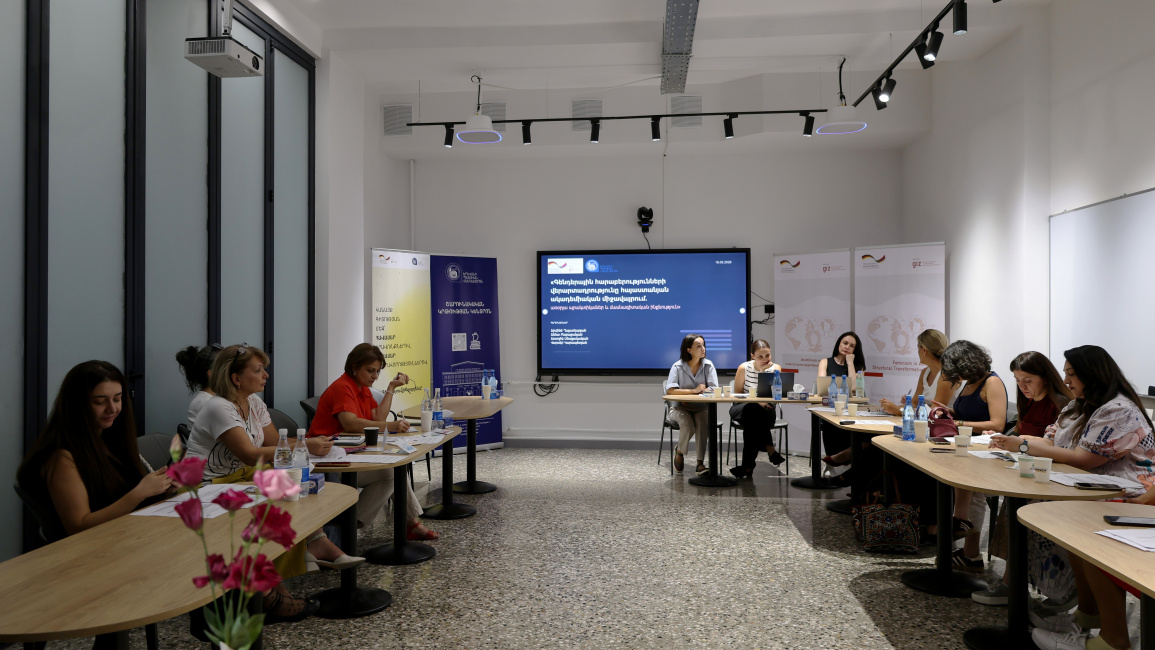
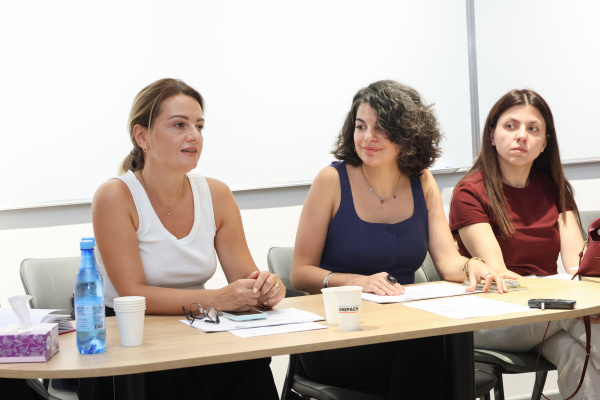
The Yerevan State University (YSU) Continuing Education Center hosted a roundtable discussion to review and validate the findings of a qualitative study titled "Reproduction of Gender Relations in Armenian Academia: Everyday Practices and Professional Identity."

YSU organized the discussion as part of the Feminism in Action for Structural Transformation (FAST) and Women's Empowerment for Wellbeing (WoW) programs, implemented by the German Agency for International Cooperation (GIZ) with funding from the German government.

The study examines women's career paths, advancement opportunities and everyday experiences in Armenia's scientific and academic communities. It also explores the systemic and gender-related factors that may affect their entry into science, their ability to remain in the profession and their career development. 
The study addresses a central question: How are gender relations reproduced in everyday practices and interactions in Armenian academia, and how do they relate to women scientists' professional opportunities, career paths and professional identity? The research is based on the premise that women's numerical representation in science does not in itself guarantee equal access to career advancement, leadership positions, recognition or resources.

The roundtable aimed to present the study's key findings and policy recommendations, discuss them with representatives of the field and gather expert feedback before finalizing the recommendations.


From research findings to policy recommendations

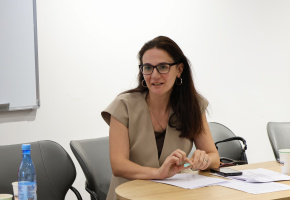
Lusine Kharatyan, Director of the YSU Continuing Education Center, said the program being carried out through cooperation between YSU and GIZ aims to encourage greater participation of women and girls in science.
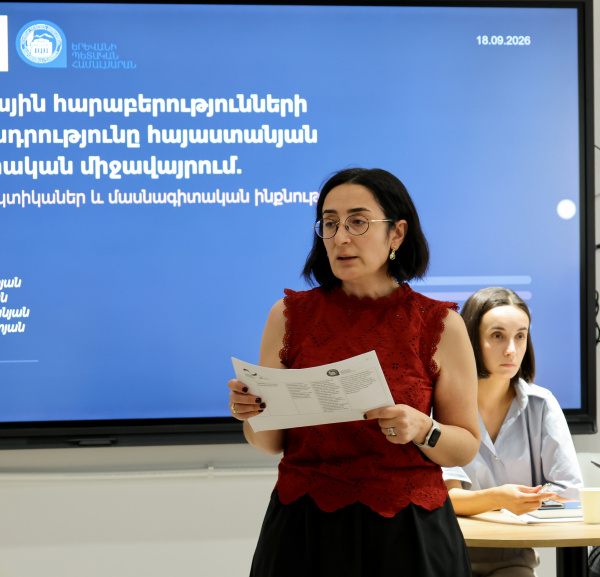
Several initiatives have been undertaken as part of the program, including events marking the International Day of Women and Girls in Science, a spring school, regional discussions and a media campaign.

"Today, we are holding a validation meeting as part of this research. We want to hear about the team's main findings and recommendations and gather your feedback. This is very important for finalizing the research findings and recommendations so that they can later be presented to the Armenian government," Kharatyan said.

She added that another component of the program involves plans to write a popular science book about women in science in Armenia, particularly aimed at sparking schoolchildren's interest in science.


Women's representation in science does not tell the whole story

According to program advisor Karine Simonyan, such initiatives play an important role in integrating gender equality principles into the development and implementation of policies and actions across different fields, including science. 
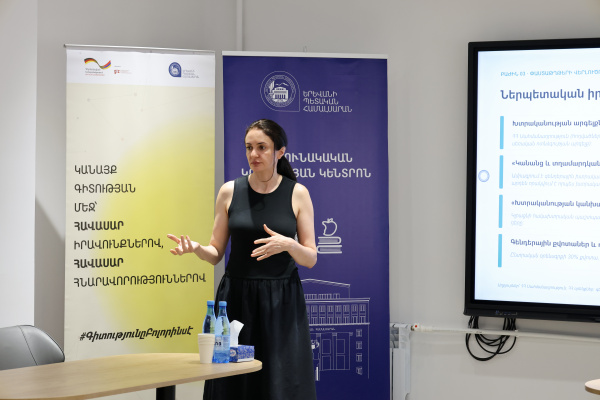
"This study is important because it examines equal opportunities not only in terms of the number of women involved, but also at the systemic and structural levels. Women's participation in science is relatively high in Armenia, but numerical representation alone does not amount to equality," she said. 

Simonyan emphasized the importance of understanding the roles women play in academia, their opportunities for professional advancement and leadership positions, and the gender stereotypes that may hinder the educational and professional development of women and girls.

"I believe this study will help us discuss these issues in greater depth and consider not only representation, but also the real and lasting changes we can make in this field," the program consultant said. 

Anahit Simonyan, policy advisor for the global FAST program, described the study as an important step toward more substantive, research-based discussions of gender relations and the challenges associated with them.
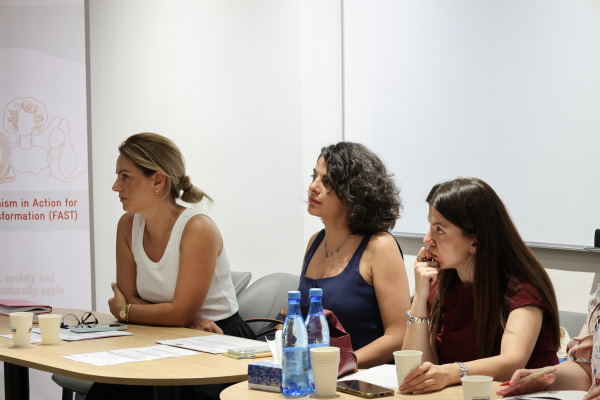
"We need to put the various problems arising from the perpetuation of gender relations on the policy agenda and address them as quickly as possible. The longer these problems remain unaddressed, the more deeply entrenched and systemic they become," Anahit Simonyan emphasized. 

She said the study was also important because it provided an opportunity to move beyond general observations and toward evidence-based analysis.

Anahit Simonyan also highlighted the potential to develop a policy document based on the research findings. She noted that the involvement of a member of the research team in higher-level policy decision-making could provide additional support for putting the recommendations into practice. 

"We now have a stronger foundation for implementing these recommendations," she said.


Research methodology and three main areas of focus

The study was conducted by a team of specialists from different fields, including researchers and a lawyer.

The research methodology covered several interconnected areas. The first stage involved a desk review of statistical data, the distribution of women and men across the scientific system, funding and institutional opportunities, and broader social factors related to work and family life, such as the effects of paid and unpaid work, overall workloads, marital status and having children.

The team also examined international conventions, Armenia's legal and legislative framework, national strategies, and the strategies and policies of universities and research institutions, focusing on how they address gender-related issues.
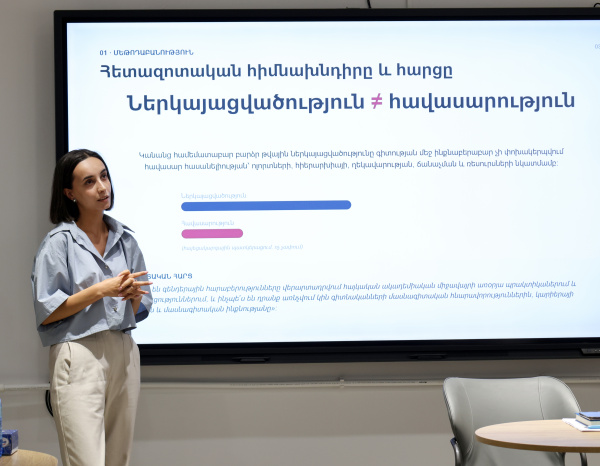
A key component of the research involved in-depth interviews with women scientists from different disciplines, age groups and professional positions. Through these interviews, the researchers sought to understand women's career choices, their paths into science, career development, the challenges they face and how they perceive their own professional experiences.

"We are trying to answer questions about how women chose their professions, how they entered the field, how their scientific careers are progressing and what plans they have. We have analyzed the data collected and begun developing a set of policy recommendations for different institutions," said Armine Ghalamdaryan, a lecturer at the YSU Faculty of Sociology and a member of the research team.

The recommendations are expected to address several levels: the system as a whole, state and individual sectors, and universities and research organizations at the institutional level.


Figures highlight women's participation and challenges in career advancement

The data presented showed that women's overall representation in science is not reflected in the positions they hold.

"There is a common perception that there are not many women in science, but that is not actually the case. About 53% of scientists or researchers are women. However, we need to understand where they work and what positions they hold," Ghalamdaryan said while presenting the research findings.

Women's participation also varies considerably across scientific disciplines. It is higher in biology, while significantly lower in physics and mathematics.

However, one of the central issues examined in the study is not only women's participation in science but also their opportunities for career advancement.

"Most importantly, we also examined the positions women hold. Women work across different sectors. They make up the majority of employees in the public sector, account for roughly half of all employed people and represent about half of scientists. Yet they are significantly underrepresented in leadership positions across all sectors, including public authorities, regional and local government bodies, among employers and in business, as well as in the leadership of universities and research institutions. The higher the position in the hierarchy, the fewer women there are," the researcher emphasized.

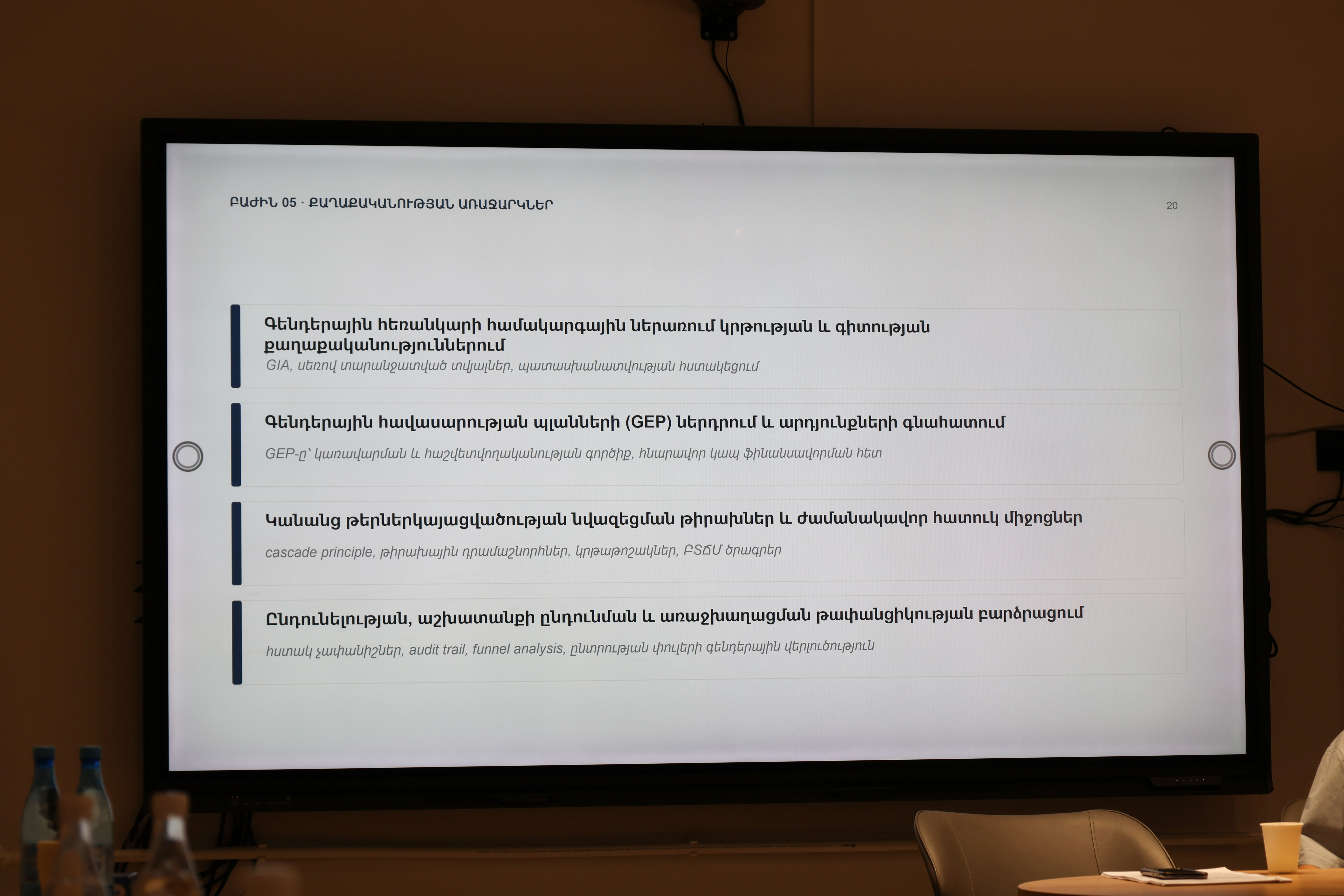
According to the data presented, women account for approximately 50% of doctoral students and a similar proportion of those holding Candidate of Sciences degrees. However, they represent only 24% of those holding Doctor of Sciences degrees.

The findings therefore raise questions not only about women's participation in science but also about their opportunities for advancement at subsequent stages of their careers.


Everyday practices reveal systemic challenges

Astghik Mnatsakanyan, Director of the YSU Center for Strategic Planning and a member of the research team, said one of the study's key objectives was to identify, through everyday practices, the barriers that may affect women's entry into science, their ability to remain in the field and their career advancement.
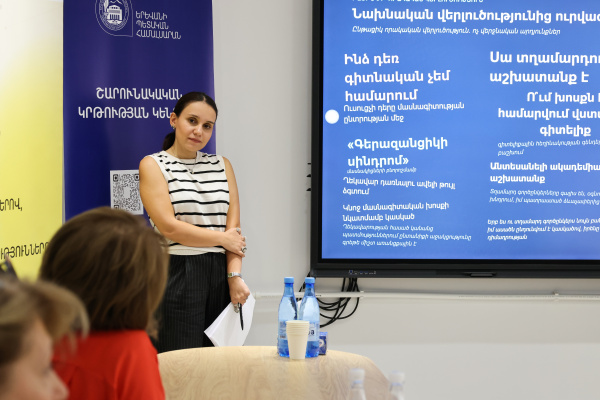
"Our goal was to combine qualitative and quantitative methods to examine the challenges in the field and develop policy recommendations based on the findings. Documents, strategies, programs and laws are often adopted but remain on paper. We also aim to identify, through women scientists' everyday practices, gender stereotypes that often go unrecognized as such," she emphasized.

Mnatsakanyan also stressed the importance of understanding the career paths women scientists have followed, the changes they expect in the scientific environment and the mechanisms that could help bring about those changes.


Study leads to 12 policy recommendations 

A distinguishing feature of the roundtable was that the research team presented not only its findings but also the policy recommendations developed on the basis of those findings.

The recommendations address changes at various levels, ranging from systemic and institutional solutions to specific targeted measures.
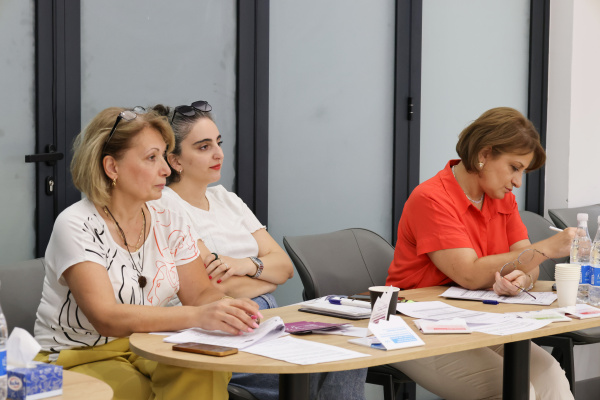
"At the roundtable, we presented the main findings of our research, including those from the desk review, document analysis and qualitative research that have been analyzed and are available at this stage. Based on these findings, we have developed 12 policy recommendations, which we will discuss and validate with participants to assess their practical applicability, incorporate additional input and refine them," Mnatsakanyan added.

The discussion focused primarily on the study's preliminary findings, the data used and the analytical framework.

Participants suggested examining additional statistical and administrative data, analyzing certain indicators in greater detail or from different perspectives, and including further legal, strategic and institutional documents in the document review. 

They also recommended placing certain findings in a broader context and, for some topics, drawing clearer distinctions between numerical representation, career transitions and potential systemic causes.

During the discussion, participants had an opportunity to assess the feasibility of the recommendations, provide additional feedback and identify areas for further improvement of the research findings and recommendations.

The study's final findings and a comprehensive package of policy recommendations are expected to be developed during the next stages of the program.

Meri Soghoyan
  • Download
  • Download
  • Download
    ShareFacebookTelegram

    Latest News

    Ինչպե՞ս չափել բուհերի գործունեության արդյունավետությունը և բարելավել կրթության որակը․ ԵՊՀ-ում ամփոփվել են KPI4HE ծրագրի...

    02.11.2026

    Մեկ դար անց՝ Զապել Եսայանի գաղափարից դեպի նրա հիշատակը հավերժացնող արձան․ ԵՊՀ-ում ամփոփվել է մրցույթը

    02.11.2026

    Panel discussion, diplomatic game and educational quest: YSU SSS initiatives at COP17

    30.10.2026
    Show All

    Announcement

    ՅՈՒՆԵՍԿՕ–Ալ Ֆոզանի երիտասարդ գիտնականների միջազգային մրցանակի թեկնածուների առաջադրման հայտերի ընդունելություն

    10.29.2026 - 11.30.2026

    «Էրազմուս+» ծրագրի միջազգային կրեդիտային շարժունություն. Բոլոնիայի համալսարան, Իտալիա

    10.29.2026 - 11.11.2026

    «Էրազմուս+» ծրագրի միջազգային կրեդիտային շարժունություն. Վալենսիայի պոլիտեխնիկական համալսարան, Իսպանիա

    10.29.2026 - 11.11.2026
    Show All

    Արագ հասանելիություն

    • Intranet
    • E-learning
    • Mulberry
    • Online applications
    • Phone book
    • Registrar
    • Documentation

    Footer(ENG)

    • Main pages
      • Admission
      • Education
      • Science
      • News
    • Information
      • Frequently asked Questions
      • Vacancies
      • Search for educational programs
      • For the applicants
      • For the students
    • About YSU
      • YSU management
      • YSU symbols
    © Yerevan state university 2026
    Address: Republic of Armenia, Yerevan, 0025, 1 Alex Manoogian (+37460) 710000 info@ysu.am