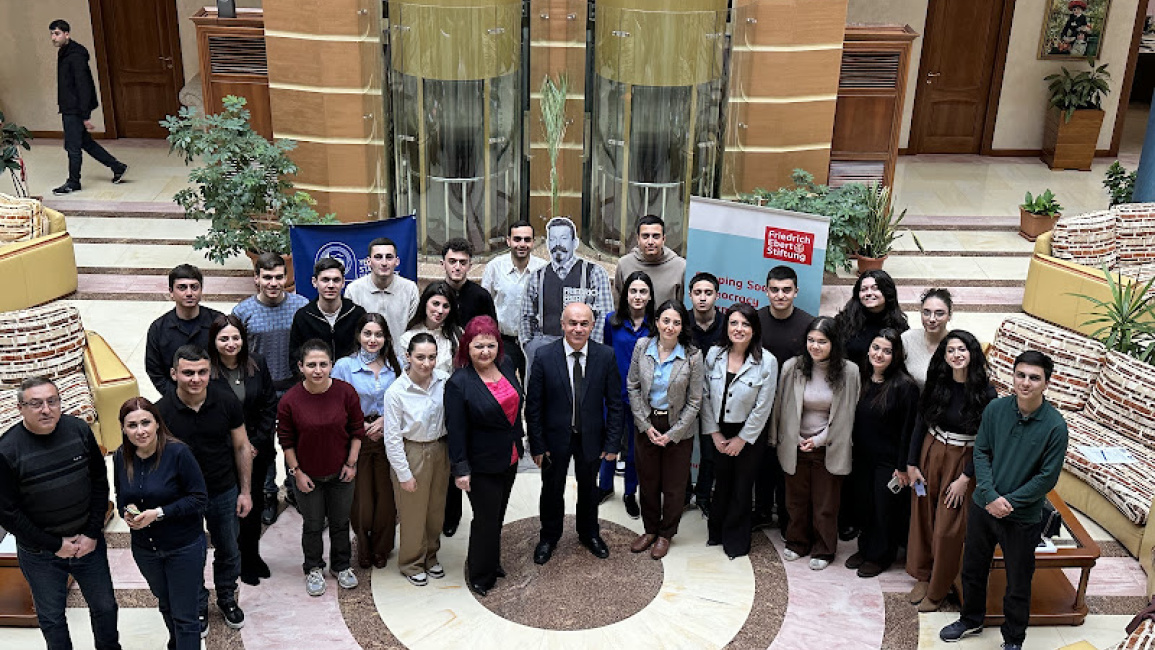
On April 11, the first phase of a four-module course titled "The South Caucasus and Core Principles of EU Policy and Decision-Making" was officially launched in Tsaghkadzor.
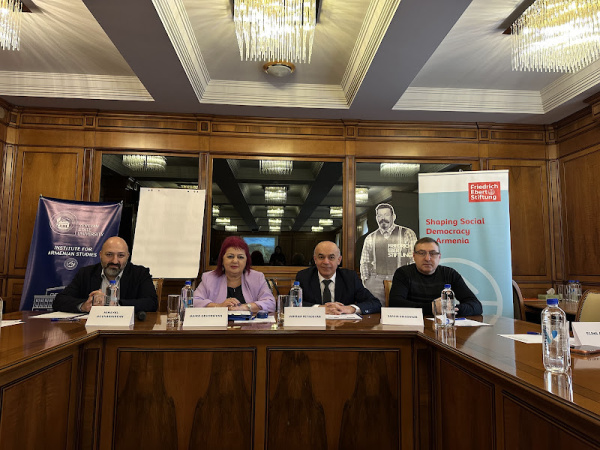
The long-established program has been implemented through close cooperation between the YSU Institute for Armenian Studies and the Armenia office of the Friedrich Ebert Foundation. Now in its fourth edition, the initiative attracted an unprecedented number of applicants this year—around 360 in total—of whom the 30 best ones were selected. It should be noted that the initial maximum number of participants had been set at 25.
This year's program stood out for its broader representation of universities and academic disciplines. Participants came from Yerevan State University, Brusov State University, the National University of Architecture and Construction of Armenia, the American University of Armenia, the Khachatur Abovian Armenian State Pedagogical University, Shirak State University, the Russian-Armenian University, and the National Archives of the Republic of Armenia. The selected participants from Yerevan State University represented various academic and research units, including institutes and faculties, in fields such as Armenian studies, international relations, political science, law, oriental studies, history, journalism, cultural studies, and related fields.
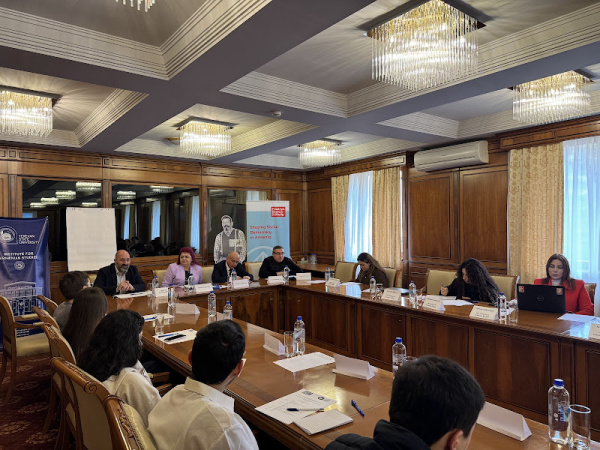
The opening ceremony featured remarks by the Chair of the Organizing Committee and Director of the YSU Institute for Armenian Studies, Doctor of Historical Sciences Vahram Petrosyan, who noted that the program had generated significant interest even at the announcement stage. He emphasized that the selection process was highly competitive and responsible, as only the strongest candidates were chosen from a large pool of applicants. The selected participants successfully passed both the preliminary and interview stages. Petrosyan particularly highlighted the relevance of the course topics, stressing that non-formal education models of this kind remain a priority for both the Institute for Armenian Studies and the Friedrich Ebert Foundation, as reflected in their ongoing cooperation. He also noted that the course is considered one of the most successful projects implemented by the Friedrich Ebert Foundation in the South Caucasus. In his remarks, he underlined the importance of participants adhering to the program's code of ethics, emphasizing its role in both academic settings and professional practice.
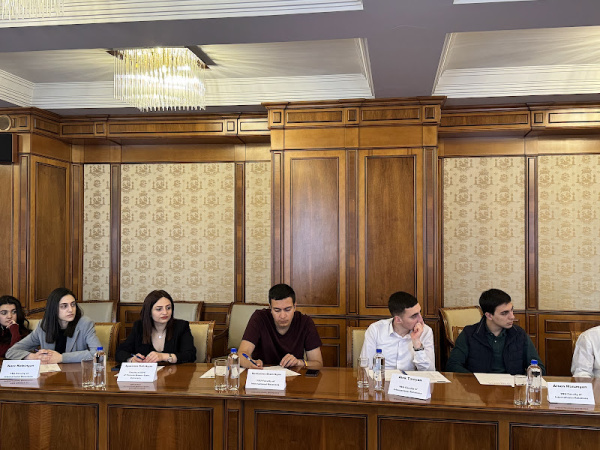
The YSU Vice-Rector for International Cooperation, Development, and Innovation, Doctor of Philology Mikayel Hovhannisyan, also delivered a welcoming address. He highly praised the initiative of the Institute for Armenian Studies and the successful implementation of the project within the framework of YSU's strategic development and the advancement of Armenian Studies. Congratulating both organizers and participants, he noted that such formats not only provide professional knowledge but also help young people explore both their identity and the world through the lens of Armenian Studies, thereby contributing to the university's overall mission. He also expressed gratitude to the Friedrich Ebert Foundation for its long-standing support of YSU infrastructure, both materially and in terms of values.
In her welcoming address, Head of the Friedrich Ebert Foundation's Armenia Office Naira Gevorgyan presented a brief overview of the foundation's history, the development trajectory, and current activities. Emphasizing the role of youth in shaping Armenia's future, she outlined the foundation's strategic priorities, including the development of democracy, strengthening of political institutions, and media development. Particular emphasis was placed on issues of security, social justice, and economic stability. Gevorgyan highly valued the effective and long-standing cooperation with the YSU Institute for Armenian Studies and stressed the importance of its continuity.
Sargis Grigoryan, Head of the Research Department of Armenian-Kurdish Relations at the Institute for Armenian Studies and a member of the organizing committee, also delivered remarks. He stressed the importance of active and responsible engagement by participants, urging them to demonstrate maximum attentiveness and initiative throughout the course. He noted that each lecture offers an opportunity to gain valuable knowledge and engage with experts from various fields, which may play a significant role in future professional development.
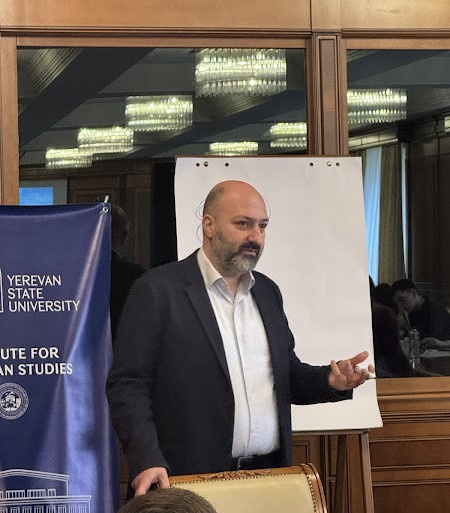
The opening lecture, titled "Key Phases of EU Engagement in the South Caucasus and Armenia: Chronology of EU–Armenia Relations," delivered by Vice-Rector Mikayel Hovhannisyan, stood out for its depth, analytical rigor, and topical relevance. He addressed the dynamics and stages of EU–Armenia relations, the legal and treaty framework, future prospects, EU diplomacy and decision-making mechanisms, as well as the influence of global and regional actors in the South Caucasus. Drawing on extensive experience in cooperation with Western foundations, including European ones, the lecture combined theoretical insight with practical relevance and innovative approaches.
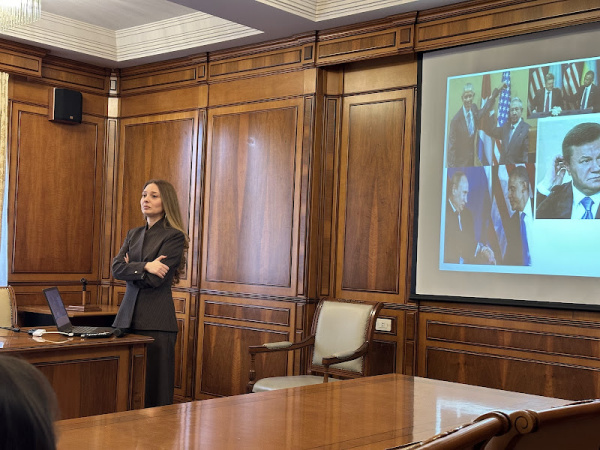
A lecture titled "Peculiarities of Political Image Formation" was delivered by YSU Vice-Rector for Academic Affairs, Associate Professor of Psychological Sciences Elina Asriyan. The session was important for understanding the interconnection between political communication and public perception, as well as the role of image-building in contemporary political processes. Demonstrating high professional mastery in both content delivery and teaching methodology, the lecturer ensured active engagement from the audience. Combining theoretical frameworks with practical examples, she outlined the key components and trends in the formation and development of political image, as well as mechanisms of public perception.
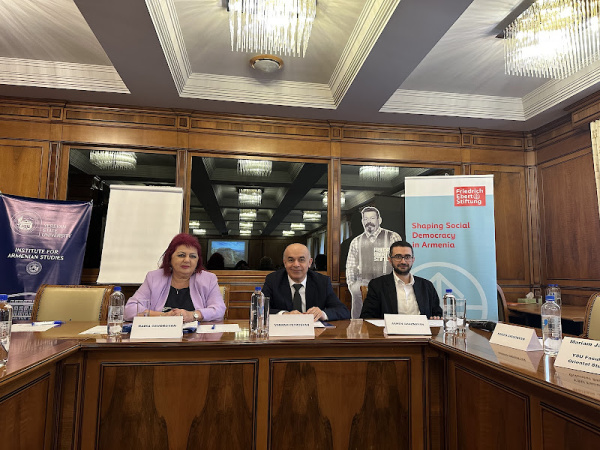
The third speaker of the day, Deputy Minister of Internal Affairs of the Republic of Armenia Armen Ghazaryan, presented on "The Dynamics of Migration and Internal Security Reforms from the Perspective of European Values." The lecture. grounded in scientific analysis and presented in clear and comprehensible terms, included an active question-and-answer session addressing the definition of migration, its main aspects, international experience, and patterns of population inflow and outflow across different periods.
Special attention was paid to the development, consolidation, and modernization of relevant state institutions, achievements in priority areas, and mechanisms for adapting migration management systems to contemporary global challenges.
On April 12, the second day of the course, Spokesperson of the Ministry of Foreign Affairs of the Republic of Armenia Ani Badalyan delivered a lecture titled "Foreign Policy Priorities, Achievements, and Opportunities of Armenia." The session was conducted in a briefing format on key directions of Armenia's foreign policy.
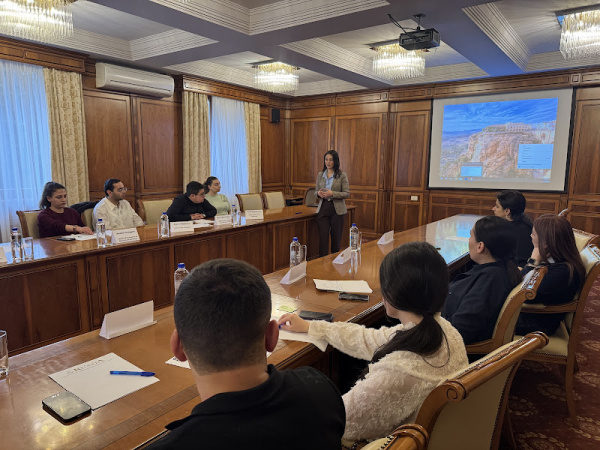
The speaker addressed Armenia's foreign policy achievements in the context of global, regional, and local actors and processes. She discussed bilateral relations with countries of strategic importance, Armenia's participation in international organizations, and the development of strategic partnerships and agendas. She also highlighted current foreign policy challenges and opportunities, emphasizing Armenia's approaches toward reconciliation with Azerbaijan and normalization with Turkey, as well as the country's positioning amid global and regional transformations.
The second speaker of the day was lecturer at the YSU Faculty of Journalism and well-known journalist from Shant TV, Kristine Alagulyan. Her lecture, "Peculiarities of Covering International Relations and Armenia's Foreign Policy in Mass Media," focused on the principles of news agenda formation and newsworthiness criteria in political journalism. She also presented the specifics of covering working, official, and state visits, as well as international summits. Particular emphasis was placed on journalistic tools and the importance of accurate and professional information dissemination. Drawing on extensive experience covering major international events, she provided both visible and behind-the-scenes aspects of political journalism.
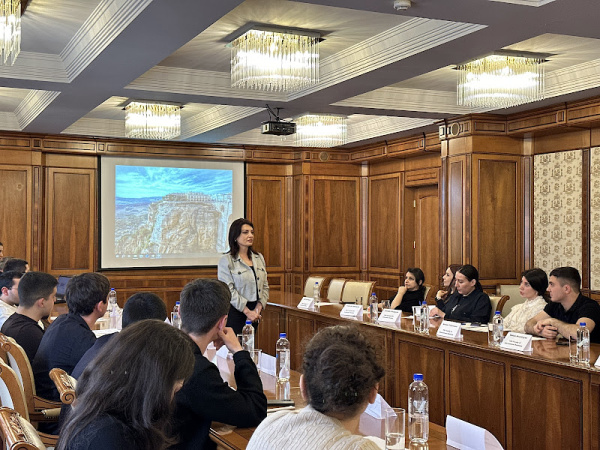
At the conclusion of the course, students were assigned targeted research projects with practical relevance for state institutions of the Republic of Armenia.
To date, around 200 students from approximately 15 universities across the country and 8 faculties of YSU have become beneficiaries of the program implemented by the YSU Institute for Armenian Studies in cooperation with the Friedrich Ebert Foundation. Notably, 22 graduates of the program have received job offers from various speakers, proving the effectiveness and practical value of the initiative. The fourth phase is no exception.
The course is conducted in a four-module format. The second phase is scheduled to take place from May 22–24 of this year in one of Armenia's provinces, with further details to be announced in the near future.
Upon completion of the program, participants will receive certificates.