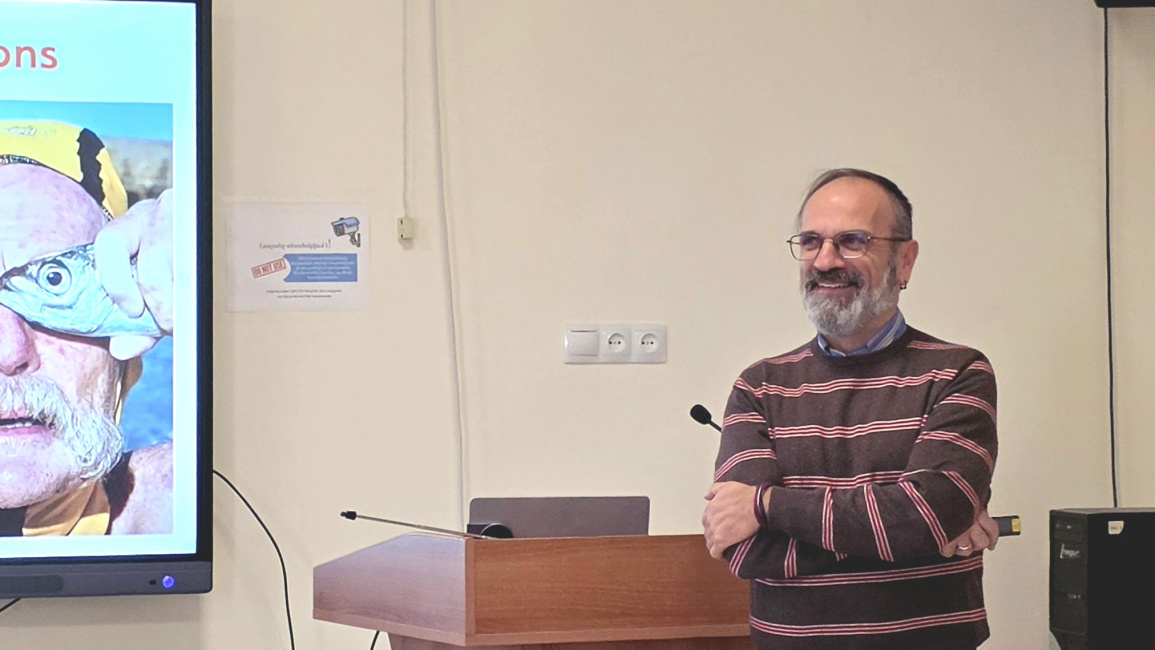
An academic meeting was held at the YSU Institute of Pharmacy with Professor Konstantinos Kormas from the University of Volos. Professor Kormas is a member of the Hellenic Society for Microbiology and a representative of FEMS (Federation of European Microbiological Societies), representing Greece in various international platforms.
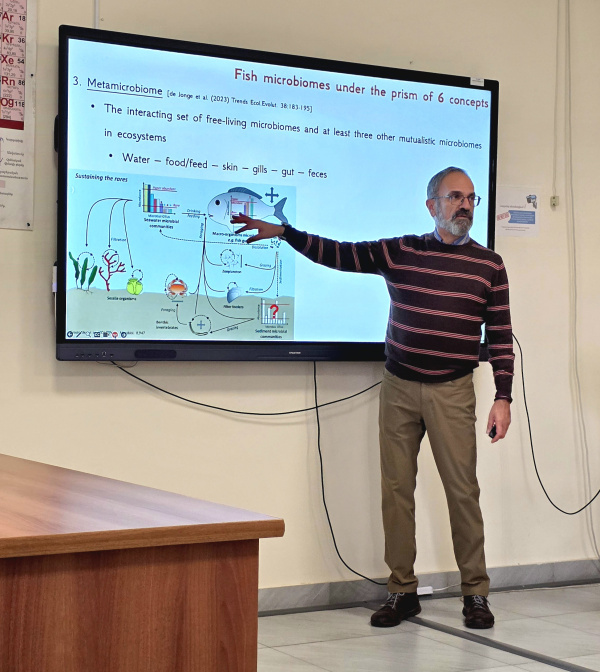
During the meeting, Professor Kormas delivered a comprehensive presentation highlighting the main directions of his research, ranging from the ecology of animal-microbe interactions to studies of fish microbiomes. He discussed how microbes shape animal environments and influence the host's immune responses, nutrition, behavior, and growth. Special attention was given to fish microbiomes, emphasizing that fish live in microbial-rich environments and that their microbiomes are sensitive to climatic changes.
The presentation introduced six conceptual frameworks for analyzing fish microbiomes, including phylosymbiosis, process ontology, metamicrobiome, the Anna Karenina Principle, microbial rescue mechanisms, and the role of the core microbiota. These approaches reveal the diversity, stability, and dynamic transformations of microbiomes at ecological, functional, and evolutionary levels.
Professor Kormas also presented recent research conducted by the MICHAELab, including studies on the skin and gut microbiomes of Mediterranean monk seal pups during their recovery phase. He highlighted his collaborations with leading scientific institutions, such as the Woods Hole Oceanographic Institution (USA), Georgia Institute of Technology (USA), and the Chinese Academy of Fishery Sciences (China), among others.
A key aspect of the presentation was the introduction of opportunities for international collaboration. Professor Kormas provided a detailed overview of Erasmus+ and other exchange programs that allow students and early-career researchers to participate in international educational and research projects. He emphasized that such programs not only foster professional development but also strengthen scientific and educational connections between countries.
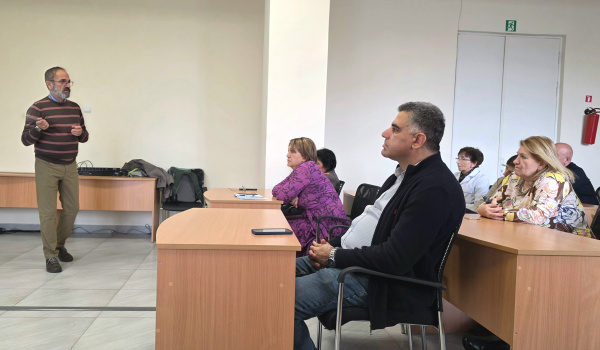
Professor Konstantinos A. Kormas is the author of more than 150 scientific publications, with an h-index of 38, reflecting the impact and international recognition of his research. The meeting provided a valuable platform for exploring new scientific and educational perspectives, strengthening international connections, and exploring contemporary directions in microbiological science. Students and faculty members had the opportunity to interact directly with the professor, discuss potential avenues for collaboration, and draw inspiration from his scientific journey.