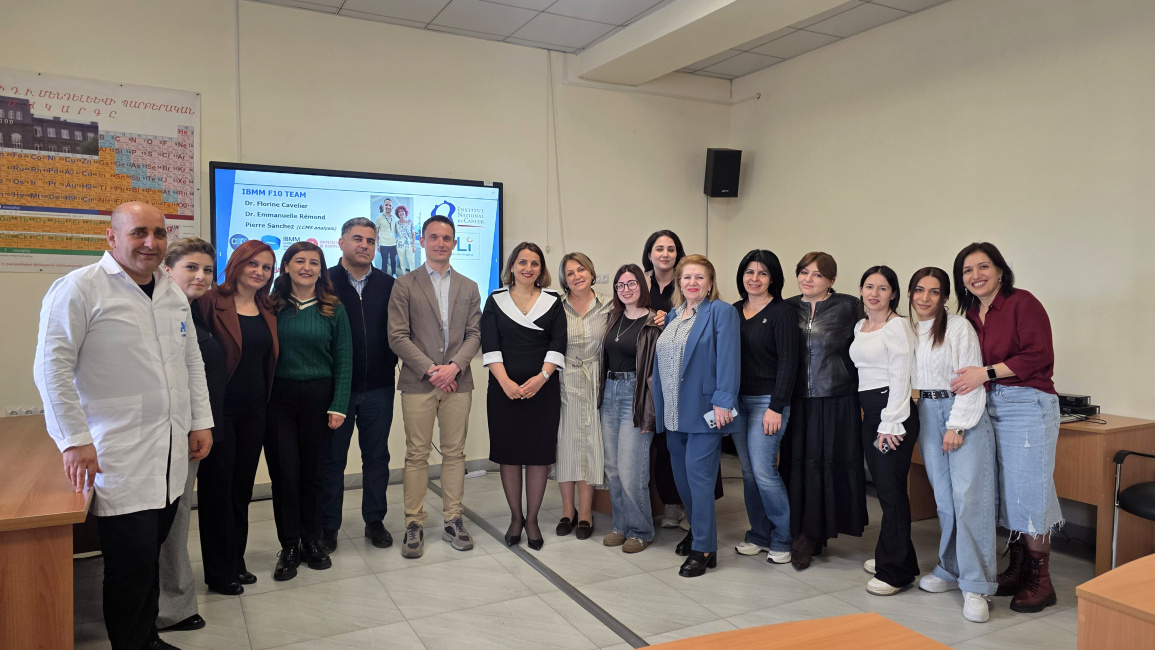
Within the framework of the Erasmus+ faculty exchange program, the Institute of Pharmacy at Yerevan State University hosted Dr. Santo Previti, Senior Assistant Professor (RTD-B) of Medicinal Chemistry at the University of Messina (Italy), who delivered a specialized lecture.
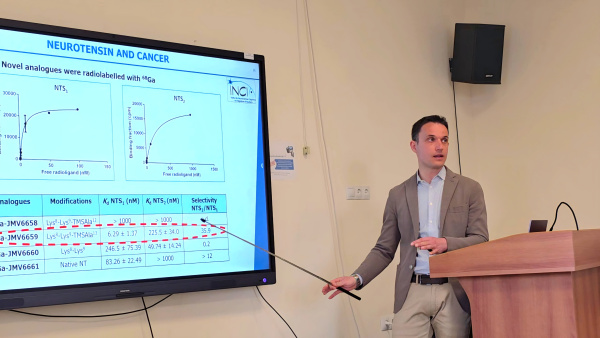
The lecture, titled "Ligands of G-Protein Coupled Receptors (GPCRs) in Theranostics", addressed a topic of key importance in modern pharmaceutical science. Dr. Previti presented research on neurotensin, a significant neuropeptide that, through its receptors, is emerging as a promising platform for targeted cancer diagnosis and therapy.
During the presentation, particular emphasis was placed on professional aspects such as molecular stabilization and pharmacophore modeling. Addressing molecular stabilization, Previti noted that natural neurotensin degrades very rapidly in the body (with a half-life of less than two minutes). He highlighted the achievements of his research group in the synthesis of peptidomimetics characterized by enhanced stability and selectivity.
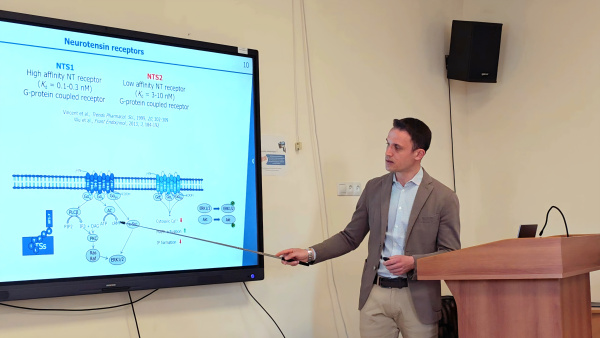
In discussing pharmacophore modeling, the lecture clearly illustrated the structural parts of the molecule responsible for receptor binding, thereby providing a foundation for the development of targeted therapeutic agents.
Especially notable were the clinical examples presented, including PET/CT scan results demonstrating the accumulation of synthesized radiopharmaceuticals in tumor tissues—specifically in cases of lung, pancreatic, and prostate cancers. These examples allowed students to observe the direct link between laboratory synthesis and practical medicine.
Previti also discussed the principle of theranostics, emphasizing that the same ligand can be used for both diagnosis and therapy. This search and destroy method is considered one of the leading directions in the advancement of modern oncology.
His authorship of approximately 52 scientific publications in international journals, along with an h-index of 18, attests to his significant professional standing and influence within the scientific community.
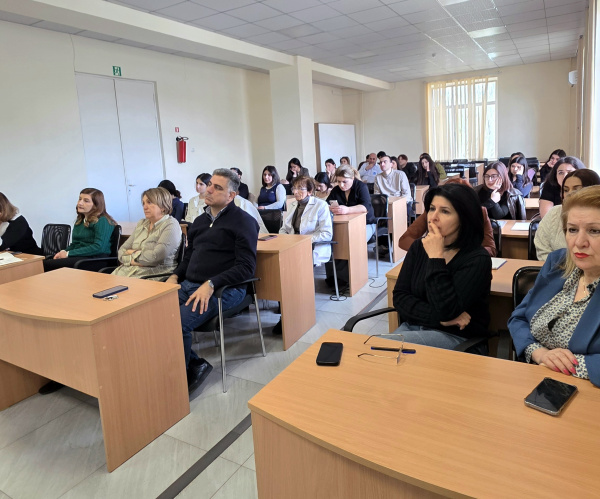
The lecture was marked by active discussion. Attendees, including future pharmacists and field specialists, had the opportunity to ask questions regarding the intricacies of synthesis and the bioavailability of next-generation drugs.
Such international lectures serve as a bridge between theoretical science and modern medical practice, engaging both faculty and students with the latest developments in global scientific research.