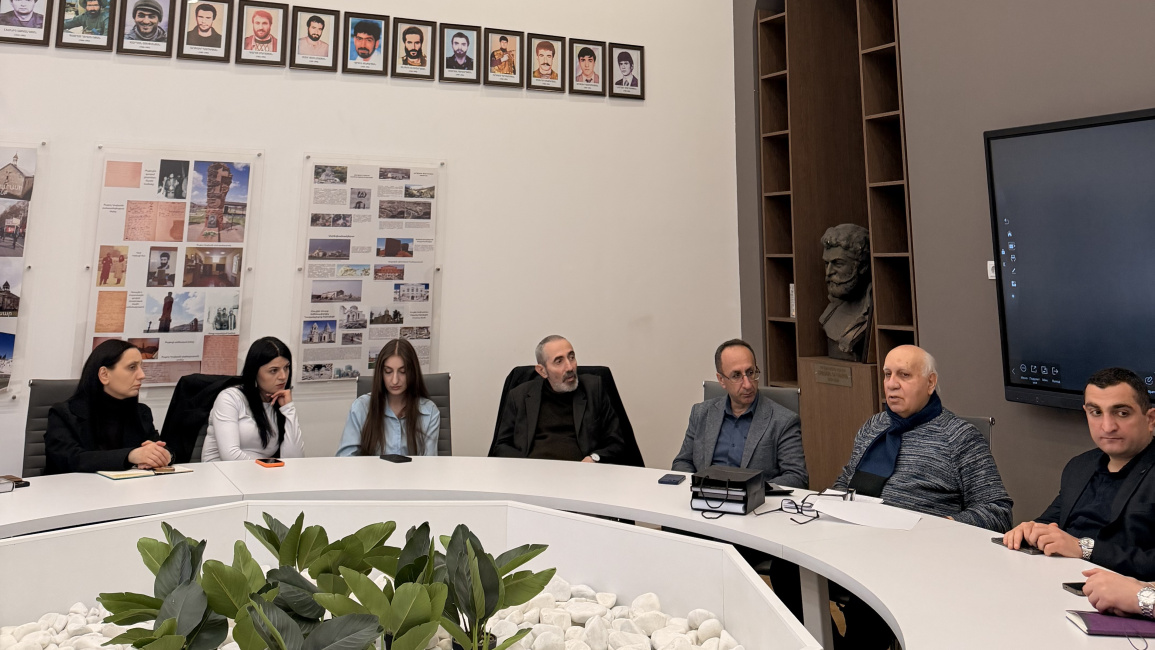
At the YSU Faculty of History, Professor Albert Stepanyan, PhD in History, delivered a lecture titled "Crisis Societies: Theoretical Considerations". The lecture aimed to provide a strong theoretical foundation for the integrated study of national and global histories, emphasizing the processes of constructing and evaluating crisis memory.
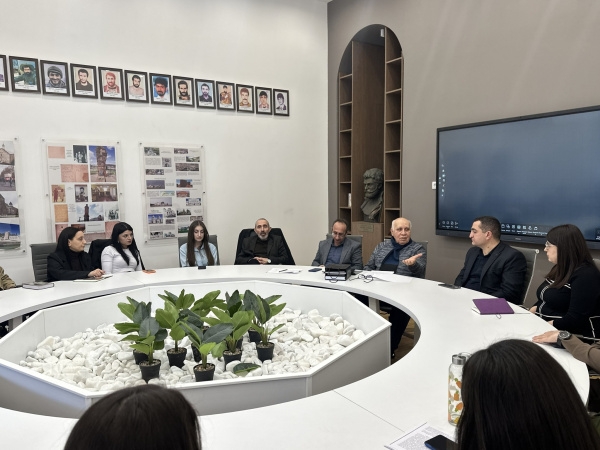
Drawing on the methodological approaches of the French Annales School and historical sociology, Professor Stepanyan analyzed the deep-rooted causes of social crises and explored potential ways to overcome them. According to the speaker, historical realities must be examined from systematic and innovative perspectives to meet the demands of contemporary historiography.
Within the framework of socio-historical analysis, Professor Stepanyan referred to Ludwig von Bertalanffy’s General Systems Theory. He noted that any system may face the risk of two extremes: absolute homogenization or absolute multiplicity. In the first case, the suppression of heterogeneity leads to stagnation, while in the second, uncontrolled proliferation can result in chaos and system collapse. Avoiding these extremes requires maintaining civilizational equilibrium, which enables societies to respond effectively to internal and external challenges.
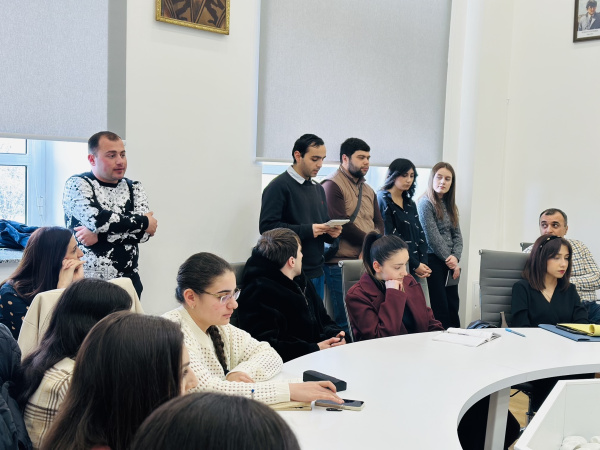
The lecture also addressed the problem of perceiving historical time, critiquing strictly linear conceptions. Professor Stepanyan argued that spatial or calendar-based time alone is insufficient for understanding historical dynamics. He emphasized the importance of a multidimensional conception of time, combining short-, medium-, and long-term perspectives, through which the fundamental rhythms of civilizational development are formed.
The speaker highlighted the crucial role of select elites in crises. According to Professor Stepanyan, historical responsibility is often assumed by small but influential groups within society, whose intellectual and volitional efforts reconstruct civilizational identity and create new opportunities for development.
The event was organized by the YSU research group "National and Global Dimensions of History: The Armenian Experience" and will continue as part of an ongoing series.