
On March 27, within the framework of the annual seminar on scientific results at Yerevan State University, a seminar titled "Colonization in World History" was held at the Faculty of History. The Head of the Chair of World History, Doctor of Historical Sciences and Professor Hakob Harutyunyan, presented the results of a research project conducted under the Higher Education and Science Committee of the RA Ministry of Education, Science, Culture and Sports program "Research in the Fields of Social Sciences, Armenian Studies, and Humanities–2024".
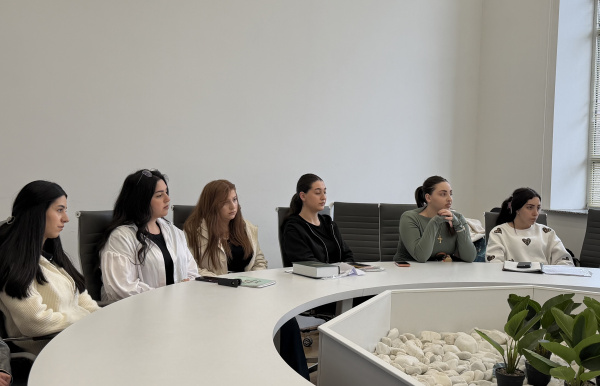
The report detailed the main stages in the formation and development of colonization, with particular emphasis on its role in global historical processes.
Professor Harutyunyan presented colonization as a major driving force in world history, discussed its formation and development phases. He noted that the origins of colonization can conventionally be linked to early forms of riverine settlement expansion, which were later followed by maritime and oceanic variants. In this context, particular importance was attributed to the activities of the Phoenicians and the ancient Greeks, while the starting point of oceanic colonization is considered to be the year of Christopher Columbus's 1492 voyage, marked by the discoveries of Christopher Columbus.
The YSU professor drew special attention to the dual nature of colonization, emphasizing that it has produced both negative and positive consequences. On the one hand, colonized countries and peoples were subjected to economic exploitation and plunder; on the other, colonial powers contributed to the dissemination of certain models of science, education, and governance.
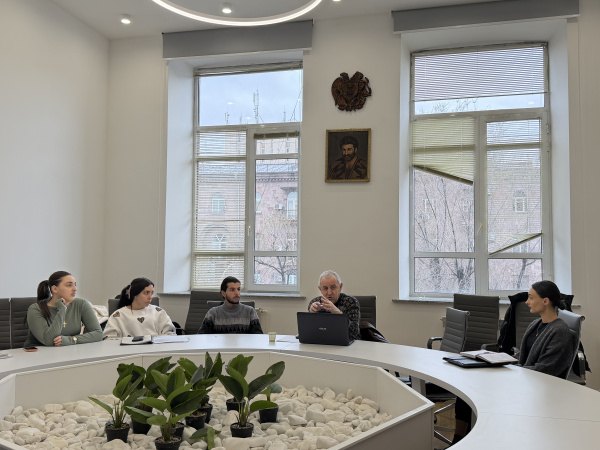
The speaker also addressed colonial policies of the Early Modern and Modern periods, presenting the activities of the Spanish-Portuguese and Anglo-French powers, as well as the later ambitions of Germany and Italy, which led to heightened international tensions and ultimately to the world wars. Particular emphasis was placed on the Year of Africa (1960), when around twenty states on the continent gained independence from colonial rule, signaling a new phase in the process of decolonization.
Professor Harutyunyan also presented the example of Ancient Armenia, referring to the resettlement policies implemented during the reigns of Artaxias I and Tigranes the Great of the Artaxiad dynasty. In this context, special attention was given to the role of the Jewish community established in Armenia, which held significant importance in the country's socio-economic development.
The seminar contributed to the development of students' professional competencies by fostering skills for comprehensive analysis of colonization processes and cultivating a critical understanding of historical phenomena. At the same time, it played an important role in integrating research findings into the educational process, thereby ensuring the interconnected advancement of science and teaching.