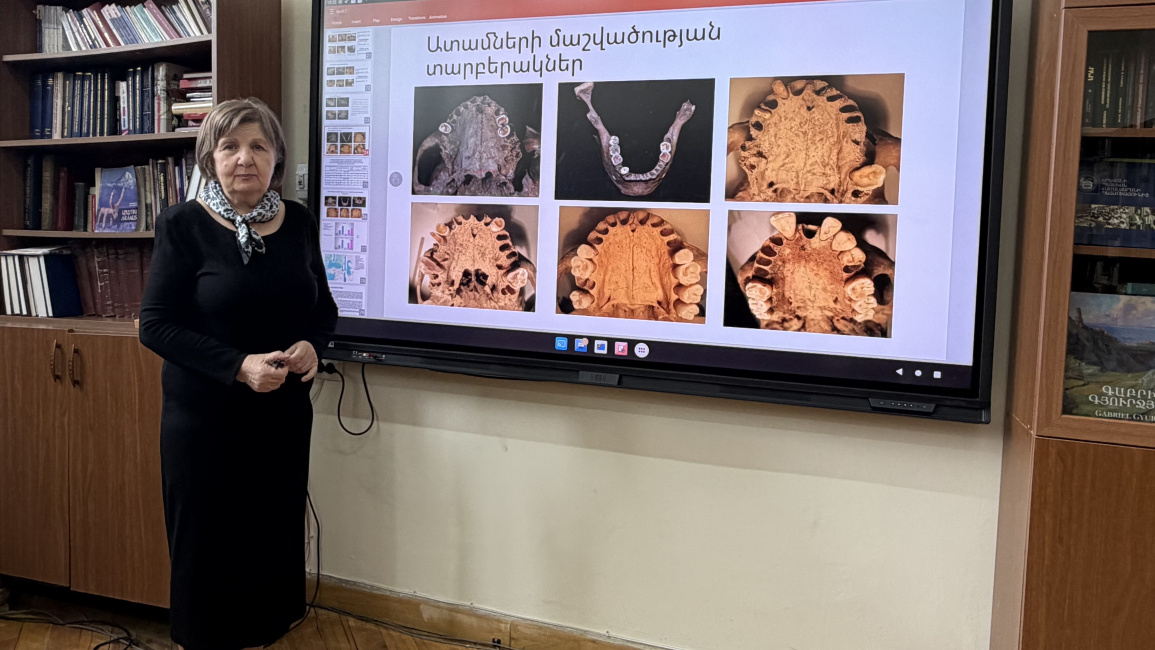
On April 7, within the framework of the annual seminar on scientific results at Yerevan State University, a seminar titled "Anthropological Type, Archaeological Ethnography, and Diet of Middle and Late Bronze Age Populations of Lake Sevan Basin" was held at the Faculty of History. Associate Professor at the Chair of Culturology, PhD in History, Ruzan Mkrtchyan, presented the results of a research project conducted under the Higher Education and Science Committee of the RA Ministry of Education, Science, Culture and Sports program "Research in the Fields of Social Sciences, Armenian Studies, and Humanities–2024".
The study involved a comprehensive analysis of anthropological materials recovered from the burial grounds of Lchashen and Nerkin Getashen. Its objective was to characterize the anthropological type of the population, identify the degree of intrapopulation differentiation, and assess integration processes.
As a result of the research, a paleodemographic profile of the Middle and Late Bronze Age population of the Sevan Basin was reconstructed, along with an overview of their lifestyle and dietary patterns based on odontological data.
According to the YSU associate professor, the Middle Bronze Age population was characterized by above-average stature, dolichocephalic skulls, a relatively large cranial capacity, as well as a long facial structure and pronounced nasal profile. She noted that in the Late Bronze Age, stature did not undergo significant changes, although a reduction in cranial dimensions was observed.
Addressing paleodemographic findings, Mkrtchyan stated that men demonstrated relatively high longevity, whereas women's life expectancy was significantly lower, particularly during reproductive years.
Odontological analyses indicate that the population suffered from various dental conditions, including wear, caries, calculus, and tooth loss. According to the speaker, the primary causes were a diet consisting of both hard and carbohydrate-rich cereal-based foods. The low incidence of enamel hypoplasia suggests an absence of prolonged starvation, which is attributed to the complex structure of the economy. Agriculture provided carbohydrates, animal husbandry supplied proteins and fats, and fishing contributed mineral-rich components to the diet.
In conclusion, Mkrtchyan emphasized that the Middle and Late Bronze Age communities of the Sevan Basin practiced exogamous marital patterns, and the influx of women from different groups contributed to the formation of genetic diversity within the population.
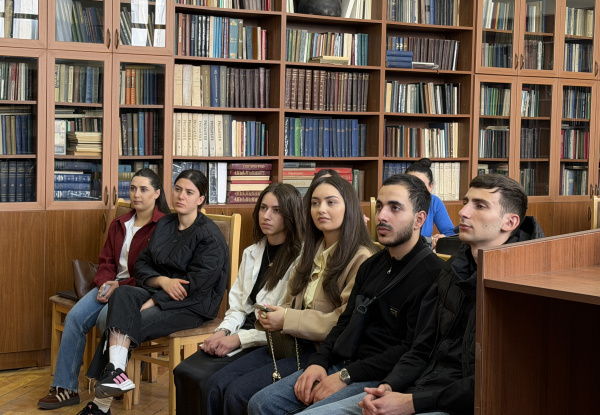
The presentation of research findings at the faculty level is of significant importance for students, as it enables them to become familiar with contemporary scientific research, develop analytical thinking, and deepen their professional knowledge. It also strengthens the link between education and science by involving students in a research-oriented environment.