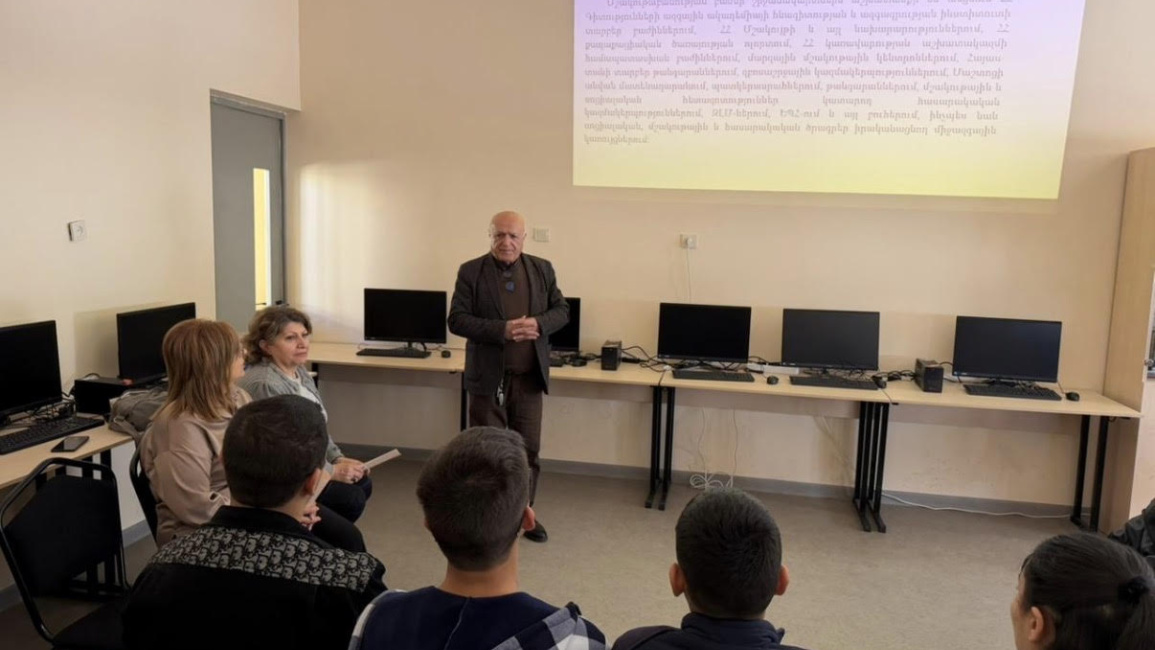
Head of the YSU Chair of Culturology, Head of the "Cultural Studies" bachelor's program, Doctor of Historical Sciences, Professor Hamlet Petrosyan, and Professor of the same chair, Doctor of Architectural Sciences Lyuba Kirakosyan, visited secondary schools in the Hnaberd and Kaghtsrashen communities of the Ararat province within the framework of university–school cooperation.
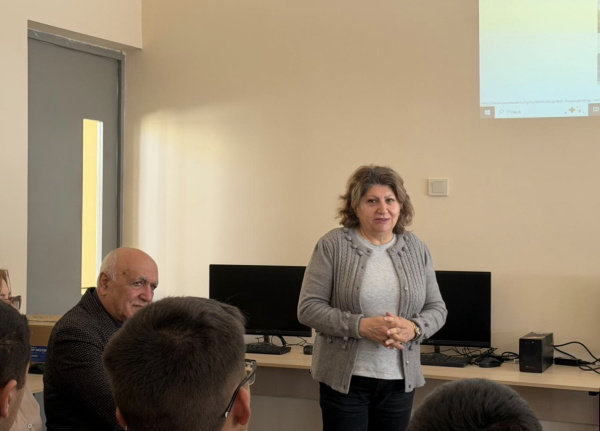
During the meeting, the students were introduced to the main areas of educational and research activity of the chair, as well as to opportunities for professional development in the field.
Professor Hamlet Petrosyan presented the content and significance of the "Cultural Studies" bachelor's program, noting that it aims to train specialists in the fields of cultural theory and history, cultural policy, and contemporary cultural processes.
According to the speakers, the program is structured around the following core areas: cultural theory, cultural history and policy, and contemporary cultural processes. It was emphasized that the curriculum also includes important disciplines such as anthropology, philosophy of culture, archaeology, ethnography, as well as the history of world and Armenian culture.
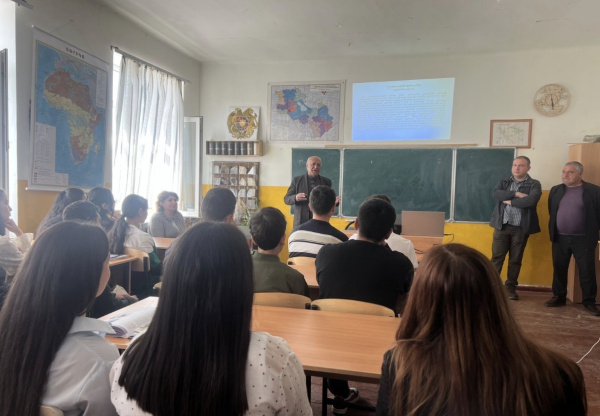
Addressing learning outcomes, the program head noted that graduates acquire skills in theoretical analysis of culture, assessment of cultural phenomena in historical context, and the implementation of cultural studies research. He also stated that students become familiar with the principles of cultural policy, management mechanisms, and tools for the preservation and promotion of cultural heritage.
Petrosyan emphasized that graduates of the program can pursue careers in public administration, research institutions, museums, cultural centers, tourism organizations, as well as non-governmental and international organizations.
Within the framework of the meetings, an agreement was reached to establish Young Cultural Researcher groups in schools. With the support of the Chair of Culturology, these groups will focus on studying and promoting the cultural heritage of their communities.