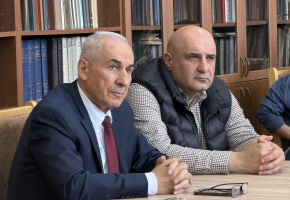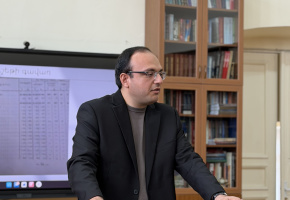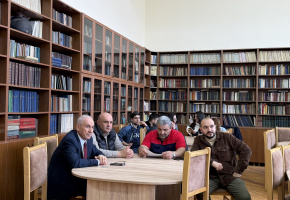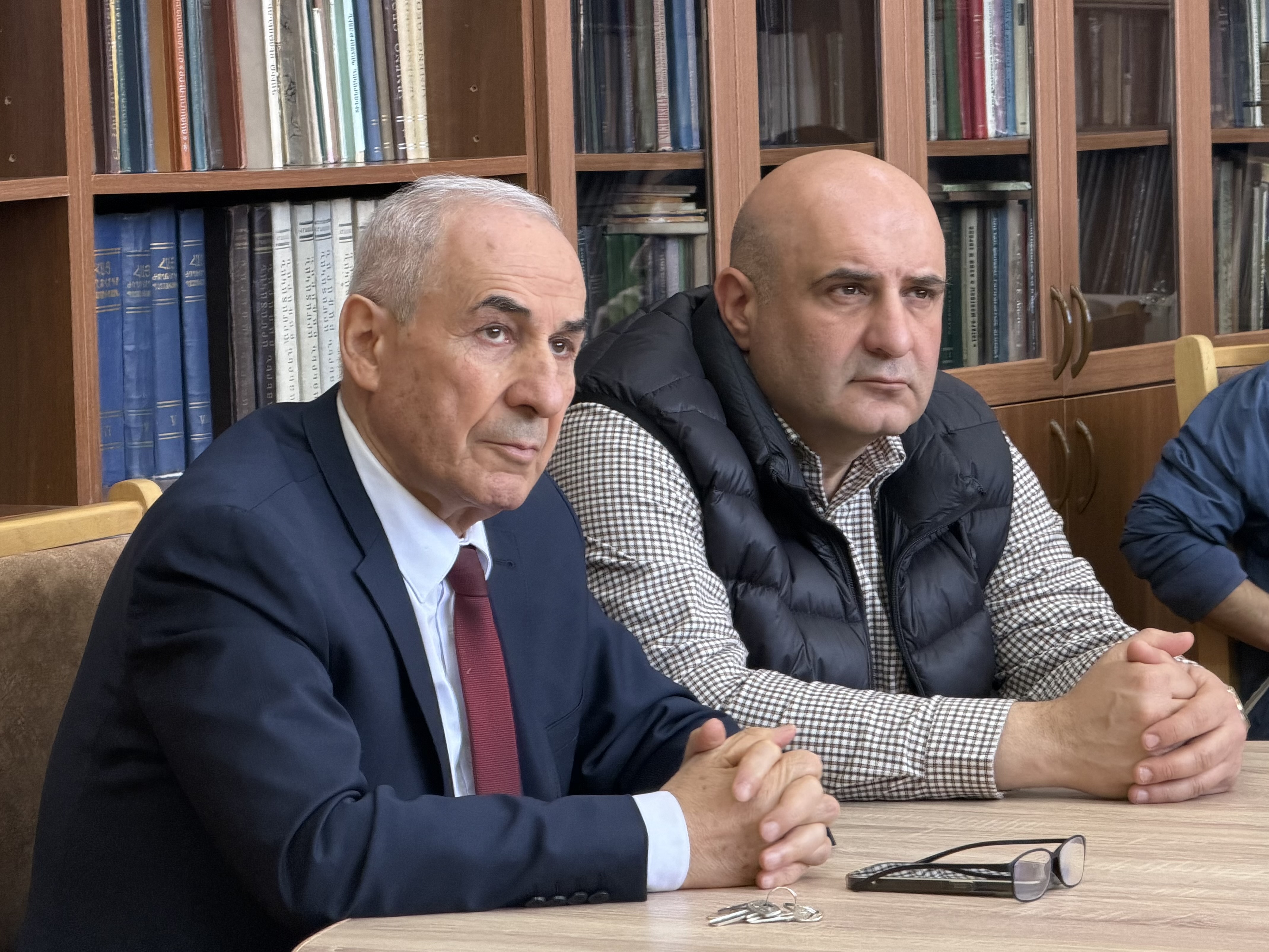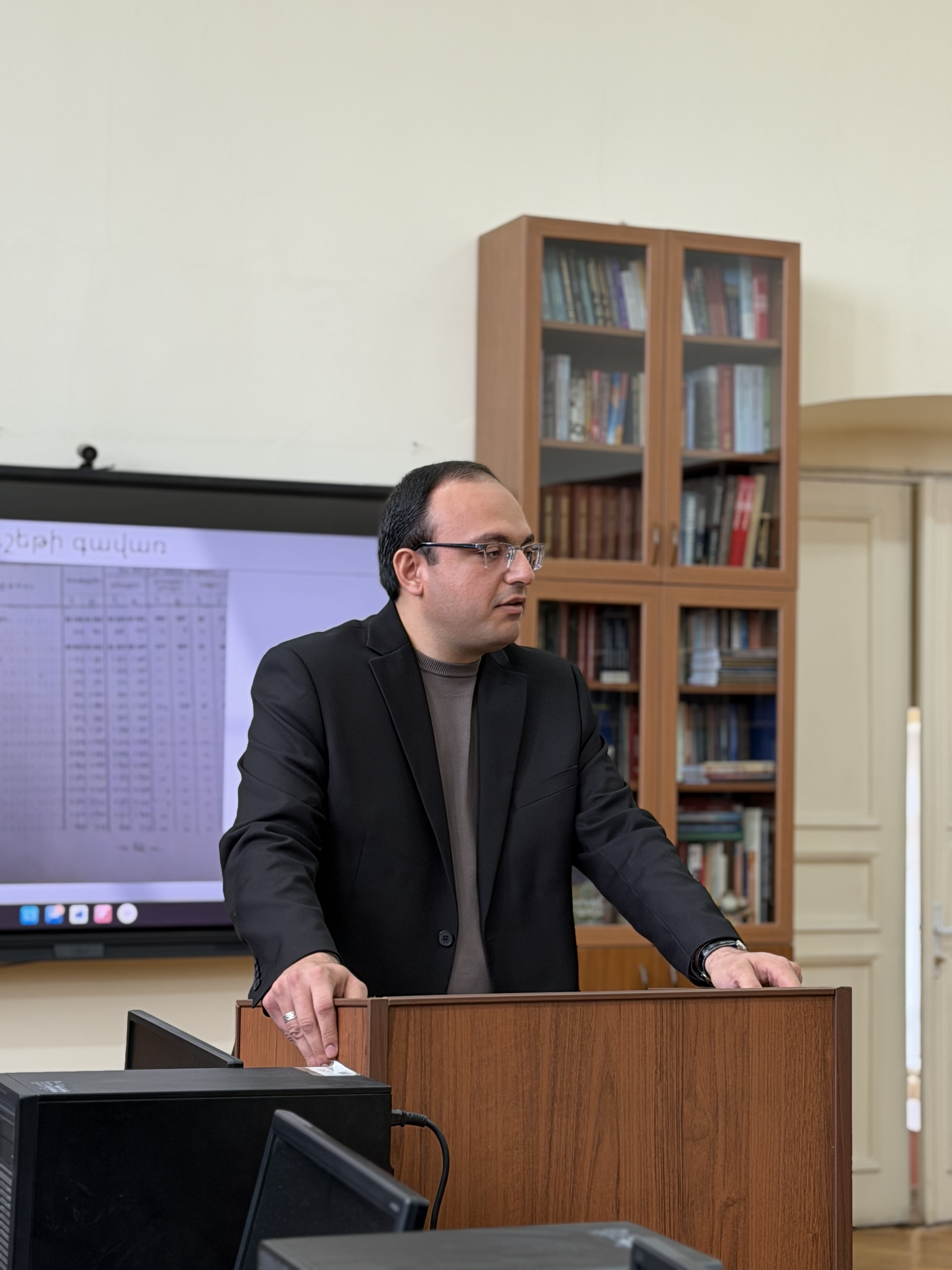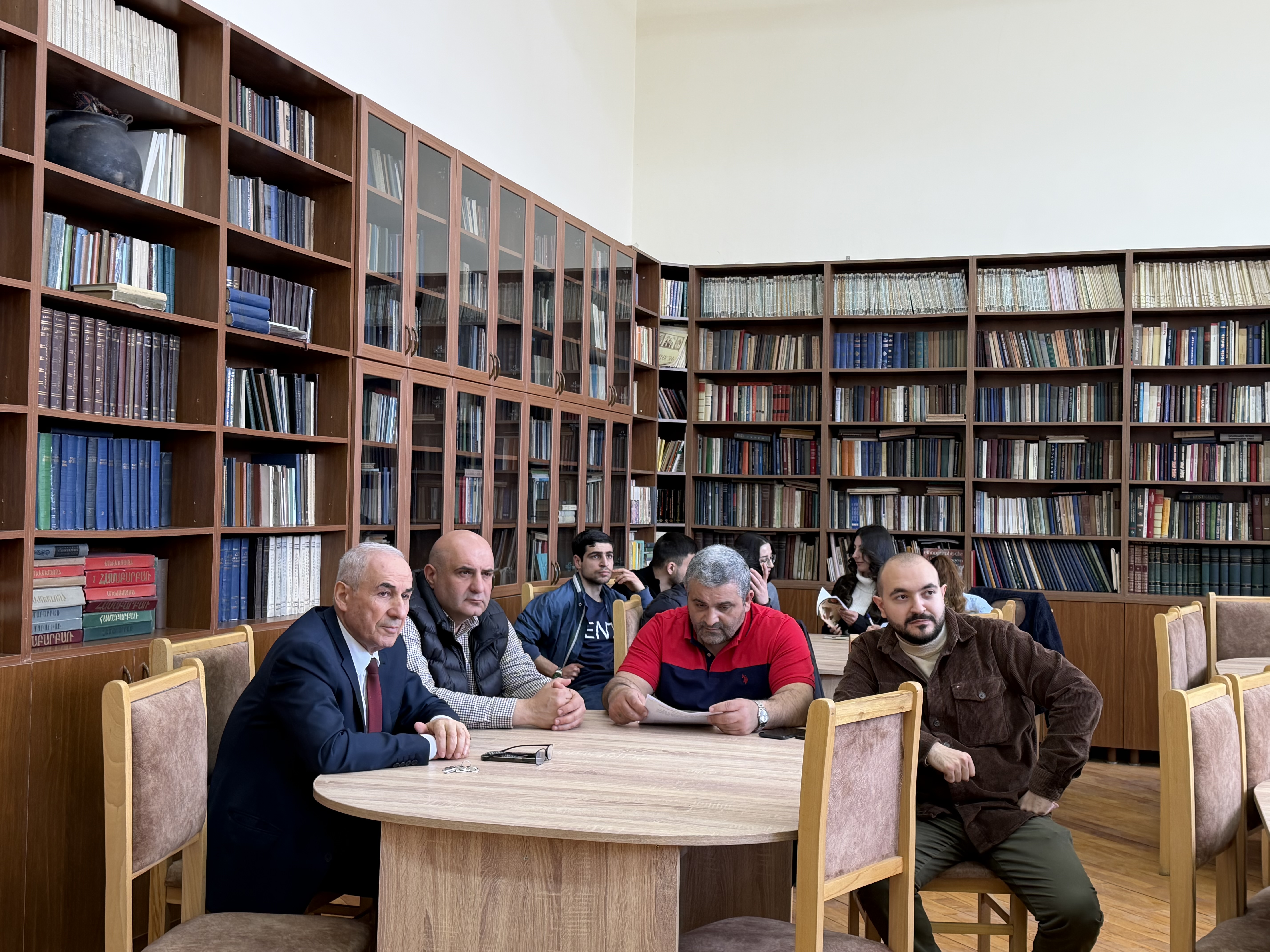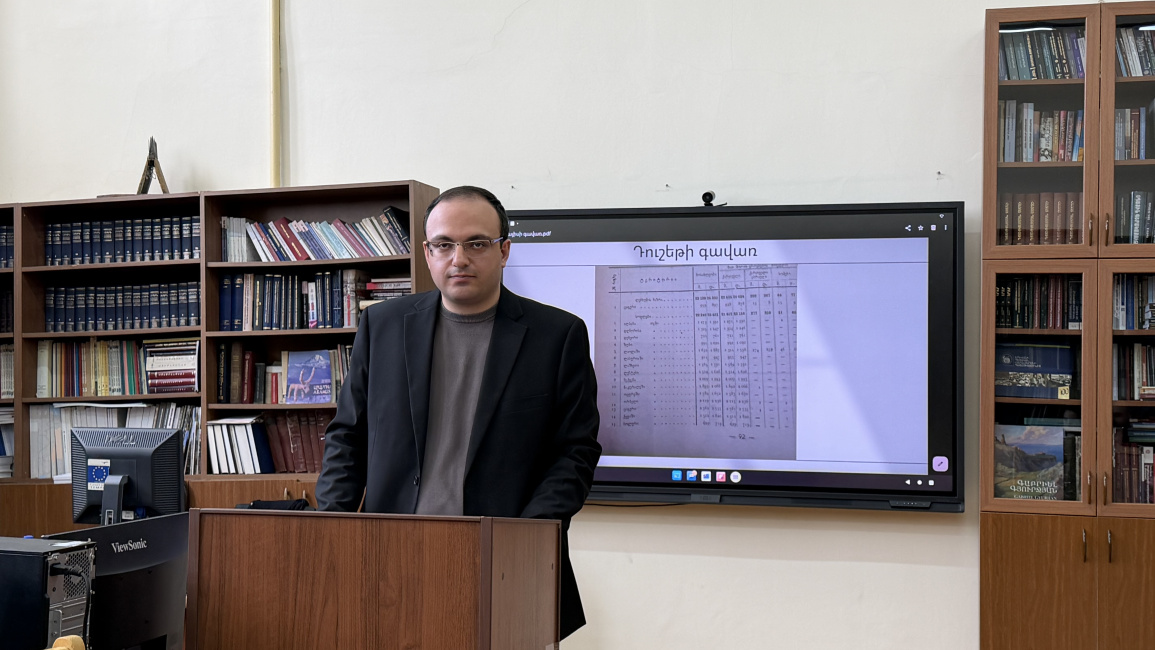
Within the framework of theoretical seminars for PhD students and candidates at the YSU Faculty of History, Babken Ghazaryan, a PhD candidate at the Chair of History of Neighboring Countries of Armenia, delivered a presentation titled "Armenians in Georgia in the 1920s–1930s (Historical and Demographic Context)." The speaker outlined the key features of the formation and distribution of the Armenian population in Georgia, tracing developments from historical origins through the early decades of the Soviet era.
The relevance of the study stems from the centuries-long presence of Armenians in Georgia, as well as the distinctive settlement patterns that emerged across different historical periods. These factors have had a significant impact on the demographic and cultural development of the region.
Ghazaryan presented data from the first All-Union Census of 1926, according to which Georgia's population totaled 2,666,494, including 307,018 Armenians. He emphasized that the research examines the ethnic composition of settlements in Georgia, with particular attention to the socio-economic, political, and cultural engagement of the Armenian population.
According to the speaker, changes in the size of the Armenian population during the early Soviet years were driven by a range of historical and socio-political factors. Notably, data from the 1939 All-Union Census indicate that the number of Armenians in Georgia had risen to approximately 415,000, while the republic's overall population remained relatively stable.
The report also addressed the impact of Soviet nationalities policy on demographic processes and assessed the effectiveness of managing ethnic issues in Georgia. The researcher noted that the study employs historical-statistical and critical analytical methods, incorporating works by Georgian historians, contemporary press materials, and documents from the National Archives of Georgia, thereby enabling a more comprehensive and academically grounded presentation of the topic.
The presentation concluded with an active discussion, during which participants posed questions regarding specific aspects of the topic and the approaches presented.
Ghazaryan's academic supervisor, Associate Professor Eduard Zohrabyan, along with members of the faculty's academic staff, offered theoretical and methodological observations of fundamental importance for the effective organization of the research.