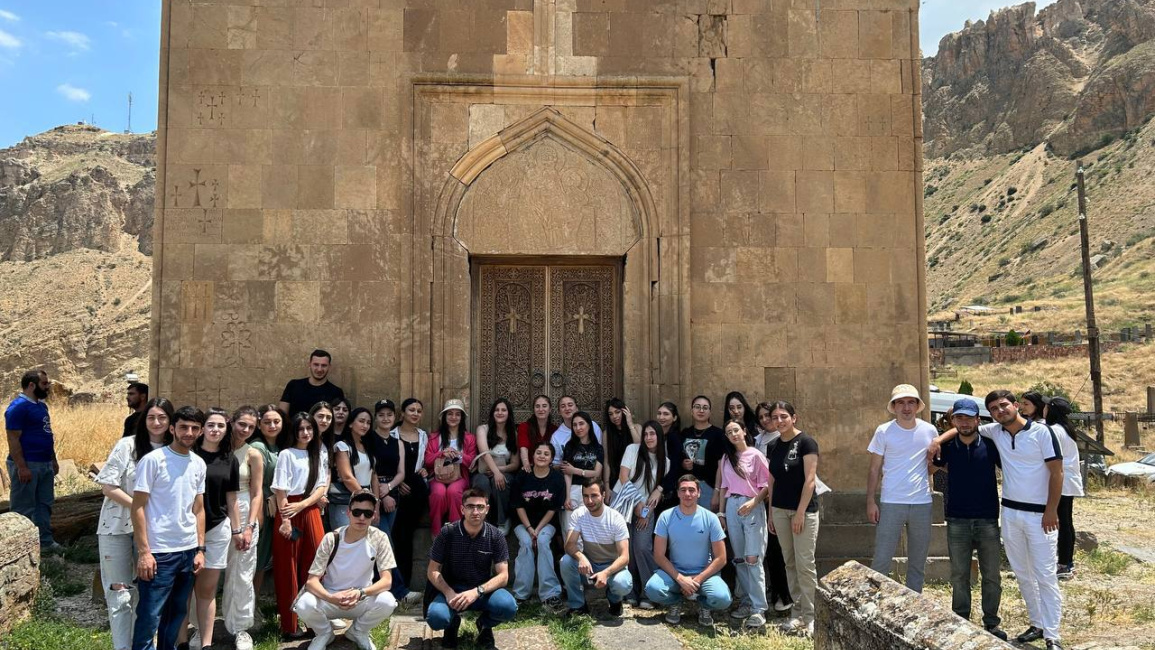
The YSU Faculty of History, known for its rich scientific and educational traditions, offers the "History" bachelor's program, which is designed to train specialists with foundational knowledge, theoretical preparation, research skills, and professional expertise.
For centuries, history has been one of the most developed and significant fields of Armenian culture. Following established historiographical traditions, the Armenian people have not only documented their past but have also sought to understand themselves, their place, and their role in the world. Consequently, the historian's profession has held a unique status in Armenian society, recognized as a classical and highly valued discipline.
Role of historians in contemporary society
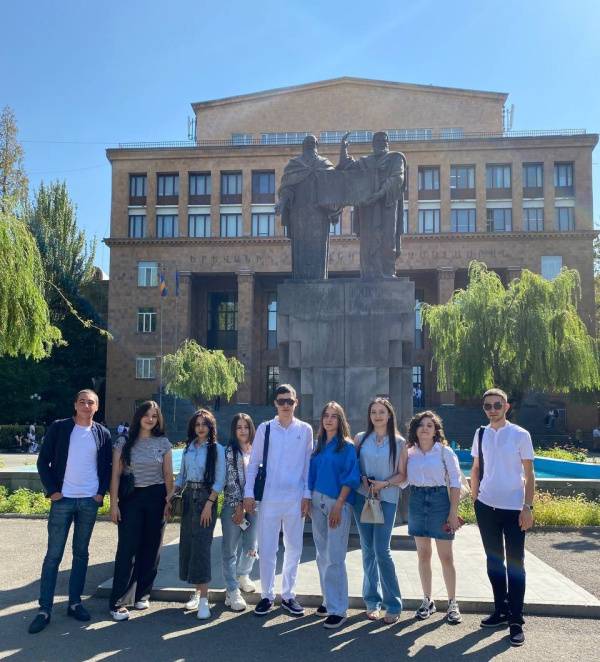
Today, facing both internal and external challenges, Armenians increasingly turn to history to examine, evaluate, and reinterpret the past. The formation of citizens and generations with a resilient national consciousness, capable of responding to contemporary threats and contributing to state development, has become a priority. Historians play a critical role in this process. Through their research and its presentation, historians help shape historical and national awareness among Armenians, which in turn informs behavior and decision-making across various spheres of life.
The historian's profession allows individuals not only to study and understand the realities of the past but also to navigate the challenges of the present and future with informed judgment. Students and graduates of the program acquire in-depth professional knowledge, research skills, broad perspectives, analytical thinking, and the ability to understand and influence social and political processes, making them highly sought-after professionals in various sectors.
Program features
Recent updates to the program organize the study of national, regional, and world history chronologically, providing students with foundational knowledge of historical sources, historiography, archaeology, ethnography, and other fields of historical study. The program emphasizes theoretical preparation and the development of research skills through targeted coursework.
Practical training and internships
As part of their studies, students participate in diverse academic and practical internships, which are crucial for consolidating professional knowledge and establishing connections with potential employers. Archaeological and ethnographic internships involve visits to Armenia's historical and cultural sites, where students apply their theoretical knowledge in practice. Archival and museum internships provide hands-on experience in document handling, research methods, and an understanding of museum systems and practices.
Career opportunities for graduates
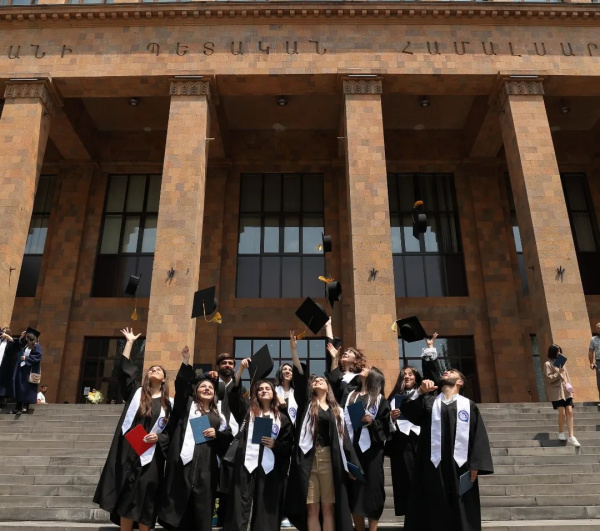
Graduates of the "History" bachelor's program, equipped with foundational knowledge, research expertise, and a flexible worldview, have played important and leading roles in Armenia across multiple sectors, from research institutions and museums to government agencies and the political arena.
Graduates can pursue professional careers at research institutes of the Armenian National Academy of Sciences, including history, archaeology, ethnography, and Oriental studies, as well as in other research and cultural institutions. They are in demand in national archives, museums, tourism and travel organizations, and, with additional pedagogical qualifications, in schools and vocational education institutions.
Beyond academia, graduates successfully work in various branches of public administration, including the Government of Armenia, ministries, the National Assembly, the Office of the Commissioner for Diaspora Affairs, the National Security Service, regional governorates, municipalities, and local administrations.
Admission to the "History" bachelor's program is based on written examinations in one of the following subjects: Armenian History, Armenian Language and Literature, or a Foreign Language. Applications are accepted from April 15 through May 10 (until 18:00 on May 10).