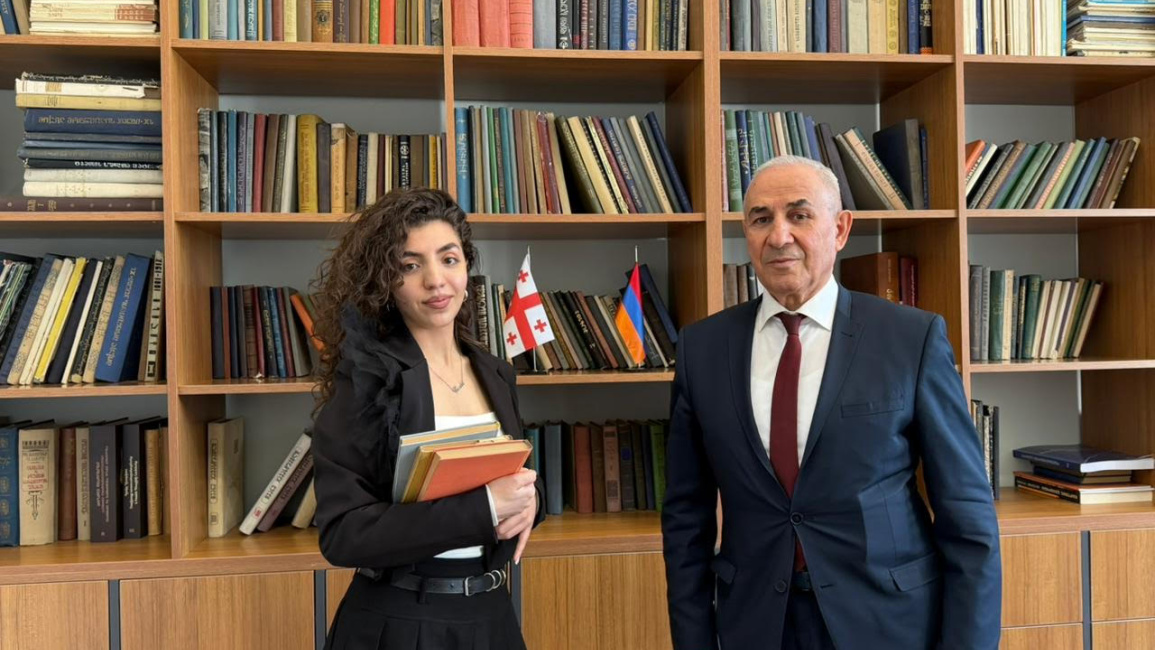
In the context of contemporary geopolitical developments, the Caucasus region remains one of the key hubs of international political, cultural, and civilizational processes. The study of the region's multilayered history, interethnic relations, cultural heritage, and current political realities has generated a growing demand for new scholarly approaches and specialized professional education.
Against this backdrop, the "Caucasus Studies" master's program at the YSU Faculty of History plays an important role in advancing professional knowledge and developing applied skills. The program allows students not only to acquire in-depth theoretical knowledge but also to develop research skills and analytical thinking.
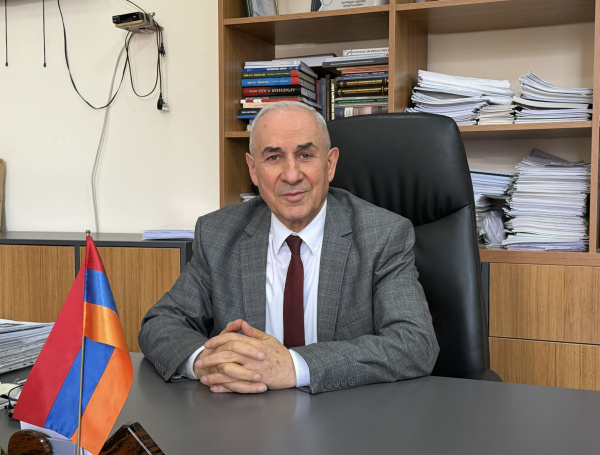
According to Eduard Zohrabyan, Head of the "Caucasus Studies" master's program, PhD in History, Associate Professor, the program is of significant importance for integration into the contemporary academic environment of historical studies. He noted that the Caucasus is currently a complex geopolitical space, making the study of its centuries-old history, culture, and civilizational values particularly important.
A key component of the "Caucasus Studies" master's program is its practical training element. Internships are organized at the Caucasus Institute, the Mesrop Mashtots Institute of Ancient Manuscripts, institutes of the National Academy of Sciences of the Republic of Armenia, as well as other research institutions and public administration bodies. In recent years, international placements have also been organized at Southern Federal University in Russia, allowing students to deepen their regional studies, become acquainted with the historical and cultural heritage of local Armenian communities, and examine contemporary migration processes.
Zohrabyan underscored that recent years have also seen a shift in student research interests. Whereas earlier greater emphasis was placed on medieval studies, today graduate research is increasingly focused on contemporary historical and political processes, regional security, as well as issues of identity and historical memory. This trend is driven by ongoing developments in the Caucasus and the need for their scholarly interpretation.
Master's student Karolin Saryan noted that one of the primary objectives of master's studies is to deepen the knowledge acquired during bachelor's education and to develop analytical skills.
"The Caucasus is a multiethnic, multicultural, and multilingual region with numerous conflicts and issues of identity and security. The study of these processes is both an interesting and important research direction," she said.

Karolin chose to focus her master's thesis on the history of Armenian communities in the North Caucasus, examining their formation, distribution, and socio-political characteristics from the period prior to the 1917 Revolution, through the Soviet era, and up to the present day.
In her view, the program provides important opportunities for professional development and career prospects.
"The knowledge and skills we acquire can be applied in research centers, public administration, international organizations, and other institutions engaged in regional studies," Karolin noted.
According to the YSU master's student, the "Caucasus Studies" program also facilitates integration into the academic environment. Students have the opportunity to participate in conferences, present papers, gain experience in academic writing, and engage with researchers from different countries.
Thus, for applicants interested in the Caucasus region, the program offers not only professional knowledge but also an understanding of the worldview of the region's peoples, their cultural characteristics, and the processes shaping historical consciousness. In today's world, where accurate interpretation and analysis of regional developments are of increasing importance, the "Caucasus Studies" program trains specialists capable of responding to contemporary challenges at both the academic level and in real-world settings.
Documents for the first phase of admission to the "Caucasus Studies" master's program are accepted from June 1 to June 26 of this year, until 18:00, while documents for the second phase will be accepted from July 6 to August 17, until 18:00. The second-phase entrance examination will be held on August 25 at 12:00.