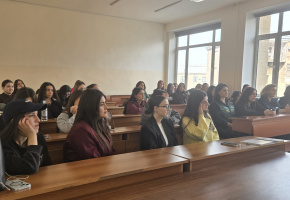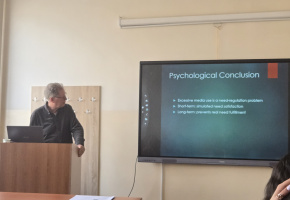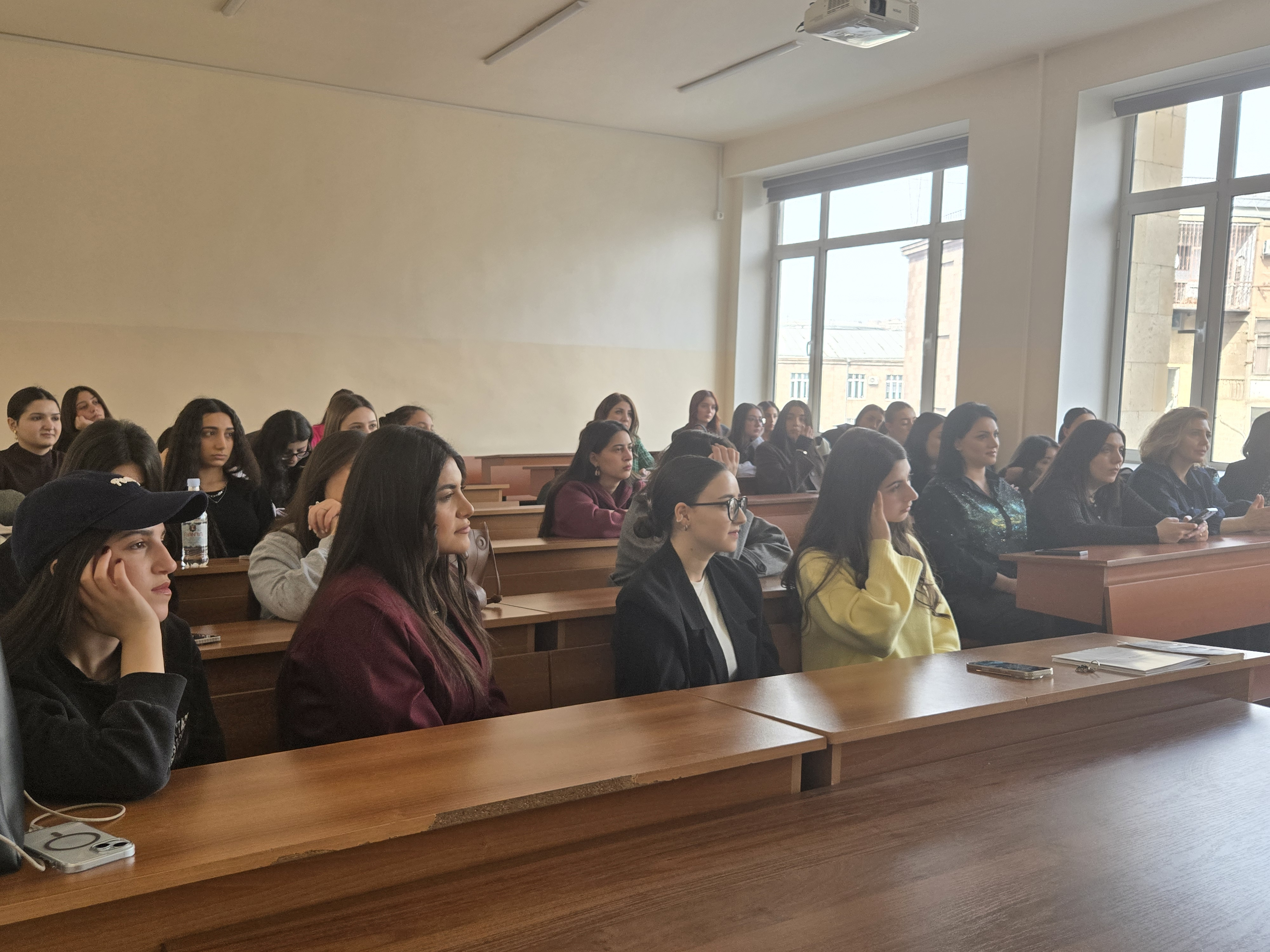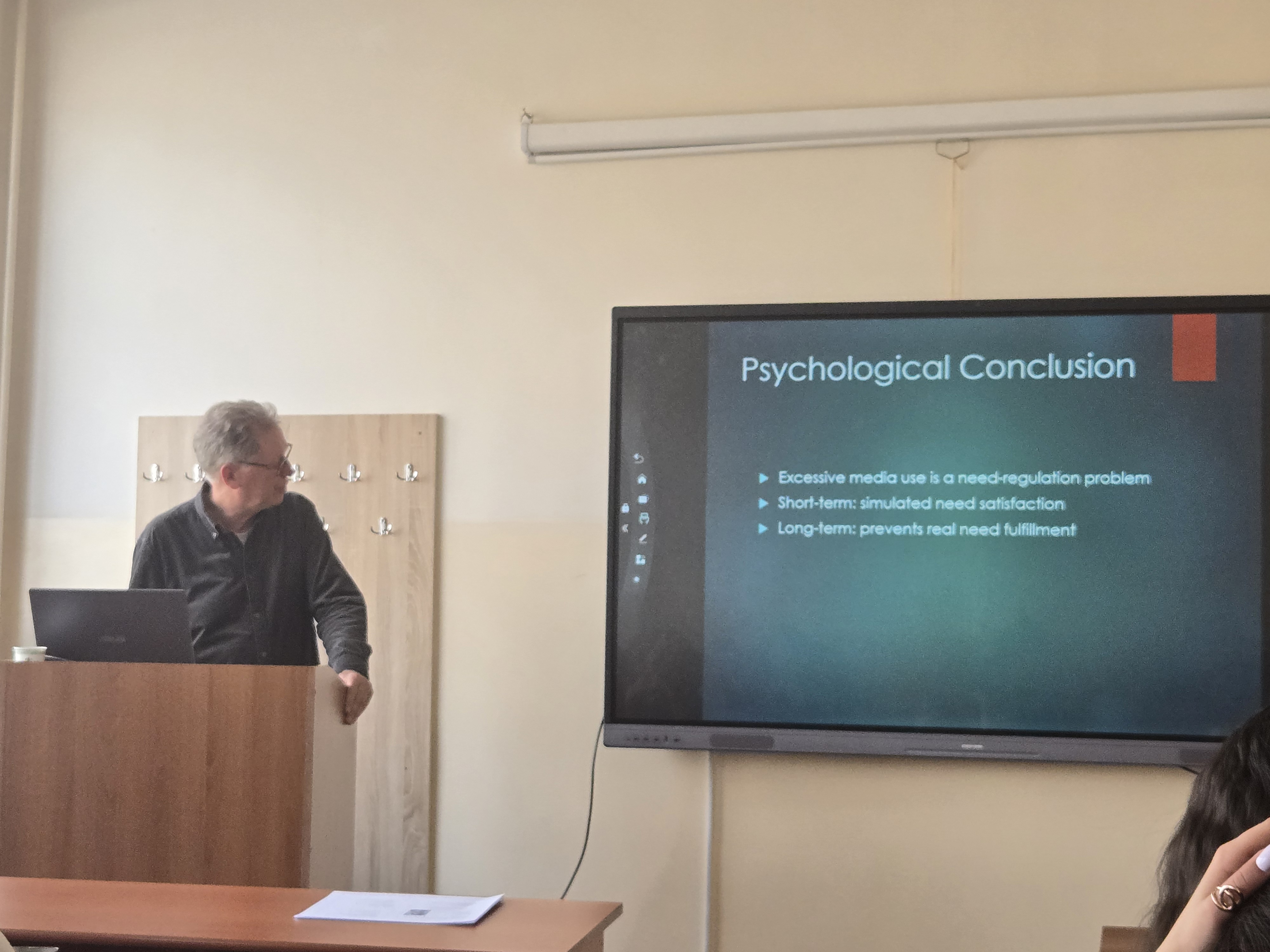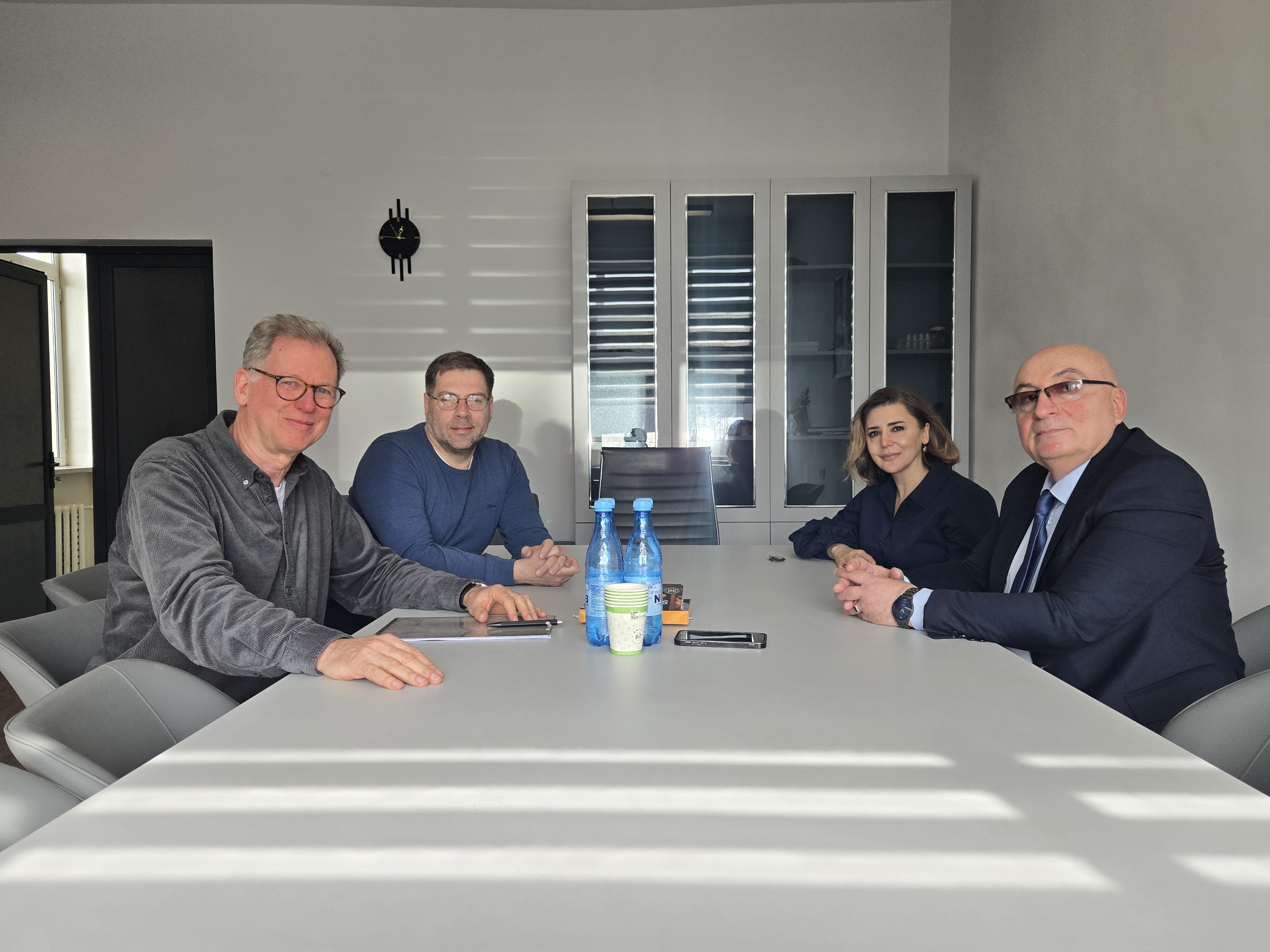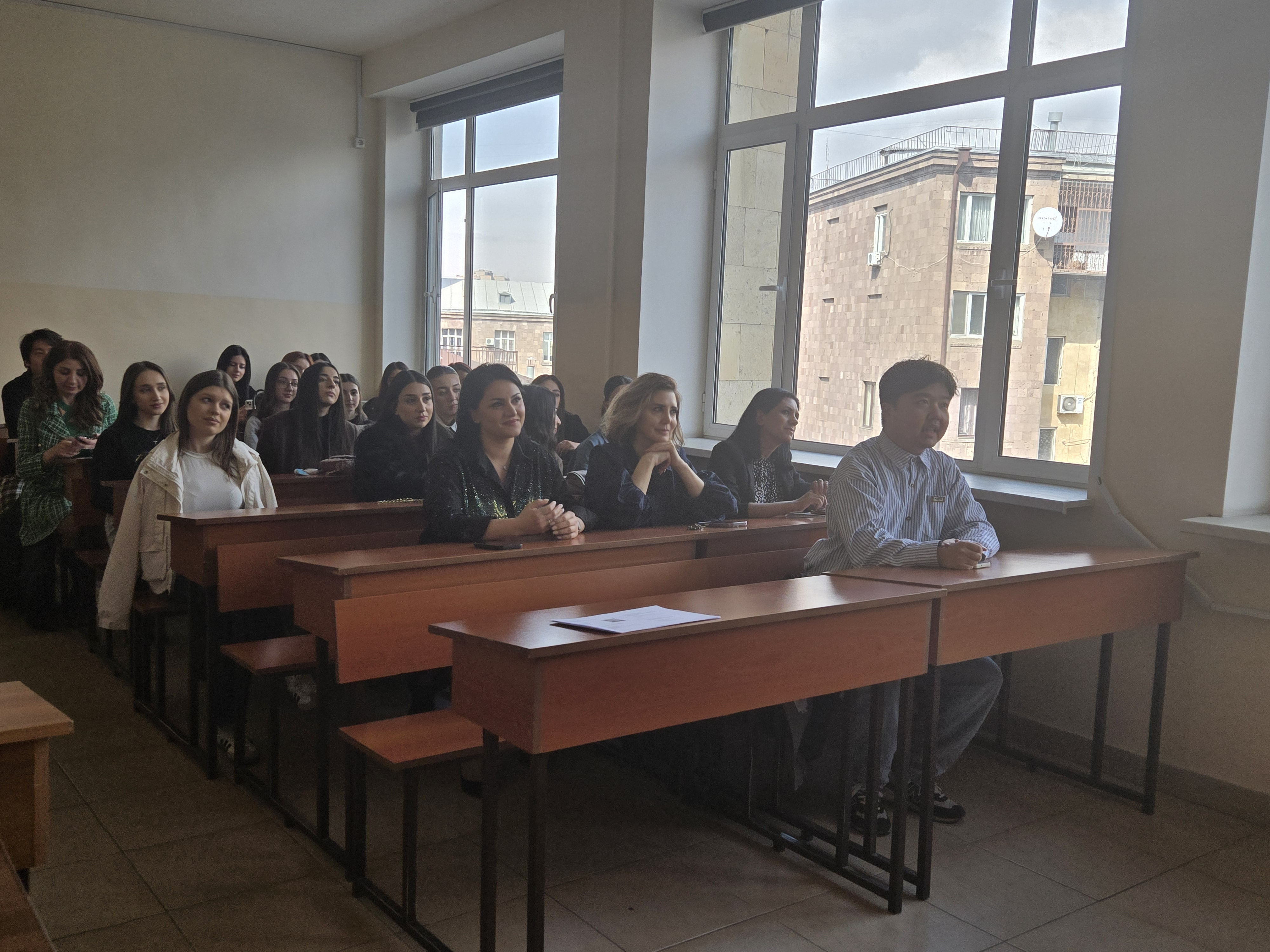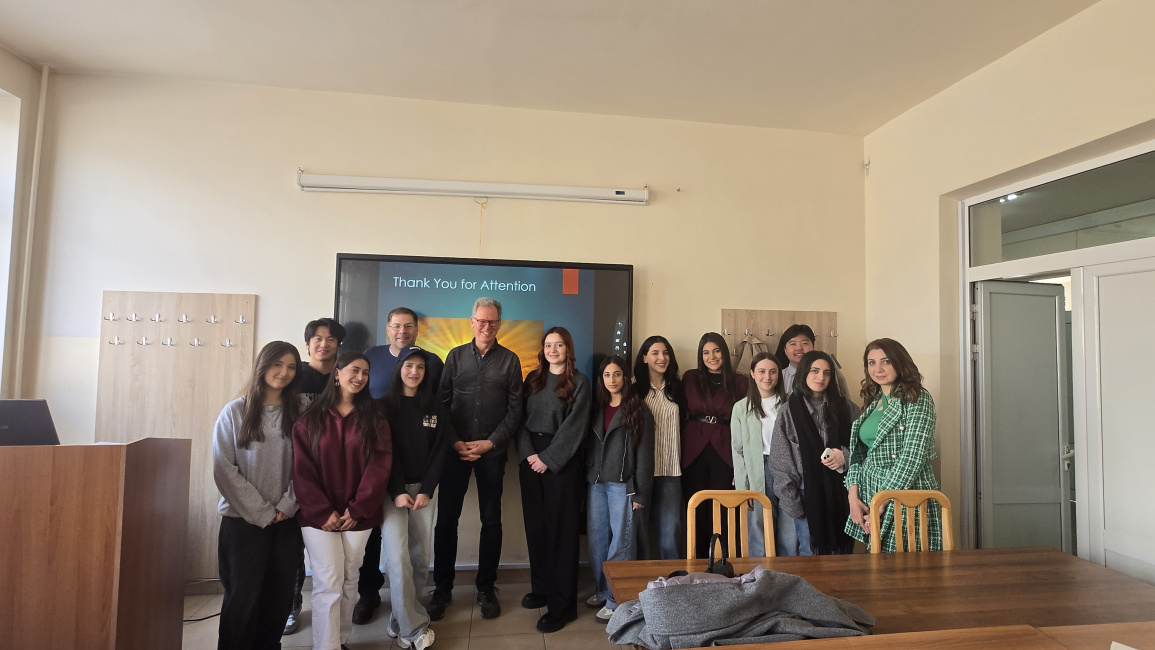
The Faculty of Journalism of Yerevan State University on March 4, 2026, hosted a lecture by a Gestalt therapist and preschool education consultant, Jan Hitzeroth (Hamburg, Germany)
The lecture centered on “The Four Basic Psychological Needs of Children” and to how the modern media environment affects a child’s personality formation. The presentation was based on the consistency theory of the German psychologist Klaus Grave, according to which a person’s psychological well-being depends on meeting four fundamental needs: orientation and control (a), the desire for pleasure and pain avoidance (b), attachment (c), and maintaining and protecting self-esteem (d). Of particular interest in the lecture was the discussion of how the digital media environment and social media function as an iconic system through which a child interprets social reality and their place in it. Media content forms certain models of perception, behavior, and self-esteem, creating a specific symbolic environment in which the process of socialization unfolds outside the context of physical reality.
The speaker noted that modern media content is oversaturated with visual stimuli and is algorithmically organized. The mechanisms of instant gratification create a feeling of satisfaction of psychological needs. As a result, the child receives symbolic signals of recognition and pleasure, such as “likes” or “positive comments”, which can replace the live experience of communication, joint activities, and achievements. The semiotic aspect of the problem is particularly evident in the formation of self-esteem. Social media creates a space of constant symbolic comparison, where signs of approval and recognition begin to serve as indicators of personal value. It can cause children and adolescents (and not only them) to become dependent on external validation and face instability in their self-esteem.
At the end of the lecture, Jan Hitzeroth emphasized the importance of a need-based approach to parenting. The media cannot be considered only a technology. It is a complex space of signs and meanings. In this context, reasonable boundaries of media use are important. Emotional support and the development of real communication are equally important. All this helps the child to form a stable identity and a healthy psyche.
Jan Hitzeroth’s lecture aroused considerable interest. It became a trigger for discussing different problems, such as how the media environment, as a sign space, affects socialization, communication, and personality formation in the digital age.