January 29, 2026 | 11:57
Science
International cooperation
Competitions

YSU PhD student Arevik Ghrmajyan's project, titled "Ecological and Phylogenetic Characteristics of Certain Insect Pests in Armenia", has been awarded funding through the "Research Support Program for PhD Students and Young Candidates – 2025" competition, organized by the Higher Education and Science Committee of the Ministry of Education, Science, Culture, and Sports of the Republic of Armenia.
Arevik Ghrmajyan explains the relevance of the project and the mechanisms for its implementation.
Causes of insect pest spread
Insect pests today pose a serious challenge to both agriculture and the natural environment in Armenia. Climate change, intensive agriculture, and human activity contribute to the accelerated spread of pests, sometimes leading them to appear in new areas. Currently, information about many insect pests in Armenia is either partial or outdated, while reliable contemporary data are lacking. Understanding this topic is crucial, as it is impossible to effectively protect crops, reduce pesticide use, and preserve the environment without a thorough knowledge of pest species.
Although some insect pests are widely distributed in Armenia, their actual prevalence has not been fully studied. Certain species, due to their specific ecological traits, may become active only in particular years or spread into new regions.
Focus of the study: nocturnal and diurnal moths
The project primarily focuses on insects that damage agricultural crops and trees, negatively impacting horticulture, vegetable production, and forestry. The main subjects of study are Lepidoptera—both nocturnal and diurnal moths. These insects can destroy leaves, fruits, or other parts of the plant, reducing yield, deteriorating quality, and causing financial losses for farmers.
Research methodology
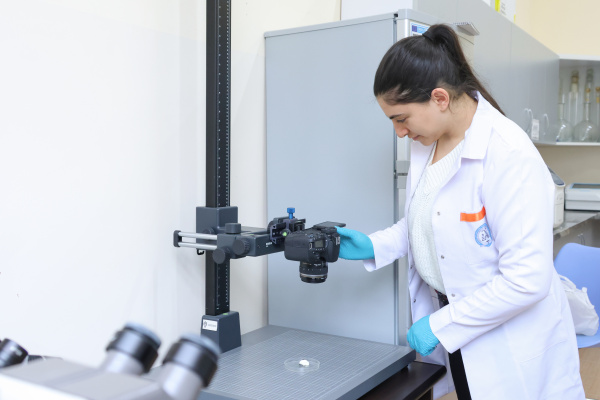
The study will be conducted in multiple stages. Insects will be collected from various regions of Armenia through fieldwork, followed by laboratory analyses to identify species. By combining data from field research with laboratory results, researchers will obtain a comprehensive understanding of the distribution and behavior of pests. This approach allows not only for observing the insects in their natural environment but also for accurately identifying the specific species.
Mastery of international modern methods
The project involves collaboration with leading scientific institutions in Germany, particularly the Leibniz Institute for Biodiversity Research, as well as universities in Bonn, Tartu (Estonia), and Charles University (Czech Republic). The collaboration will include exchange of expertise, joint data analysis, and training in modern research methodologies.

Expected outcomes of the project
The project will enable the creation of a precise and reliable database on insect pests in Armenia, improve early detection capabilities, and lay the foundation for safer, alternative pest control methods that reduce reliance on chemical pesticides. These outcomes will support farmers, specialists, and government agencies in making informed decisions.
Several studies on the topic have already been conducted, including fieldwork, insect collection, analysis, as well as collaboration with experts from Armenia and abroad. Results have been published in international scientific journals and presented at conferences. This project represents a continuation and expansion of that work.
Arevik Ghrmajyan's scientific supervisor is Professor Marine Arakelyan, Head of the YSU Laboratory of Animal Evolution and Zoonotic Diseases. Together, they provide scientific oversight and methodological guidance for the project.