January 30, 2026 | 14:08
Society
Research
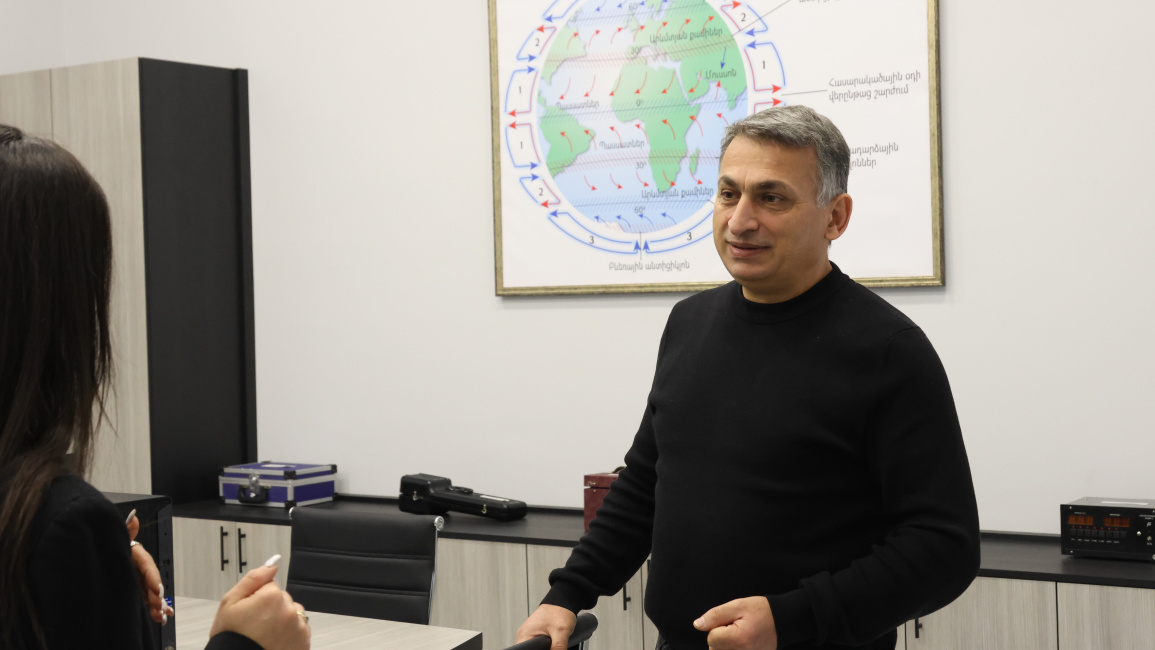
"The Mini MBA program covered a wide range of fundamental topics and provided practical skills that were very useful to me," says Associate Professor Narek Harutyunyan.
The five-week program provided him with the opportunity to acquire practical skills in marketing, strategic planning, finance, and entrepreneurial management, while also enhancing his abilities in leadership, teamwork, and appropriately presenting ideas. According to him, the program played a crucial role in market evaluation, formulating a value proposition, and applying data-driven approaches.
He emphasizes that the knowledge and tools he gained will be applied not only in his professional and research activities—particularly in project planning, data analysis, and results presentation—but also in the development and realization of business initiatives.
"The Mini MBA program stands out from other educational or training initiatives due to its practical focus and highly qualified mentoring team."
According to Narek Harutyunyan, the courses were led by recognized and experienced professionals in their fields, who not only presented theoretical foundations but also generously shared their personal experience, equipping participants with business thinking, operational skills, and applicable tools.
Narek Harutyunyan participated in the Mini MBA program while already managing an active business initiative. The "Biohumus: Low-Carbon Agriculture" project had a practical foundation and produced tangible outputs before joining the program. During the five-week course, the project was further systematized, with the business model, market analysis, and development strategy clearly defined, transforming it into a more sustainable and scalable initiative.
– Mr. Harutyunyan, during the program you worked on the project titled Biohumus: Low-Carbon Agriculture', aimed at establishing an efficient system for processing agricultural organic waste based on the principles of a circular economy. Could you describe the expected outcomes and practical applicability of the project?
– Within the framework of the program, the project focused on the production of biohumus, designed to simultaneously enhance soil fertility, ensure the sustainability of agricultural production, and reduce carbon emissions. The expected outcomes include increased economic efficiency through the processing of organic waste into valuable products, positive social impact by creating new employment opportunities and supporting the development of rural communities, as well as ecological benefits, such as reducing environmental pollution and promoting the sustainable use of natural resources.
– How does the proposed biohumus production technology address ecological challenges while simultaneously creating economic value as a business model?
– The proposed biohumus production technology is designed to simultaneously tackle ecological challenges and generate economic value, thereby establishing a viable and sustainable business model. The process is based on the efficient collection and processing of agricultural organic waste, particularly cow manure, straw, and chaff, which are currently the primary sources of environmental pollution and greenhouse gas emissions. Unmanaged decomposition of cow manure releases large quantities of biogas, including methane, a potent greenhouse gas. By collecting and concentrating the manure, it becomes possible to capture the biogas and use it to meet the energy needs of the farm, thereby significantly reducing greenhouse gas emissions and improving energy efficiency.
At the same time, the burning of straw and chaff—commonly practiced for clearing grain fields and orchards—leads to substantial emissions of carbon and other greenhouse gases. Under the program, these residues are collected and processed together with cow manure into biohumus, reducing open-burning practices and their associated ecological harm. Additionally, for packaging the finished biohumus, previously used polypropylene sacks and binding fibers from agriculture are repurposed, contributing to waste reduction, saving material resources, and extending product lifecycle.
In this way, the proposed technology combines environmentally oriented solutions with the production of high-value organic products that meet market demand, resulting in an economically profitable, ecologically responsible, and long-term sustainable business model.
– Could you explain who is your business idea targeted at (farmers, agricultural enterprises, organic producers), and what gives this biohumus a competitive advantage in the market?
– The target market for our biohumus includes smallholder farmers, greenhouse and orchard operations, nurseries, as well as private and municipal organizations involved in landscaping. Besides, the product is intended for individuals growing ornamental and indoor plants, and for companies engaged in fertilizer production, either as a high-quality organic raw material or as a finished product.
From a competitive standpoint, our biohumus stands out for several key reasons. First, it is produced from locally sourced, recycled organic materials using circular economy principles, ensuring low production costs and environmental responsibility. The product contributes to long-term soil fertility improvement, enhances soil structure and biological activity, while simultaneously reducing the need for chemical fertilizers.
Moreover, the sustainable solutions applied in both the production and packaging processes, combined with the high quality and practical effectiveness of the product, allow us to build trust in the market and secure a competitive position among consumers engaged in both conventional and organic agriculture.
– Mr. Harutyunyan, how do you plan to organize the collection of raw materials, production, and distribution of the finished product as an operational business chain?
– During the raw material collection phase, we will collaborate with smallholder farmers, greenhouse and orchard operations, to ensure the regular collection and centralization of cow manure, straw, and chaff. These collaborations are established on a contractual basis, guaranteeing a stable supply of raw materials and quality control.
In the production phase, the collected organic materials are processed through standardized technological procedures to produce high-quality, consistent biohumus. At the same time, principles of environmental protection and resource efficiency are adopted, including biogas capture and its utilization within the production process.
For distribution, we employ both direct sales channels and partnerships with organizations engaged in fertilizer production and distribution. In this way, the business chain is organized as a complete and sustainable system, ensuring continuity of production, supply aligned with market demand, and long-term economic efficiency.
– Are there opportunities for scaling the project, attracting investments, and exporting, particularly in the context of low-carbon agriculture?
– The project offers broad and diverse opportunities for scaling. First, the biohumus production system can be expanded across multiple agricultural regions through collaboration with local private farms, greenhouse and orchard operations. During scaling, it will be possible to develop larger production hubs, centralize raw materials, and improve production efficiency, while maintaining the principles of environmental protection and low-carbon agriculture.
From an investment perspective, the project's ecological and social orientation, together with the growing demand for organic products, ensures interest from both government and local support programs as well as private investors. In particular, leveraging inter-agency support, green investment funds, and social entrepreneurship mechanisms can contribute to long-term financial sustainability.
Regarding exports, the market value of biohumus is expected to rise due to international demand for organic and environmentally friendly fertilizers. The project enables the creation of competitive export-ready products that comply with international ecological standards and enhance the global recognition of local production.
Overall, scaling the project, attracting investment, and pursuing export opportunities not only support the development of an economically efficient business model but also promote long-term environmental protection and the advancement of low-carbon agriculture.
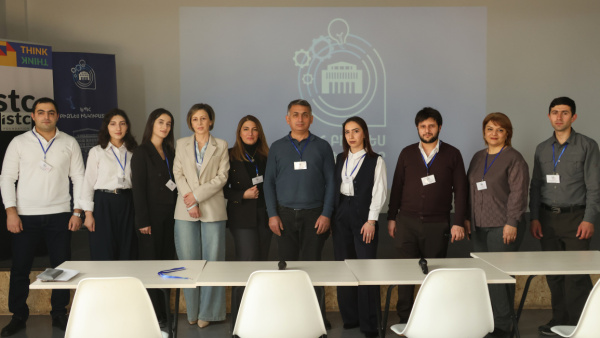
– How did the Mini MBA program help you clearly define your project idea and prepare it for practical application?
– The Mini MBA program helped me clearly define my idea by providing structured knowledge and practically applicable tools in business fundamentals, strategic planning, marketing, and finance. The skills acquired during the program—organizing teamwork, presenting ideas, and effective communication—enabled a thorough analysis of the concept, precise identification of the target market, and the development of a feasible business model.
At the same time, the practical experience gained and guidance from mentors supported the assessment of the project's applicability and the development of solutions that ensure marketability of the product, as well as the effective realization of its ecological, economic, and social impact.
– What steps do you plan to take to translate the project results into research applications and practical use?
– I plan to translate the project results into the research field by using the biohumus already produced, which has been enriched with Californian worms and specific microorganisms. This pilot product will enable soil and ecological studies to assess the impact of the humus on soil fertility, structure, and biological activity, as well as to develop optimal production technologies.
At the same time, the biohumus production model developed within the project is intended to be further developed as a business initiative, creating a sustainable and profitable operation. The product is planned to be monetized through local, and particularly agricultural, market sales, while also evaluating potential export opportunities, thereby ensuring economic efficiency and the long-term sustainability of the project.
Below are brief questions summarizing the winner's experience and key takeaways from the Mini MBA program.
– Mini MBA in one word.
– Practical.
– Most useful skill acquired during the program.
– Project planning.
– Biggest discovery during the program.
– Mentorship.
– Theory or practice?
– Both.
– Teamwork or individual approach?
– Teamwork.
– Five weeks: fast or effective?
– Effective.
– Science + business =
– Innovation.
– Next step after Mini MBA.
– Business.