Home
envelope
ՀայերենРусскийEnglish

Main Navigation (Eng)

  • Admission
    • Undergraduate admission
    • Master’s degree admission
    • Postgraduate admission
    • Foreign Students
    • Preparatory courses
    • Work Carried out with Applicants
    • YSU STEM High School
  • Education
    • Guide Book for First Year Students
    • Educational programs
    • Granting qualification of a pedagogue
    • Center for Academic Writing
    • Continuing education
    • Academic Calendar
    • Olympiad
  • Science
    • Open science
    • Conferences
    • Library
    • Grants
    • Publishing House
    • Doctoral Thesis Defence Councils
    • HRS4R
  • News and events
    • Events
    • Activities
    • News
    • Newsletter
    • Announcement
    • Photo gallery
    • Video gallery

Secondary Navigation (Eng)

  • About YSU
    • YSU Management
    • YSU Symbols
    • YSU International Cooperation
    • Quality assurance
    • YSU History Museum
    • Vacancies
    • FAQ
  • Structure
    • YSU Faculties and Educational Centers
      • Faculty of Geography and Geology
      • Faculty of Theology
      • Faculty of Oriental Studies
      • Faculty of European Languages and Communication
      • Faculty of Journalism
      • Faculty of Informatics and Applied Mathematics
      • Faculty of Law
      • Faculty of Biology
      • Faculty of Armenian Philology
      • Faculty of International Relations
      • Faculty of History
      • Institute of Physics
      • Faculty of Russian Philology
      • Faculty of Sociology
      • Faculty of Economics and Management
      • Faculty of Philosophy and Psychology
      • Faculty of Chemistry
      • Faculty of Mathematics and Mechanics
      • Pedagogy and Education Development Center
      • Center for European Studies
      • Institute of Pharmacy
      • Information Technologies Educational and Research Center
      • Chair of Civil Defense
      • Chair of Physical Education and Sports
    • Column Wrapper
      • YSU STEM High School
      • YSU Ijevan Branch
    • Scientific Centers and Laboratories
      • American Studies Center
      • Psychology Research Center
      • Research Laboratory of Applied Sociology
      • Center for Mathematical and Applied Research
      • Institute for Armenian Studies
      • Institute for Social and Humanitarian Studies
      • Research Center for Chemistry
      • Research Institute of Biology
      • Research Institute of Physics
      • Research Center for the Institute of Pharmacy
    • Scientific and Educational Centers
      • Observatory
      • Scientific and Educational Center for Control and Monitoring of the Quality of Medicines
      • Specialized cabinet-laboratory for the Design of Very Large Integrated Circuits (Synopsis)
      • Legal Clinic
      • Center for Applied Psychology
      • Research Center-Library of Greek Studies
      • Innovation Center for Microbial Biotechnology and Biofuels
      • Russian Center
      • Center for Russian Studies
      • Distance Learning Laboratory of Sociology
    • Column Wrapper
      • Banner
    • Administrative Divisions of YSU
      • Academic Secretary
      • Center for Doctoral Education
      • General Division
      • YSU History Museum
      • Department of Energy System Operation
      • Financial Analysis Department
      • Human Resources Department
      • Center for Admissions and Affairs with Applicants
      • Vehicle Fleet
      • Business Incubator
      • Byurakan Industrial Practice Base
      • Medical Center
      • Science Policy Department
      • Procurement Planning Department
      • Dilijan Sports and Health Center
      • YSU Archive
      • Publishing House
      • Legal Service
      • Marketing Department
      • International Cooperation Office
      • Tsaghkadzor training and production base
      • Cultural Center
      • Fire Safety Service
      • Alumni and Career Center
      • Hankavan Industrial Practice Base
      • Accounting Department
      • Center for Quality Assurance
      • Department for Special Affairs
      • Guest House
      • Student Dormitory
      • Educational-Methodological Department
      • Marie and Sarkis Izmirlian Library
      • Center for Strategic Planning
      • Rectorate
      • Rector's Office
      • Department of Territory Improvement and Landscape Design
      • Information Technology Department
      • Department of Organization and Control of Economic Activities
  • Structure
  • Alumni and Career
    • Alumni Community
    • Career Center
    • Friends of YSU
  • Student life
    • YSU Student Scientific Society
    • YSU Student Council
    • Art and Culture
ՀայերենРусскийEnglish
envelope

Main Navigation (Eng)

  • Admission
    • Undergraduate admission
    • Master’s degree admission
    • Postgraduate admission
    • Foreign Students
    • Preparatory courses
    • Work Carried out with Applicants
    • YSU STEM High School
  • Education
    • Guide Book for First Year Students
    • Educational programs
    • Granting qualification of a pedagogue
    • Center for Academic Writing
    • Continuing education
    • Academic Calendar
    • Olympiad
  • Science
    • Open science
    • Conferences
    • Library
    • Grants
    • Publishing House
    • Doctoral Thesis Defence Councils
    • HRS4R
  • News and events
    • Events
    • Activities
    • News
    • Newsletter
    • Announcement
    • Photo gallery
    • Video gallery

Secondary Navigation (Eng)

  • About YSU
    • YSU Management
    • YSU Symbols
    • YSU International Cooperation
    • Quality assurance
    • YSU History Museum
    • Vacancies
    • FAQ
  • Structure
    • YSU Faculties and Educational Centers
      • Faculty of Geography and Geology
      • Faculty of Theology
      • Faculty of Oriental Studies
      • Faculty of European Languages and Communication
      • Faculty of Journalism
      • Faculty of Informatics and Applied Mathematics
      • Faculty of Law
      • Faculty of Biology
      • Faculty of Armenian Philology
      • Faculty of International Relations
      • Faculty of History
      • Institute of Physics
      • Faculty of Russian Philology
      • Faculty of Sociology
      • Faculty of Economics and Management
      • Faculty of Philosophy and Psychology
      • Faculty of Chemistry
      • Faculty of Mathematics and Mechanics
      • Pedagogy and Education Development Center
      • Center for European Studies
      • Institute of Pharmacy
      • Information Technologies Educational and Research Center
      • Chair of Civil Defense
      • Chair of Physical Education and Sports
    • Column Wrapper
      • YSU STEM High School
      • YSU Ijevan Branch
    • Scientific Centers and Laboratories
      • American Studies Center
      • Psychology Research Center
      • Research Laboratory of Applied Sociology
      • Center for Mathematical and Applied Research
      • Institute for Armenian Studies
      • Institute for Social and Humanitarian Studies
      • Research Center for Chemistry
      • Research Institute of Biology
      • Research Institute of Physics
      • Research Center for the Institute of Pharmacy
    • Scientific and Educational Centers
      • Observatory
      • Scientific and Educational Center for Control and Monitoring of the Quality of Medicines
      • Specialized cabinet-laboratory for the Design of Very Large Integrated Circuits (Synopsis)
      • Legal Clinic
      • Center for Applied Psychology
      • Research Center-Library of Greek Studies
      • Innovation Center for Microbial Biotechnology and Biofuels
      • Russian Center
      • Center for Russian Studies
      • Distance Learning Laboratory of Sociology
    • Column Wrapper
      • Banner
    • Administrative Divisions of YSU
      • Academic Secretary
      • Center for Doctoral Education
      • General Division
      • YSU History Museum
      • Department of Energy System Operation
      • Financial Analysis Department
      • Human Resources Department
      • Center for Admissions and Affairs with Applicants
      • Vehicle Fleet
      • Business Incubator
      • Byurakan Industrial Practice Base
      • Medical Center
      • Science Policy Department
      • Procurement Planning Department
      • Dilijan Sports and Health Center
      • YSU Archive
      • Publishing House
      • Legal Service
      • Marketing Department
      • International Cooperation Office
      • Tsaghkadzor training and production base
      • Cultural Center
      • Fire Safety Service
      • Alumni and Career Center
      • Hankavan Industrial Practice Base
      • Accounting Department
      • Center for Quality Assurance
      • Department for Special Affairs
      • Guest House
      • Student Dormitory
      • Educational-Methodological Department
      • Marie and Sarkis Izmirlian Library
      • Center for Strategic Planning
      • Rectorate
      • Rector's Office
      • Department of Territory Improvement and Landscape Design
      • Information Technology Department
      • Department of Organization and Control of Economic Activities
  • Structure
  • Alumni and Career
    • Alumni Community
    • Career Center
    • Friends of YSU
  • Student life
    • YSU Student Scientific Society
    • YSU Student Council
    • Art and Culture
  1. Main
  2. News
  3. Headscarves over Kingdom of Van hats mirror Armenian traditional dress, study finds
March 11, 2026 | 16:37
Research
Publications and scientific journals
Culture
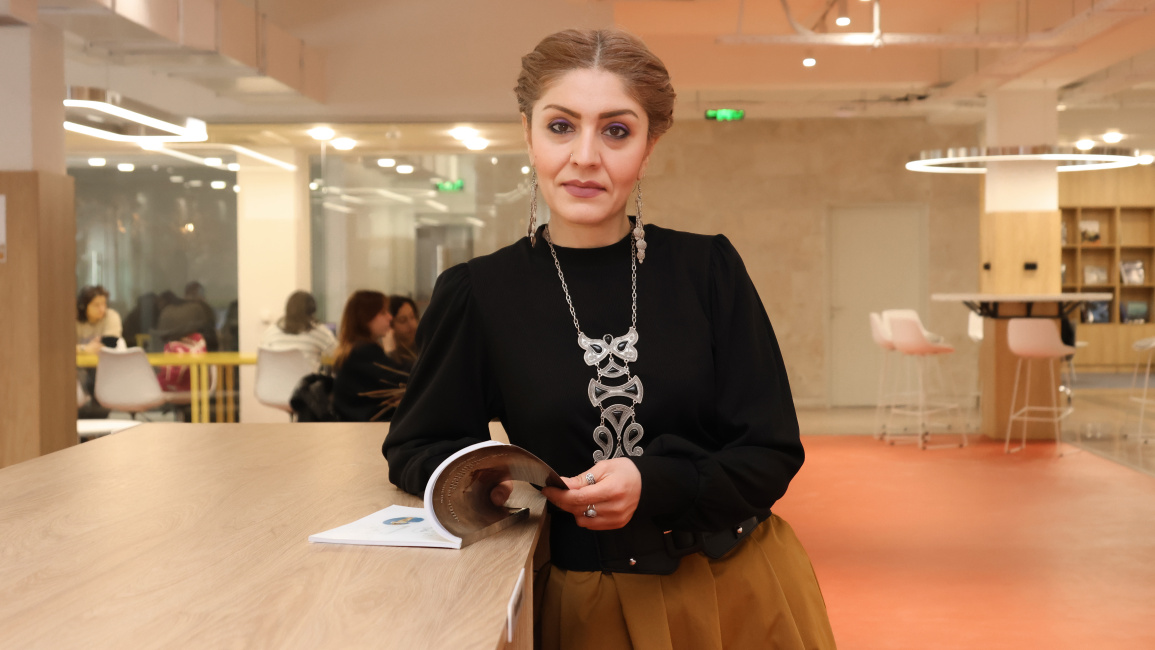
Headscarves over Kingdom of Van hats mirror Armenian traditional dress, study finds

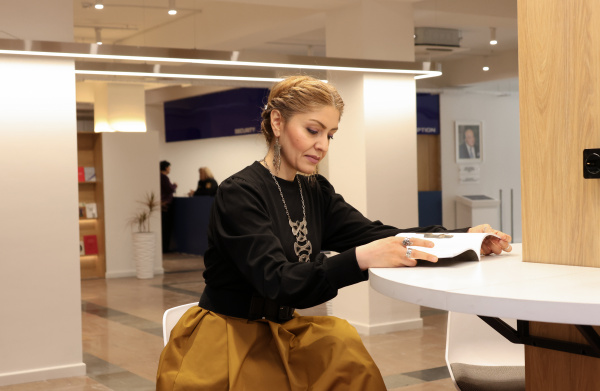
How did people dress in the Kingdom of Van, and what aspects of Urartian clothing have been inherited? In her monograph titled "Clothing of the Kingdom of Van", Gayane Poghosyan, lecturer in the Chair of History and Theory of Armenian Art at the YSU Faculty of History, proposes new hypotheses, draws parallels between Urartian clothing and traditional Armenian dress, and presents visual reconstructions of male and female attire.

– Ms. Poghosyan, when describing the clothing of people from the Urartian period, which sources did you rely on, considering that you are referring to such an early historical era? 

– The research is primarily based on Urartian archaeological findings, including sculptures, metalwork such as belts, ritual objects, and samples from murals. I combined the analysis of these artifacts with surviving written sources and the results of the few previous studies conducted in this area.

Important sources for the research also included written records from neighboring cultures. For example, the Assyrian King Sargon II recorded that when his army plundered the temple of the god Khaldi in the city of Musasir (Van), they seized various items, including jewelry and textiles.

– The book presents male, female, and deity attire. What were the distinctive features of Urartian clothing?

– Research shows that blue-purple was the primary color of royal clothing. This likely corresponds to "apricot" in medieval sources, where the term referred to a reddish-blue or reddish-purple royal color. In the monograph, I have tried to correlate this blue-purple with the apricot hue, which later became a key color in the vestments of Christian clergy. 
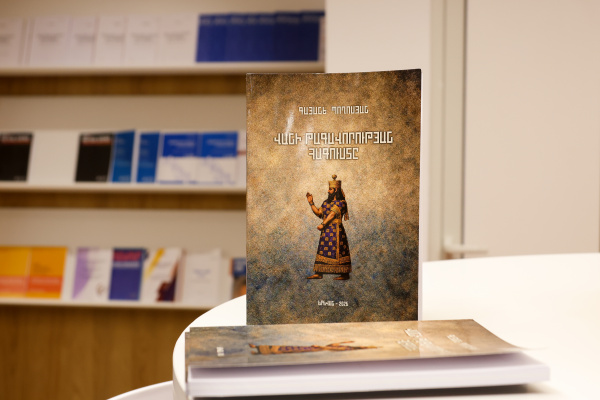
The Kingdom of Van was a theocratic state, where religion and the divine played central roles. People often sought to align their own lives with this divine order. In art, gods and goddesses were frequently depicted wearing attire characteristic of the elite: male deities in royal-style clothing, female deities in garments similar to queens and priestesses. 

The monograph covers not only the external appearance of clothing, but also patterns, structural features, and fabric characteristics.

– What types of threads and colors were common in Urartian clothing aside from blue-purple?

– Information about fabrics also comes from various archaeological samples. Excavations at Red Hill and other sites of the Kingdom of Van have uncovered traces of burnt textiles. During Soviet years, specialists studied these materials, and the results indicate that wool processing and woolen textiles were highly developed and widely used in clothing. Linen was also common and considered a valuable fabric both in Assyria and in the Kingdom of Van. 

Silk was used as well. While it is difficult to say definitively whether silk was produced locally or imported from places like China, it is possible that local silk production existed, as medieval Christian Armenia was known for silk weaving. This suggests that the origins of silk production in the Armenian Highlands may go back to pre-Christian times.

Urartian clothing was multicolored, but the most common fabrics were wool and linen in red and purple hues. It is also believed that cotton may have been used.

– How did royal palace clothing differ from that of ordinary people? What did women wear, and how did male and female attire correspond to each other?

– Both men's and women's clothing were typically tunic-shaped. Garments were made from rectangular fabric pieces of varying widths and lengths, with neck and sleeve openings tailored to the wearer’s body. 

Members of the elite wore garments made from luxurious textiles, often adorned with embellishments, coats, jewelry, belts, and accessories, while lower classes wore simpler materials with modest decoration.

Women's dresses were long, tunic-shaped, and fitted to the body. While some might assume ancient clothing was very loose, for example, the statuette of the goddess Arubani, held at the History Museum of Armenia (and pictured in my book), shows a garment closely fitted to the body. This can be described as a two-part dress, with a decorative cut around the knees indicating a longer garment underneath. Similar clothing is seen in other Urartian monuments.

In the Kingdom of Van, both men's and women's clothing often featured fringe decoration, adding aesthetic value. Such fringe-adorned garments were common across the ancient Near East.

The book also discusses jewelry: notably, both men and women in the Kingdom of Van wore ornaments such as rings and bracelets.

– While studying Urartian clothing, you drew parallels with traditional Armenian dress. Could you give a few examples on this topic?
– In the Kingdom of Van, young girls are depicted with uncovered heads, unlike the goddess Arubani, wife of the god Khaldi, who is shown wearing a headscarf. This can be seen as a social indicator, distinguishing married women from young girls. For example, in traditional Armenian dress, a married woman is identified by wearing a headscarf, whereas girls either wear hats or leave their heads uncovered. The same pattern appears in the Kingdom of Van. 

Another example comes from an Urartian depiction in which a woman wears a headscarf over her hat. This approach is also found in Armenian traditional dress, where headscarves were worn over hats.

Urartian textiles also feature decorative patterns. Research shows that fabrics included impressed designs, as well as elements of embroidery and appliqué embroidery.

– Are there any decorative motifs that we have inherited — that is, which continued to be used after the Urartian period?

– Yes. For example, the rosette was the most widespread motif in the Kingdom of Van. It was used not only in Van but also in neighboring Assyria and Mesopotamia. The rosette, as a symbol of fertility and the sun, continued to be widely used in the culture of the Kingdom of Ani.

The square motif, often combined with the rosette, also had a place in traditional Armenian dress. Many plant-based designs in Armenian textiles, such as floral and cocoon motifs, reflect these patterns seen in the murals of Ani.

In the Kingdom of Van, the most common motif found in both male and female garments was a square with a rosette at its center. 

– What new hypotheses does your study contribute to the body of existing research?

– I have two specializations — art history and clothing design — and combining these has allowed me to propose some new and interesting hypotheses not found in previous studies. For example, the use of trousers in the Kingdom of Van. The type of trousers worn by men can be seen on a bronze belt discovered at Red Hill. Some researchers believe it depicts the god Shivini, but I consider this interpretation debatable. While soldiers in Assyria did wear trousers, comparing the evidence suggests that trousers appeared earlier in the Kingdom of Van.

Compared to earlier studies, I examine textile decoration and color patterns, types of hats, and jewelry more extensively. The book also concludes that in the Kingdom of Van, belts, medallions, and other luxury ornaments depicting rituals involving women were likely worn by women, while items associated primarily with male figures belonged to men. 

Additionally, the book includes original sketches of Urartian clothing, generated with the help of artificial intelligence.


Nara Martirosyan
ShareFacebookTelegram

Latest News

ԵՊՀ աջակցությամբ կազմակերպվել է Քուվեյթում գտնվող ուսանողների վերադարձը Հայաստան

01.04.2026

New opportunities for academic cooperation in atomic energy discussed at YSU

01.04.2026

Longstanding dedication and responsible service: Alexander Virabyan awarded certificate of appreciation

31.03.2026
Show All

Announcement

Invitation to Online Conference: American Research Institute of the South Caucasus

09.17.2026 - 09.19.2026

Invitation to Participate in International Conference "Armenia: Crossroads of Centuries and Worlds"

06.18.2026 - 06.19.2026

Grant Competition for Invited Professorship at Yerevan State University

04.10.2026 - 05.20.2026
Show All

Արագ հասանելիություն

  • Intranet
  • E-learning
  • Mulberry
  • Online applications
  • Phone book
  • Registrar
  • Documentation

Footer(ENG)

  • Main pages
    • Admission
    • Education
    • Science
    • News
  • Information
    • Frequently asked Questions
    • Vacancies
    • Search for educational programs
    • For the applicants
    • For the students
  • About YSU
    • YSU management
    • YSU symbols
© Yerevan state university 2026
Address: Republic of Armenia, Yerevan, 0025, 1 Alex Manoogian (+37460) 710000 info@ysu.am