April 13, 2026 | 12:00
Science
Education
Society
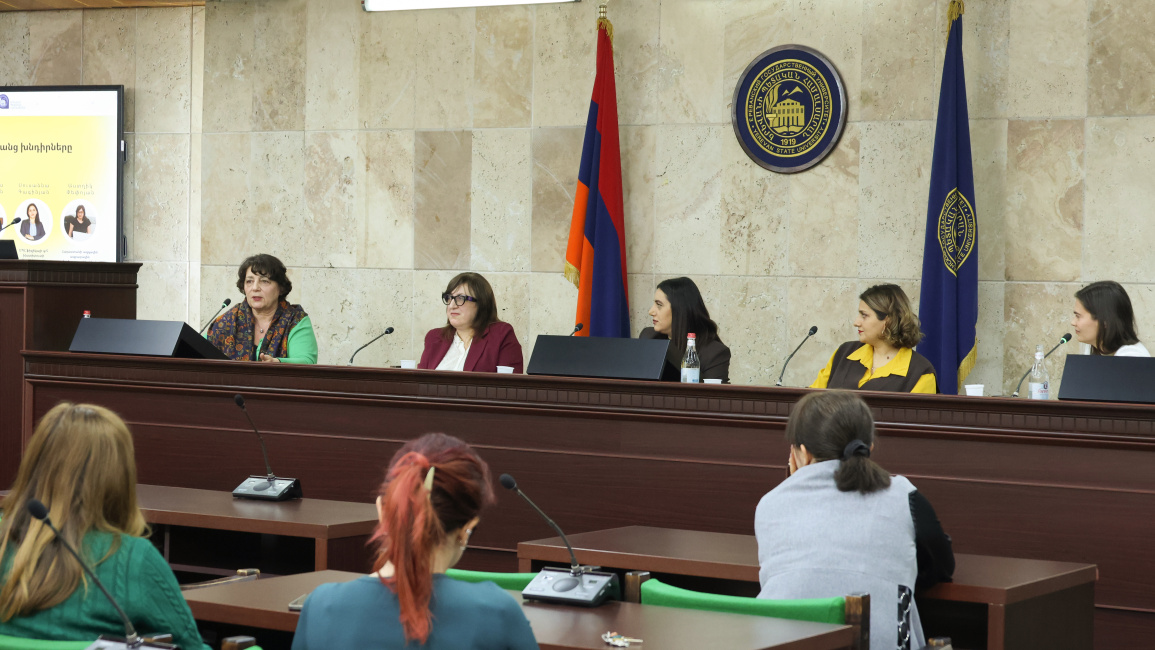
In recent years, thanks to numerous international and national educational programs worldwide, women have become actively engaged in a wide range of scientific fields. In this regard, Armenia has recorded both an increase in the number of women scientists and an expansion of funding, resources, and opportunities for scientific programs. Notably, the share of women scientists included in baseline funding programs in the Republic of Armenia is approximately 1.7 times higher than the global average.
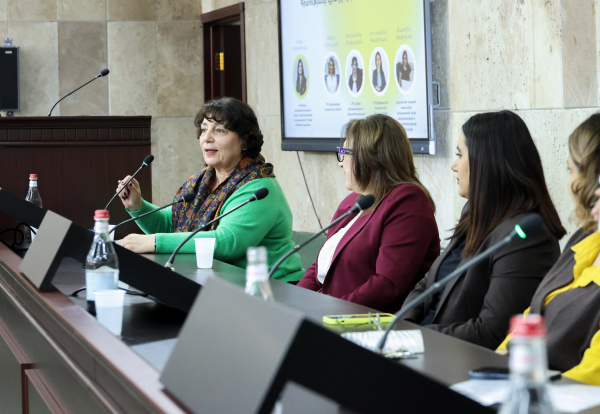
While the international community has made significant progress in promoting women's participation in science, certain gaps remain evident. According to a UNESCO report, around 46% of girls worldwide who complete school continue their studies at higher education institutions, compared to approximately 40% for boys. Nevertheless, globally, only one in three scientists is a woman.
Although women often constitute a large proportion of researchers, their representation in senior academic positions or leadership roles remains relatively low, with noticeable imbalances persisting. Women are often engaged in teaching, administrative, or organizational work, while in some fields—such as the natural sciences—they remain underrepresented.
Addressing the topic of the day, the speakers noted that the barriers faced by women scientists are multifaceted and often "hidden", a phenomenon commonly referred to as the glass ceiling. These barriers are shaped by socio-cultural environments, individual traits, and various systemic factors.
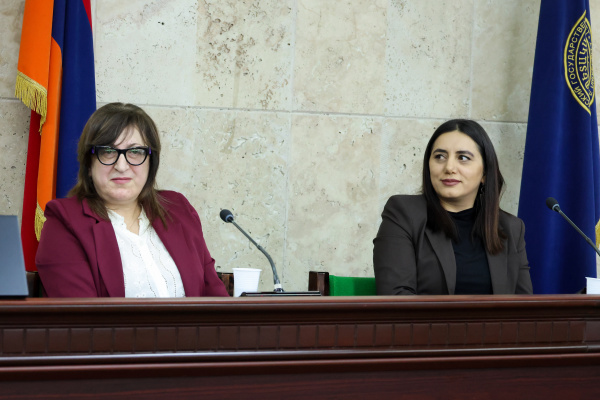
A significant burden arises from the difficulty of balancing family care responsibilities with professional duties, a challenge many women face at certain stages of life. Scientific work requires long-term research, both local and international collaboration, and often mobility. Due to socially assigned roles, women are often required to interrupt their scientific careers, leading to disrupted research activity, reduced publication output, and, consequently, decreased competitiveness.
One of the panelists, Doctor of Biological Sciences, YSU Professor Susanna Badalyan, emphasized that modern technologies make everyday life easier, thereby making science more accessible. Thus, being well organized enables individuals to keep pace with life's demands. However, many women and girls still need to overcome self-doubt, address underdeveloped self-presentation skills, and unlock their own potential. In this regard, targeted efforts should begin as early as kindergarten.
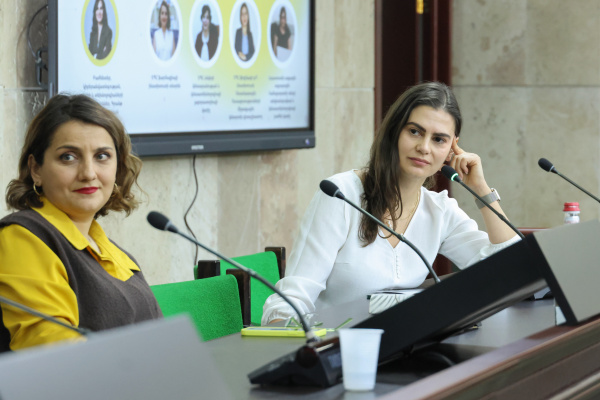
Anna Mkrtchyan, Director of the YSU Institute of Pharmacy and Candidate of Chemical Sciences, Associate Professor, noted: "According to statistics, women with higher education are more numerous, yet fewer women than men pursue science in depth. Engagement in science depends not only on a person's abilities and personal qualities, but also on family circumstances, interests, and individual choices."
At some point in life, a woman faces a choice, often prioritizing family. The speaker stressed the importance of ensuring that women have the opportunity to make this choice freely, allowing them to dedicate time to both work and family. Mkrtchyan also pointed to an interesting fact from the historical experience of the Armenian people: during a certain period of independence, when the socio-economic situation in Armenia was such that salaries amounted, for example, to 4,500 or 12,000 AMD, many male scientists were forced to leave science, whereas Armenian women continued their scientific work during that difficult time.
Overcoming the challenges faced by women and girls in science is seen both as a fundamental human right and as a social and economic necessity, essential for the full and comprehensive realization of human potential. It is of vital importance for addressing the challenges facing humanity, achieving greater results in scientific research, building a more capable society, and ensuring continued progress.