March 09, 2026 | 14:35
Education
Society
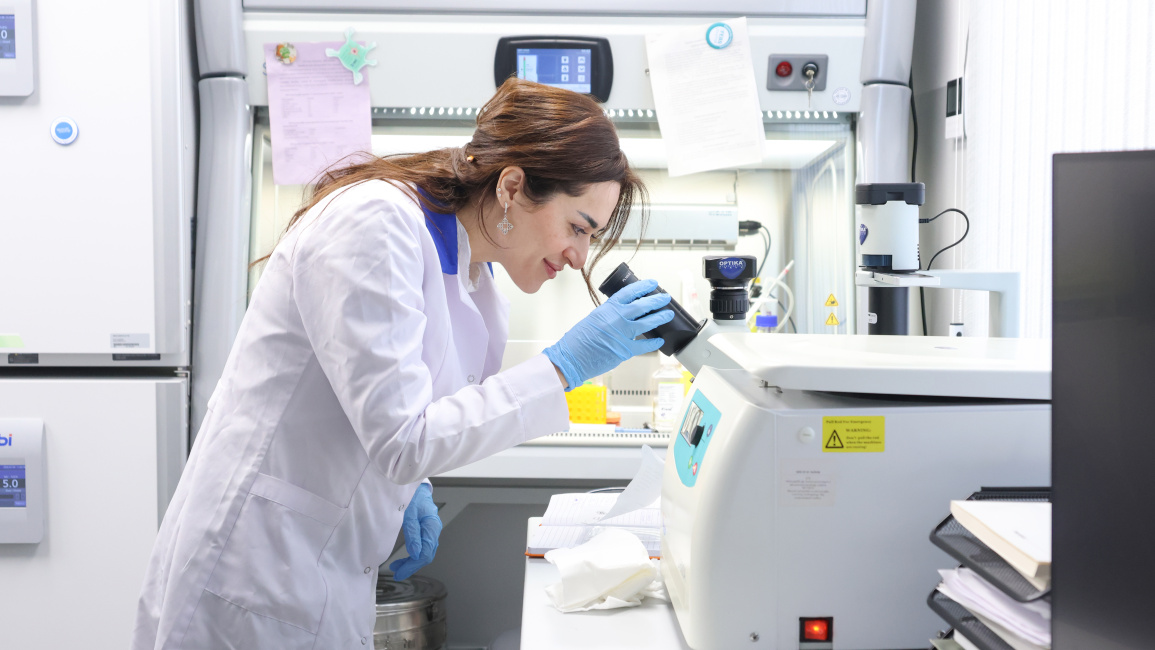
Javrushyan loved all subjects equally in school and for a long time could not decide on her profession. Guided by her mother and her biology teacher, she ultimately chose biology. Today, she confidently says that it was the right decision, noting that while a doctor treats individual patients, a biologist seeks to uncover the mechanisms of disease and contribute to overcoming them. In her case, the desire to "help people" shifted from the clinic to the laboratory.
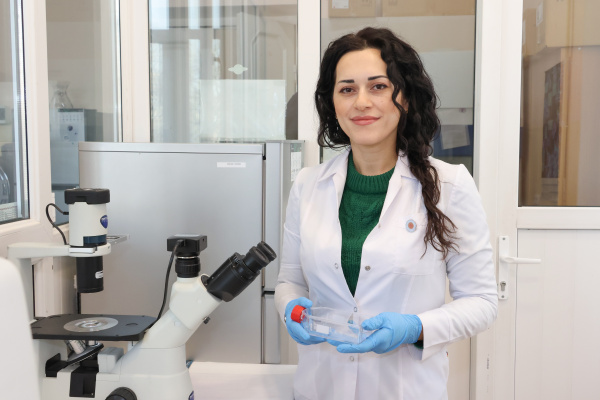
She describes her greatest achievement in science not as a specific result but as patience—not giving up in difficult moments. When asked about the difficulties she has encountered in her journey, she says, "If we focus on difficulties, it becomes hard to see the goal we are striving toward."
"In science, what matters most to me are human relationships, trust, and honest work, which I do with dedication. Yet I have sometimes noticed that discrimination against women does exist, as confirmed by official statistics. I am convinced that gender should never be a decisive factor in science; what matters is the knowledge being uncovered," the researcher emphasizes, adding that the formula for overcoming obstacles is simple: not to become discouraged and to keep moving forward.
Science is a team endeavor, and reliable support makes any challenge surmountable.
"Staying in science is a unique marathon, where women sometimes pause not due to a lack of knowledge but because of domestic and social burdens," the female scientist notes, adding that a publication in FEBS Press highlights that for this reason, many women do not return to science at certain stages of life.
Speaking about her personal experience, Javrushyan says, "For me, these two lives are actually intertwined. I have two children, and very often on weekends they spend time with me in the laboratory, 'helping' me. And when it comes to writing scientific papers, I can say that my computer has been in every possible corner of our home at all hours of the day."
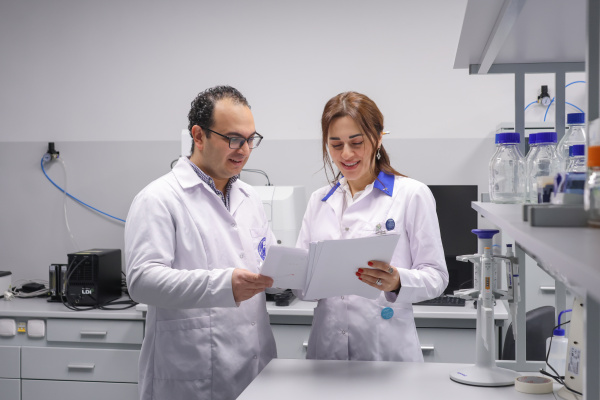
She underscores that women bring new questions and creative approaches to science, and the more diverse a team is, the more innovative and comprehensive its results. At the same time, this is crucial for the next generations. The example of successful female scientists shows girls that there are no limits in science; the only criteria are curiosity and diligence.
Javrushyan notes that the main challenges often relate to choices—family or science—but she addresses these through collaboration. For example, at a conference in Krakow, she brought her four-year-old daughter with her, turning the trip into an opportunity to combine family life with professional activity.
"I had considered canceling my trip, but then I decided to see it not as a problem but as an opportunity, and we chose to bring my daughter along. It was one of the most memorable conferences for me. In all our photos, whether we were listening to lectures or presenting reports, she was always beside us, sometimes sitting on the floor playing with colorful lab items we received as gifts from participants. We even made her an individual name tag, which she still keeps," the researcher recalls with a smile.
One should not frame the choice as a challenge between work and family. The approach needs to change, and one should not be constrained by societal norms.
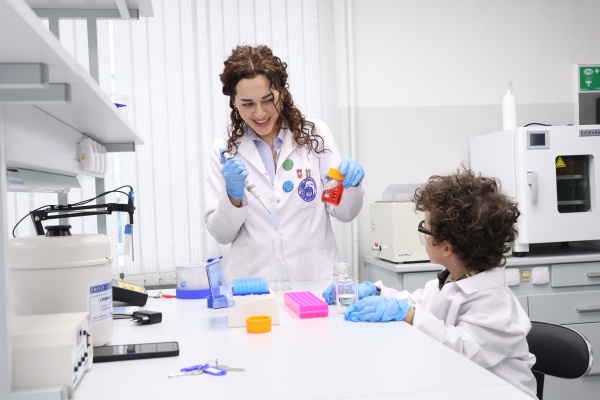
She admits that there have been days when she wanted to leave science, but she always returned, joining the 20% of women who remain in science, embrace challenges, and serve as role models for future female scientists.
"I have realized that we, female scientists, can be examples for many, just as strong women once inspired us. I am fascinated by the inner strength that allows a woman to return to the world of science every day—channeling energy from her family into science and vice versa. In science, women succeed through solidarity. True success lies where women help each other rise rather than compete," concludes the YSU researcher, who is currently studying the biochemical and cellular signal transduction mechanisms in cancer.