March 19, 2026 | 15:34
Science
Research centers and institutes
Events
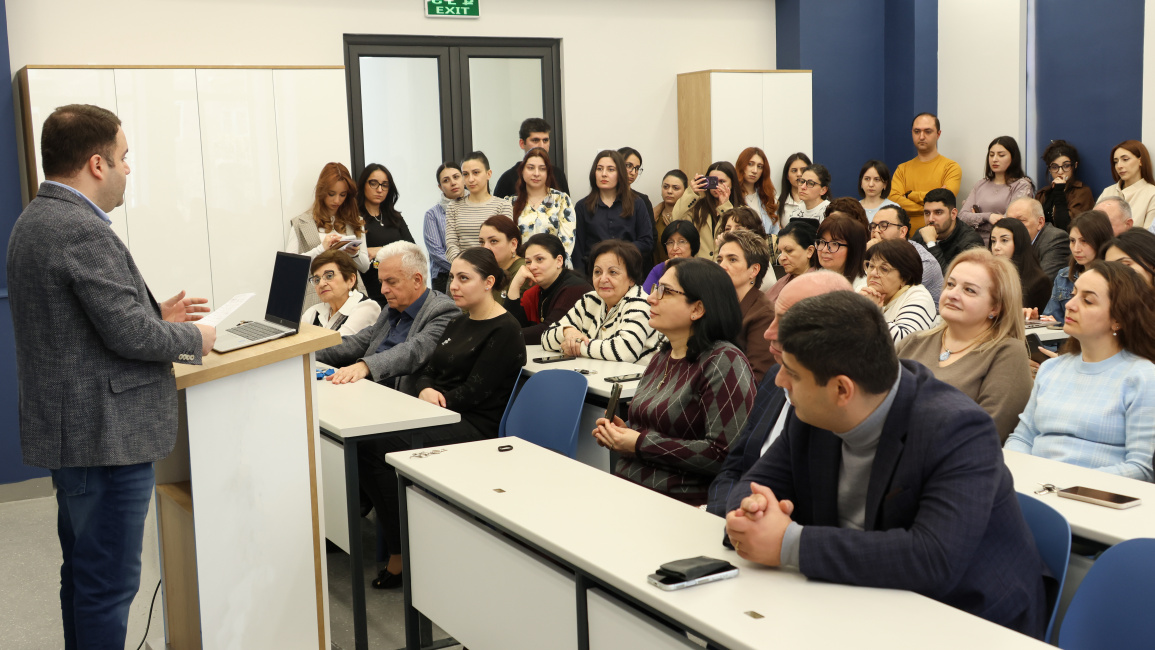

YSU Vice-Rector for Scientific Affairs, Rafayel Barkhudaryan, commended the faculty's scientific productivity and progress. He emphasized that the work performed is gaining significant visibility not only within the university but also on national and international stages. According to the vice-rector, the current research environment meets modern global standards, ensuring both quantitative and qualitative growth. He placed particular emphasis on the involvement of young researchers, noting that such initiatives provide a vital platform for them to shape their own professional paths, clarify their objectives, and achieve breakthrough results. The vice-rector also stressed that every initiative must serve a clear purpose and yield tangible outcomes—acting not as a formal gesture, but as a catalyst for scientific advancement.
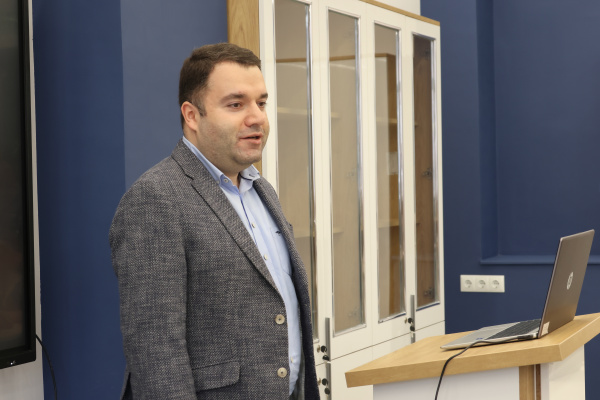
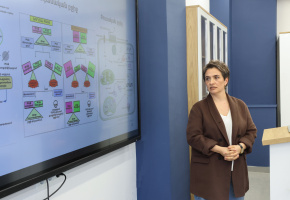
Director of the Research Institute of Biology, Doctor of Biological Sciences, Professor Karen Trchounian paid special attention to the role of young scientists, noting that this year's conference is specifically aimed at revitalizing their scientific activities. In his observation, young people often lack experience in self-expression and public speaking within the scientific environment, and such platforms provide an important opportunity to fill that gap.
Presenting the institute's achievements over recent years, he highlighted impressive figures: from 2021 to March 2026, more than 140 articles were published in high-ranking (Q1 and Q2) scientific journals, along with approximately 350 theses, while the number of grants won exceeded 60. Significant investments have also been made in the development of scientific infrastructure; approximately 2 billion AMD in funding was secured for equipment alone, enabling the laboratories to be replenished with modern instruments. At the same time, professional training programs continue to expand young specialists' international experience.
Referring to the vision for the future, Professor Trchounian noted that the institute aims to create new infrastructures and develop already existing capabilities. The newly implemented digital monitoring system allows for tracking the workload and efficient use of equipment, which serves as a basis for acquiring new devices and expanding scientific capacities. The institute is also planning ambitious projects, including the creation of a unique, multi-functional microscope expected to offer capabilities unparalleled in the international scientific community.

In the context of the scientific strategy, the institute strives for a higher benchmark, forming competitive science and aiming to keep pace with the world's leading scientific centers. Along this path, both the introduction of innovative technologies and the continuous involvement of young personnel are key.
Currently, large-scale infrastructural reforms are also being carried out at the institute: laboratory conditions are being modernized, and modern power supply and equipment protection systems are being installed. At the same time, the modern genetic editing system—CRISPR technology—is already in the launch phase; it is being used in Armenia for the first time and will enable high-precision changes at the cellular level, opening new perspectives for biological research.