April 15, 2026 | 13:21
Partners
Research centers and institutes
Research

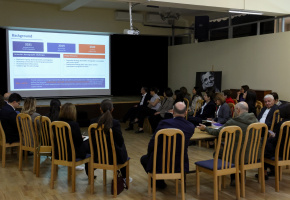
Speakers at the event emphasized the importance of applying the study's findings in the development of evidence-based policymaking, the improvement of the social protection system, and the design of programs addressing demographic challenges.

YSU Vice-Rector for International Cooperation, Development and Innovation Mikayel Hovhannisyan noted that the Center for Demographic Research and Education has, in recent months, been actively collaborating with partners from UNFPA, the Armenian Ministry of Labor and Social Affairs, and Ameria Management Advisory.
"This analysis also opens up new avenues for more in-depth research by university scholars," he said.
The study reveals the substantial yet largely "invisible" role of unpaid household and care work in Armenia's economy.

Tigran Jrbashyan, Head of Management Advisory Services at Ameria, described the study as "transformational". He noted that while it is widely understood that a significant amount of work is performed within households, its true scale and economic value are difficult to fully grasp.
Artashes Shaboyan, Senior Research Consultant at Ameria Management Advisory, presented the methodological framework of the study in detail. He explained that the traditional System of National Accounts does not include unpaid services, making it difficult to capture the full picture of the economy.
According to the speakers, conventional economic indicators—such as GDP—primarily measure market-based transactions and do not account for unpaid household work, including cooking, cleaning, and caring for children and the elderly. However, when assigned a monetary value, unpaid work indicates that non-market household services constitute a significant share of GDP.
They added that the findings are particularly relevant in the context of Armenia's demographic challenges, including population aging, declining birth rates, and migration.
Lusine Sargsyan, Head of the UNFPA Armenia Country Office, expressed hope that the study's findings will serve as a basis for institutional reforms and contribute to improving women's quality of life and broader economic development. In her view, the research lays the groundwork for more targeted, data-driven policies aimed at strengthening demographic resilience and promoting gender inclusion.

Tatevik Stepanyan, Deputy Minister of Labor and Social Affairs, said the findings will be considered in discussions on potential amendments to the Labor Code. In particular, discussions will address the possibility of recognizing caregiving as formal work experience and incorporating it into pension calculations, given that caregivers are often excluded from the labor market due to their responsibilities.
It was also noted during the presentation that Armenia is among the first developing countries to apply this new methodology adopted by the United Nations in 2025.