Home
envelope
ՀայերենРусскийEnglish

Main Navigation (Eng)

  • Admission
    • Undergraduate admission
    • Master’s degree admission
    • Postgraduate admission
    • Foreign Students
    • Preparatory courses
    • Work Carried out with Applicants
    • YSU STEM High School
  • Education
    • Guide Book for First Year Students
    • Educational programs
    • Granting qualification of a pedagogue
    • Center for Academic Writing
    • Continuing education
    • Academic Calendar
    • Olympiad
  • Science
    • Open science
    • Conferences
    • Library
    • Grants
    • Publishing House
    • Doctoral Thesis Defence Councils
    • HRS4R
  • News and events
    • Events
    • Activities
    • News
    • Newsletter
    • Announcement
    • Photo gallery
    • Video gallery

Secondary Navigation (Eng)

  • About YSU
    • YSU Management
    • YSU Symbols
    • YSU International Cooperation
    • Quality assurance
    • YSU History Museum
    • Vacancies
    • FAQ
  • Structure
    • YSU Faculties and Educational Centers
      • Faculty of Geography and Geology
      • Faculty of Theology
      • Faculty of Oriental Studies
      • Faculty of European Languages and Communication
      • Faculty of Journalism
      • Faculty of Informatics and Applied Mathematics
      • Faculty of Law
      • Faculty of Biology
      • Faculty of Armenian Philology
      • Faculty of International Relations
      • Faculty of History
      • Institute of Physics
      • Faculty of Russian Philology
      • Faculty of Sociology
      • Faculty of Economics and Management
      • Faculty of Philosophy and Psychology
      • Faculty of Chemistry
      • Faculty of Mathematics and Mechanics
      • Pedagogy and Education Development Center
      • Center for European Studies
      • Institute of Pharmacy
      • Information Technologies Educational and Research Center
      • Chair of Civil Defense
      • Chair of Physical Education and Sports
    • Column Wrapper
      • YSU STEM High School
      • YSU Ijevan Branch
    • Scientific Centers and Laboratories
      • American Studies Center
      • Psychology Research Center
      • Research Laboratory of Applied Sociology
      • Center for Mathematical and Applied Research
      • Institute for Armenian Studies
      • Institute for Social and Humanitarian Studies
      • Research Center for Chemistry
      • Research Institute of Biology
      • Research Institute of Physics
      • Research Center for the Institute of Pharmacy
    • Scientific and Educational Centers
      • Observatory
      • Scientific and Educational Center for Control and Monitoring of the Quality of Medicines
      • Specialized cabinet-laboratory for the Design of Very Large Integrated Circuits (Synopsis)
      • Legal Clinic
      • Center for Applied Psychology
      • Research Center-Library of Greek Studies
      • Innovation Center for Microbial Biotechnology and Biofuels
      • Russian Center
      • Center for Russian Studies
      • Distance Learning Laboratory of Sociology
    • Column Wrapper
      • Banner
    • Administrative Divisions of YSU
      • Academic Secretary
      • Center for Doctoral Education
      • General Division
      • YSU History Museum
      • Department of Energy System Operation
      • Financial Analysis Department
      • Human Resources Department
      • Center for Admissions and Affairs with Applicants
      • Vehicle Fleet
      • Business Incubator
      • Byurakan Industrial Practice Base
      • Medical Center
      • Science Policy Department
      • Procurement Planning Department
      • Dilijan Sports and Health Center
      • YSU Archive
      • Publishing House
      • Legal Service
      • Marketing Department
      • International Cooperation Office
      • Tsaghkadzor training and production base
      • Cultural Center
      • Fire Safety Service
      • Alumni and Career Center
      • Hankavan Industrial Practice Base
      • Accounting Department
      • Center for Quality Assurance
      • Department for Special Affairs
      • Guest House
      • Student Dormitory
      • Educational-Methodological Department
      • Marie and Sarkis Izmirlian Library
      • Center for Strategic Planning
      • Rectorate
      • Rector's Office
      • Department of Territory Improvement and Landscape Design
      • Information Technology Department
      • Department of Organization and Control of Economic Activities
  • Structure
  • Alumni and Career
    • Alumni Community
    • Career Center
    • Friends of YSU
  • Student life
    • YSU Student Scientific Society
    • YSU Student Council
    • Art and Culture
ՀայերենРусскийEnglish
envelope

Main Navigation (Eng)

  • Admission
    • Undergraduate admission
    • Master’s degree admission
    • Postgraduate admission
    • Foreign Students
    • Preparatory courses
    • Work Carried out with Applicants
    • YSU STEM High School
  • Education
    • Guide Book for First Year Students
    • Educational programs
    • Granting qualification of a pedagogue
    • Center for Academic Writing
    • Continuing education
    • Academic Calendar
    • Olympiad
  • Science
    • Open science
    • Conferences
    • Library
    • Grants
    • Publishing House
    • Doctoral Thesis Defence Councils
    • HRS4R
  • News and events
    • Events
    • Activities
    • News
    • Newsletter
    • Announcement
    • Photo gallery
    • Video gallery

Secondary Navigation (Eng)

  • About YSU
    • YSU Management
    • YSU Symbols
    • YSU International Cooperation
    • Quality assurance
    • YSU History Museum
    • Vacancies
    • FAQ
  • Structure
    • YSU Faculties and Educational Centers
      • Faculty of Geography and Geology
      • Faculty of Theology
      • Faculty of Oriental Studies
      • Faculty of European Languages and Communication
      • Faculty of Journalism
      • Faculty of Informatics and Applied Mathematics
      • Faculty of Law
      • Faculty of Biology
      • Faculty of Armenian Philology
      • Faculty of International Relations
      • Faculty of History
      • Institute of Physics
      • Faculty of Russian Philology
      • Faculty of Sociology
      • Faculty of Economics and Management
      • Faculty of Philosophy and Psychology
      • Faculty of Chemistry
      • Faculty of Mathematics and Mechanics
      • Pedagogy and Education Development Center
      • Center for European Studies
      • Institute of Pharmacy
      • Information Technologies Educational and Research Center
      • Chair of Civil Defense
      • Chair of Physical Education and Sports
    • Column Wrapper
      • YSU STEM High School
      • YSU Ijevan Branch
    • Scientific Centers and Laboratories
      • American Studies Center
      • Psychology Research Center
      • Research Laboratory of Applied Sociology
      • Center for Mathematical and Applied Research
      • Institute for Armenian Studies
      • Institute for Social and Humanitarian Studies
      • Research Center for Chemistry
      • Research Institute of Biology
      • Research Institute of Physics
      • Research Center for the Institute of Pharmacy
    • Scientific and Educational Centers
      • Observatory
      • Scientific and Educational Center for Control and Monitoring of the Quality of Medicines
      • Specialized cabinet-laboratory for the Design of Very Large Integrated Circuits (Synopsis)
      • Legal Clinic
      • Center for Applied Psychology
      • Research Center-Library of Greek Studies
      • Innovation Center for Microbial Biotechnology and Biofuels
      • Russian Center
      • Center for Russian Studies
      • Distance Learning Laboratory of Sociology
    • Column Wrapper
      • Banner
    • Administrative Divisions of YSU
      • Academic Secretary
      • Center for Doctoral Education
      • General Division
      • YSU History Museum
      • Department of Energy System Operation
      • Financial Analysis Department
      • Human Resources Department
      • Center for Admissions and Affairs with Applicants
      • Vehicle Fleet
      • Business Incubator
      • Byurakan Industrial Practice Base
      • Medical Center
      • Science Policy Department
      • Procurement Planning Department
      • Dilijan Sports and Health Center
      • YSU Archive
      • Publishing House
      • Legal Service
      • Marketing Department
      • International Cooperation Office
      • Tsaghkadzor training and production base
      • Cultural Center
      • Fire Safety Service
      • Alumni and Career Center
      • Hankavan Industrial Practice Base
      • Accounting Department
      • Center for Quality Assurance
      • Department for Special Affairs
      • Guest House
      • Student Dormitory
      • Educational-Methodological Department
      • Marie and Sarkis Izmirlian Library
      • Center for Strategic Planning
      • Rectorate
      • Rector's Office
      • Department of Territory Improvement and Landscape Design
      • Information Technology Department
      • Department of Organization and Control of Economic Activities
  • Structure
  • Alumni and Career
    • Alumni Community
    • Career Center
    • Friends of YSU
  • Student life
    • YSU Student Scientific Society
    • YSU Student Council
    • Art and Culture
  1. Main
  2. News
  3. How is a student's professional identity formed?
June 03, 2026 | 12:12
Education
Research
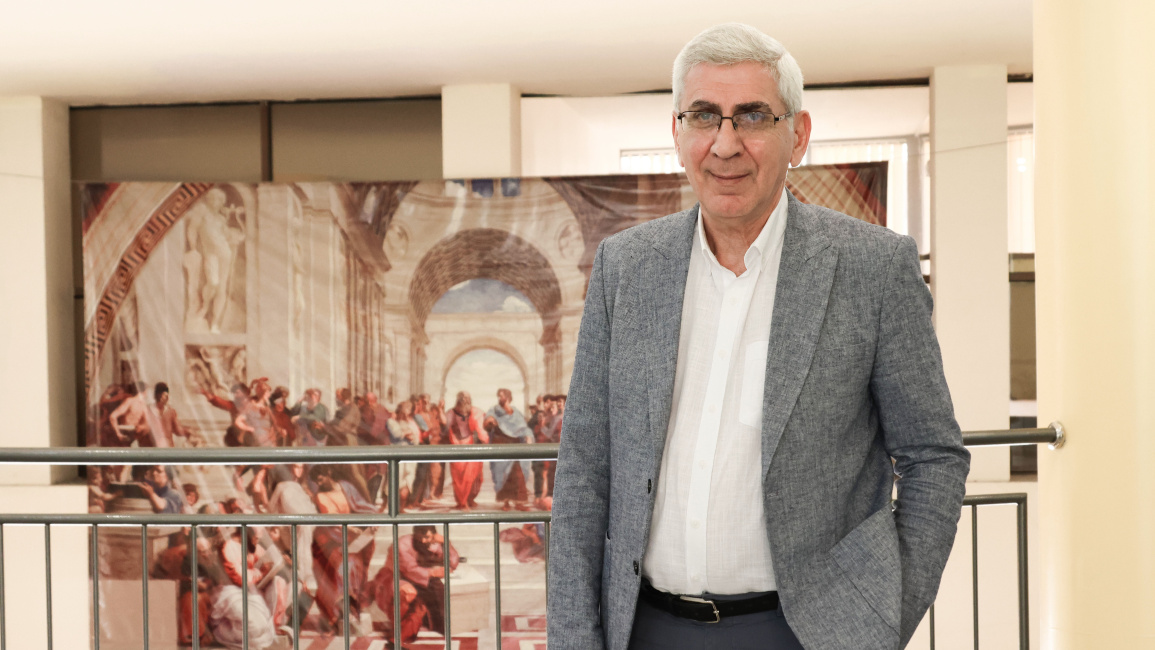
How is a student's professional identity formed?

In a rapidly changing world, where professions and labor market demands evolve almost daily, it is becoming increasingly difficult for young people not only to choose a profession but also to find their place within a particular field. How is professional identity formed? Why do students often face uncertainty? And how are the digital environment and artificial intelligence reshaping the mindset of future professionals? These questions were discussed in an interview with Professor of Psychology Hrant Avanesyan, Head of the Chair of General Psychology at the YSU Faculty of Philosophy and Psychology.

The formation of professional identity is a key component of the modern educational process, particularly at a time when a rapidly changing world requires young people to possess not only professional knowledge but also self-awareness, adaptability, and the ability to make informed choices. Professor Hrant Avanesyan, author of the article "The Importance of the Process of Forming a Student's Professional Identity in Modern Conditions," shared his insights on the subject.

– Professor Avanesyan, what is meant by the concept of "professional identity," and how is it formed during the student years?

– When discussing a person's professional identity, we should not focus solely on the student years, as the process begins much earlier. It is linked to the whole process of personal development and identity formation, reflecting self-awareness, a sense of inner wholeness, uniqueness, and continuity over time. Identity is the ongoing and fundamental search for an answer to the question, "Who am I?"

Certainly, the student years play an important role in the formation of professional identity because they constitute a crucial stage of development that involves understanding one's personality, professional role, and values. These are shaped through learning and social interaction within the university environment. 

Questions related to personal identity, the development of the self, and overcoming psychological crises have long been at the center of psychological research. The YSU Psychology Research Center is also engaged in studying these issues. 

– What are the main factors influencing the formation of a student's professional identity?

– It is extremely difficult to identify specific factors with precision because professional identity is shaped by the surrounding conditions and environment, both external (socioeconomic) and internal (university-related), which must align with professional norms and values.
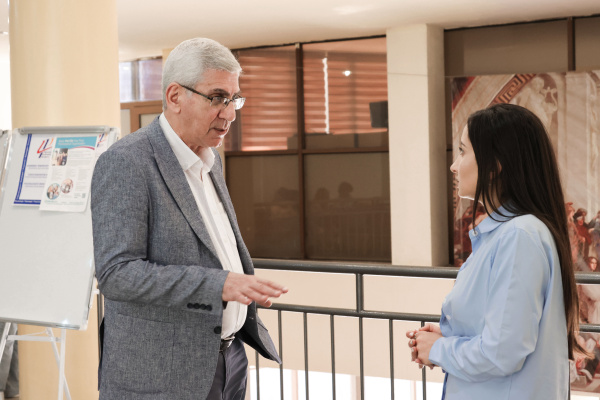
Nevertheless, two groups of factors can be distinguished. The first includes students' individual characteristics, the quality of the educational process and environment, the modernization of resources, and socio-professional factors related to the status and prospects of professions. The second group, while supplementary, is no less important; it includes the university's image, the reputation of its academic staff, institutional symbols, learning conditions, the digitalization of the educational environment, national traditions, culture, and other factors.

In addition, it is important to emphasize that the formation of professional identity is connected to both internal values and external incentives. Key roles are played by motivation for learning and self-realization, the current prestige of a profession, and the quality and practical relevance of specialized education.

– What psychological and social challenges do students face today in choosing a profession?

– I am convinced that students have always faced difficulties in choosing a profession, navigating career paths, and pursuing professional growth. The modern diversity of university specializations, coupled with uncertainties about labor market demand, often creates blurred criteria for decision-making, highlighting the importance of internal psychological factors that help maintain a meaningful and holistic approach to education.

This is where academic engagement must demonstrate its appeal through motivating and engaging methods. Most contemporary research interprets engagement as the manifestation of purposeful behavior or high motivation in the learning process. However, this does not always allow us to fully understand the relationship between engagement and professional identity since social and external factors also play an important role.

– Why has professional identity formation become more complex and more important in today's conditions?

– Given current social and economic transformations, the process of forming professional identity has become more complex because the pace of changes in professional requirements, technological processes, and market challenges has intensified the dynamics of young people's career choices. As a result, their professional identity develops within a context of heightened uncertainty, digitalization, and rapidly changing social norms.

Our research has shown that, for some students, contemporary full-time education becomes a space and period for exploration, experimentation, trial and error, and transitional choices. Under such conditions, the formation of professional identity becomes more acute, which may be reflected in a decline in the clarity of professional perceptions among students in higher academic years. 

– Professor Avanesyan, have social media and the digital environment changed young people's perceptions of careers?

– Social media and the digital environment have clearly transformed young people's perceptions of careers, bringing flexibility, personal branding, the pursuit of freedom, and the blurring of boundaries between work and leisure to the forefront.

Over the past several years, new models of career development have emerged, according to which today's young people increasingly view employment as a project-based activity. This allows them to combine study and work, choose remote or freelance employment, work for a company while running their own business, and pursue multiple professional paths simultaneously.

By following popular social platforms, young people see real-life examples of hobbies such as blogging, design, gaming, and others becoming primary sources of income. These forms of work are often unrelated to formal education. Digitalization has also created new forms of hybrid work and opportunities for remote employment, including in other countries. 

– Among young people today, which is more important: professional fulfillment or the desire for rapid success?

– Today's young people want to achieve their goals, acquire in-demand professions, and enjoy a prosperous life. There are different paths to these objectives. Much depends on each student's individual characteristics, personality, temperament, family environment, social circle, educational experience, and other factors.

Yes, there are "contagious" examples of rapid success, the allure of wealth, and elevated social status. These factors can influence attitudes toward professional development. This is precisely where the role of both the family and the university becomes increasingly important.

– In your view, how is the perception of professional identity changing in the age of artificial intelligence and a rapidly evolving labor market?
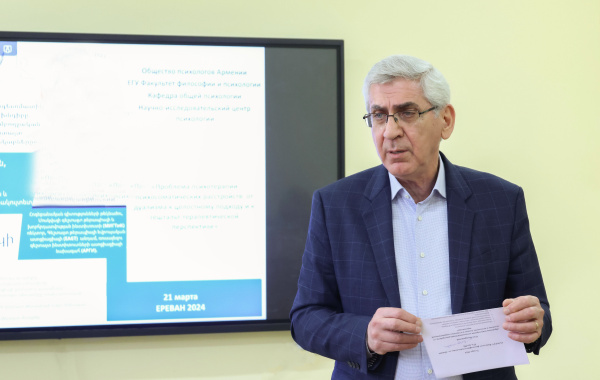
– The changes stem from the fact that artificial intelligence and the digital environment are reshaping students' professional identity by shifting the focus from routine task execution to creative work and critical thinking. Future professionals are moving from passive information accumulators to "human operators" who manage neural networks, verify data, and develop strategies. 

At the same time, there are serious challenges associated with digitalization and the use of artificial intelligence. One of them is the risk of being dependent on the internet arising from delegating thinking and analytical processes to neural networks. There are already many examples of students being unable to prepare for exams independently or write papers on their own.

Unconditional trust in AI and its widespread use also raise ethical concerns among students. Where does personal contribution to individual work end, and where does plagiarism begin? From a psychological perspective, there is also the issue of information overload, which disrupts thinking processes and complicates independent decision-making.

– In your opinion, what mistakes do young people most frequently make when choosing a profession?

– Mistakes vary. Some can be corrected later, while others lead to undesirable psychological consequences. School graduates often choose their profession based on external factors or stereotypes, which can ultimately result in emotional burnout.

Among the most common mistakes are focusing on "fashionable" and prestigious professions, parental pressure, friends' advice, misconceptions about modern careers, poor choices at the high school level, a purely pragmatic desire to obtain a university diploma, and similar factors.

For several years, the YSU Psychology Research Center has been studying these issues, particularly profession choices among high school graduates, students' professional identity, and professional development. To support this work, we are developing psychological assessment tools, tests, and evidence-based approaches to psychological counseling for young people. 

To avoid such problems, psychologists recommend relying on personal interests and abilities, studying the real labor market, and testing required skills through practical experience.

– Are there any specific challenges or trends in the formation of professional identity among Armenian youth?

– The characteristics mentioned above are largely relevant to our country, although many reflect broader global trends. Additional factors include a lack of awareness about the diversity of professions, the desire to follow in the footsteps of a role model, studying "for company" with friends, wanting to study only in a specific place, and focusing solely on the visible aspects of a profession—in other words, a superficial understanding of the field.

– What helps a person find themselves within their profession?

– In general, the formation of professional identity involves the full internalization of the values, norms, and roles associated with a chosen profession. This occurs through purposeful education, including self-education, real practical activity, and an individual's awareness of themselves as a member of a professional community.


Sona Shahverdyan
ShareFacebookTelegram

Latest News

«Իմ երազանքն է ստեղծել քաղցկեղը բուժող նոր դեղամիջոց». ԵՊՀ ուսանող

26.06.2026

Համալսարանականները ներկայացրել են իրենց փորձը Ավստրիայի առաջատար համալսարաններից մեկում

26.06.2026

Կրթական համակարգի թվային վերափոխում․ ՀՀ յոթ բուհերի հասանելի կլինի «ChatGPT Edu» հարթակը

25.06.2026
Show All

Announcement

Invitation to Online Conference: American Research Institute of the South Caucasus

09.17.2026 - 09.19.2026

Հայտարարվում է Զապել Եսայանի արձանի էսքիզային առաջարկների բաց մրցույթ

06.22.2026 - 07.31.2026

Ստանիսլավ Լեմի անվան եվրոպական հետազոտական մրցանակ

06.19.2026 - 09.30.2026
Show All

Quick access

  • Intranet
  • E-learning
  • Mulberry
  • Online applications
  • Phone book
  • Registrar
  • Documentation

Footer(ENG)

  • Main pages
    • Admission
    • Education
    • Science
    • News
  • Information
    • Frequently asked Questions
    • Vacancies
    • Search for educational programs
    • For the applicants
    • For the students
  • About YSU
    • YSU management
    • YSU symbols
© Yerevan state university 2026
Address: Republic of Armenia, Yerevan, 0025, 1 Alex Manoogian (+37460) 710000 info@ysu.am