Home
envelope
ՀայերենРусскийEnglish

Main Navigation (Eng)

  • Admission
    • Undergraduate admission
    • Master’s degree admission
    • Postgraduate admission
    • Foreign Students
    • Preparatory courses
    • Work Carried out with Applicants
    • YSU STEM High School
  • Education
    • Guide Book for First Year Students
    • Educational programs
    • Granting qualification of a pedagogue
    • Center for Academic Writing
    • Continuing education
    • Academic Calendar
    • Olympiad
  • Science
    • Open science
    • Conferences
    • Library
    • Grants
    • Publishing House
    • Doctoral Thesis Defence Councils
    • HRS4R
  • News and events
    • Events
    • Activities
    • News
    • Newsletter
    • Announcement
    • Photo gallery
    • Video gallery

Secondary Navigation (Eng)

  • About YSU
    • YSU Management
    • YSU Symbols
    • YSU International Cooperation
    • Quality assurance
    • YSU History Museum
    • Vacancies
    • FAQ
  • Structure
    • YSU Faculties and Educational Centers
      • Faculty of Geography and Geology
      • Faculty of Theology
      • Faculty of Oriental Studies
      • Faculty of European Languages and Communication
      • Faculty of Journalism
      • Faculty of Informatics and Applied Mathematics
      • Faculty of Law
      • Faculty of Biology
      • Faculty of Armenian Philology
      • Faculty of International Relations
      • Faculty of History
      • Institute of Physics
      • Faculty of Russian Philology
      • Faculty of Sociology
      • Faculty of Economics and Management
      • Faculty of Philosophy and Psychology
      • Faculty of Chemistry
      • Faculty of Mathematics and Mechanics
      • Pedagogy and Education Development Center
      • Center for European Studies
      • Institute of Pharmacy
      • Information Technologies Educational and Research Center
      • Chair of Civil Defense
      • Chair of Physical Education and Sports
    • Column Wrapper
      • YSU STEM High School
      • YSU Ijevan Branch
    • Scientific Centers and Laboratories
      • American Studies Center
      • Psychology Research Center
      • Research Laboratory of Applied Sociology
      • Center for Mathematical and Applied Research
      • Institute for Armenian Studies
      • Institute for Social and Humanitarian Studies
      • Research Center for Chemistry
      • Research Institute of Biology
      • Research Institute of Physics
      • Research Center for the Institute of Pharmacy
    • Scientific and Educational Centers
      • Observatory
      • Scientific and Educational Center for Control and Monitoring of the Quality of Medicines
      • Specialized cabinet-laboratory for the Design of Very Large Integrated Circuits (Synopsis)
      • Legal Clinic
      • Center for Applied Psychology
      • Research Center-Library of Greek Studies
      • Innovation Center for Microbial Biotechnology and Biofuels
      • Russian Center
      • Center for Russian Studies
      • Distance Learning Laboratory of Sociology
    • Column Wrapper
      • Banner
    • Administrative Divisions of YSU
      • Academic Secretary
      • Center for Doctoral Education
      • General Division
      • YSU History Museum
      • Department of Energy System Operation
      • Financial Analysis Department
      • Human Resources Department
      • Center for Admissions and Affairs with Applicants
      • Vehicle Fleet
      • Business Incubator
      • Byurakan Industrial Practice Base
      • Medical Center
      • Science Policy Department
      • Procurement Planning Department
      • Dilijan Sports and Health Center
      • YSU Archive
      • Publishing House
      • Legal Service
      • Marketing Department
      • International Cooperation Office
      • Tsaghkadzor training and production base
      • Cultural Center
      • Fire Safety Service
      • Alumni and Career Center
      • Hankavan Industrial Practice Base
      • Accounting Department
      • Center for Quality Assurance
      • Department for Special Affairs
      • Guest House
      • Student Dormitory
      • Educational-Methodological Department
      • Marie and Sarkis Izmirlian Library
      • Center for Strategic Planning
      • Rectorate
      • Rector's Office
      • Department of Territory Improvement and Landscape Design
      • Information Technology Department
      • Department of Organization and Control of Economic Activities
  • Structure
  • Alumni and Career
    • Alumni Community
    • Career Center
    • Friends of YSU
  • Student life
    • YSU Student Scientific Society
    • YSU Student Council
    • Art and Culture
ՀայերենРусскийEnglish
envelope

Main Navigation (Eng)

  • Admission
    • Undergraduate admission
    • Master’s degree admission
    • Postgraduate admission
    • Foreign Students
    • Preparatory courses
    • Work Carried out with Applicants
    • YSU STEM High School
  • Education
    • Guide Book for First Year Students
    • Educational programs
    • Granting qualification of a pedagogue
    • Center for Academic Writing
    • Continuing education
    • Academic Calendar
    • Olympiad
  • Science
    • Open science
    • Conferences
    • Library
    • Grants
    • Publishing House
    • Doctoral Thesis Defence Councils
    • HRS4R
  • News and events
    • Events
    • Activities
    • News
    • Newsletter
    • Announcement
    • Photo gallery
    • Video gallery

Secondary Navigation (Eng)

  • About YSU
    • YSU Management
    • YSU Symbols
    • YSU International Cooperation
    • Quality assurance
    • YSU History Museum
    • Vacancies
    • FAQ
  • Structure
    • YSU Faculties and Educational Centers
      • Faculty of Geography and Geology
      • Faculty of Theology
      • Faculty of Oriental Studies
      • Faculty of European Languages and Communication
      • Faculty of Journalism
      • Faculty of Informatics and Applied Mathematics
      • Faculty of Law
      • Faculty of Biology
      • Faculty of Armenian Philology
      • Faculty of International Relations
      • Faculty of History
      • Institute of Physics
      • Faculty of Russian Philology
      • Faculty of Sociology
      • Faculty of Economics and Management
      • Faculty of Philosophy and Psychology
      • Faculty of Chemistry
      • Faculty of Mathematics and Mechanics
      • Pedagogy and Education Development Center
      • Center for European Studies
      • Institute of Pharmacy
      • Information Technologies Educational and Research Center
      • Chair of Civil Defense
      • Chair of Physical Education and Sports
    • Column Wrapper
      • YSU STEM High School
      • YSU Ijevan Branch
    • Scientific Centers and Laboratories
      • American Studies Center
      • Psychology Research Center
      • Research Laboratory of Applied Sociology
      • Center for Mathematical and Applied Research
      • Institute for Armenian Studies
      • Institute for Social and Humanitarian Studies
      • Research Center for Chemistry
      • Research Institute of Biology
      • Research Institute of Physics
      • Research Center for the Institute of Pharmacy
    • Scientific and Educational Centers
      • Observatory
      • Scientific and Educational Center for Control and Monitoring of the Quality of Medicines
      • Specialized cabinet-laboratory for the Design of Very Large Integrated Circuits (Synopsis)
      • Legal Clinic
      • Center for Applied Psychology
      • Research Center-Library of Greek Studies
      • Innovation Center for Microbial Biotechnology and Biofuels
      • Russian Center
      • Center for Russian Studies
      • Distance Learning Laboratory of Sociology
    • Column Wrapper
      • Banner
    • Administrative Divisions of YSU
      • Academic Secretary
      • Center for Doctoral Education
      • General Division
      • YSU History Museum
      • Department of Energy System Operation
      • Financial Analysis Department
      • Human Resources Department
      • Center for Admissions and Affairs with Applicants
      • Vehicle Fleet
      • Business Incubator
      • Byurakan Industrial Practice Base
      • Medical Center
      • Science Policy Department
      • Procurement Planning Department
      • Dilijan Sports and Health Center
      • YSU Archive
      • Publishing House
      • Legal Service
      • Marketing Department
      • International Cooperation Office
      • Tsaghkadzor training and production base
      • Cultural Center
      • Fire Safety Service
      • Alumni and Career Center
      • Hankavan Industrial Practice Base
      • Accounting Department
      • Center for Quality Assurance
      • Department for Special Affairs
      • Guest House
      • Student Dormitory
      • Educational-Methodological Department
      • Marie and Sarkis Izmirlian Library
      • Center for Strategic Planning
      • Rectorate
      • Rector's Office
      • Department of Territory Improvement and Landscape Design
      • Information Technology Department
      • Department of Organization and Control of Economic Activities
  • Structure
  • Alumni and Career
    • Alumni Community
    • Career Center
    • Friends of YSU
  • Student life
    • YSU Student Scientific Society
    • YSU Student Council
    • Art and Culture
  1. Main
  2. News
  3. From values-based education to critical thinking: VaKE methodology at YSU
June 30, 2026 | 16:16
Education
Society

From values-based education to critical thinking: VaKE methodology at YSU

In higher education today, more than ever, importance is attached not only to the transfer of professional knowledge but also to the development of values, skills and competences that will help students become responsible citizens, conscious professionals and thoughtful leaders. In this context, innovative international approaches to education are attracting growing interest at universities.

Within the framework of the Erasmus+ PROVE project, Yerevan State University is involved in the process of studying and introducing the VaKE (Values and Knowledge Education) methodology. This values- and knowledge-based approach combines the acquisition of academic knowledge with the development of moral and value judgments, making students active participants in the learning process. 

We spoke with Lusine Hayrapetyan, Associate Professor at the YSU Pedagogy and Education Development Center and a participant in training sessions and conferences held in Salzburg, Austria, as part of the project, about the VaKE methodology, its educational significance and prospects for its introduction at Yerevan State University.


– Ms. Hayrapetyan, you became familiar with the VaKE methodology within the framework of the project. What does this approach involve, and how does it differ from traditional teaching methods?

– VaKE is an educational methodology based on the principles of constructivism, combining values-based and moral education with the acquisition of academic knowledge.

It is a distinctive pedagogical approach that works mainly through the use of dilemmas, when students are presented with a story, a moral dilemma drawn from real life that does not have an unambiguous "right" or "wrong" answer.

To resolve this dilemma and justify their position, students have to search for, find and master specific academic knowledge on their own.
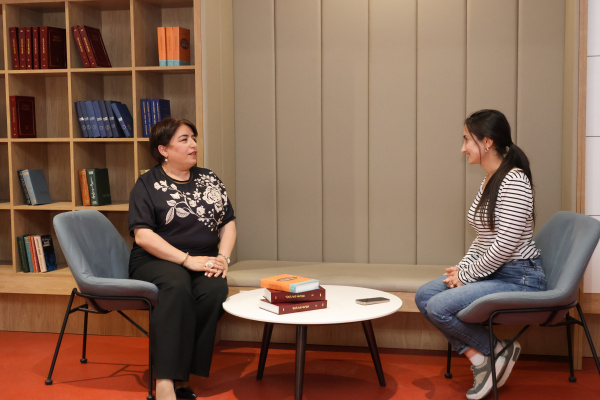
The difference from the traditional approach is significant. In traditional teaching, the lecturer "transmits" ready-made knowledge to the student, which implies passive reception, while values are discussed, at best, at an abstract level. In the case of VaKE, the student becomes the creator of knowledge through active learning, understanding how that knowledge relates to their value system and decisions.

The training sessions held in Austria and Greece were practical and very useful. The YSU delegation had the opportunity to receive training directly from the authors of the methodology, particularly Professor Jean-Luc Patry, as well as from international experts, and to participate in hands-on sessions, taking on the roles of both student and facilitator, or lecturer. We learned how to properly structure moral dilemmas so that they correspond to our local context and educational standards. Interesting examples were presented in both countries, and we are already localizing them.

– Why is values-based education important in the higher education system today? Which problems is it aimed at addressing?

– Today, in the age of information overflow and artificial intelligence, simply possessing information is no longer a competitive advantage. The main challenge facing universities is to prepare not only specialists, but also responsible citizens and leaders who have developed soft skills and can make decisions, find solutions to situations and offer creative approaches.

Values-based education organized on the conceptual basis of VaKE is aimed at addressing the following issues:

  • Preventing situations in which a scientist or specialist has extensive knowledge but uses it to the detriment of society.

  • Helping students move beyond the "it is not my concern" stereotype.

  • Bridging theoretical knowledge with the complex and contradictory problems of real life.

– How does the VaKE methodology contribute to the development of students' critical thinking, decision-making and moral judgment?

– The VaKE methodology operates through specific stages that naturally stimulate students' critical thinking and intellectual growth. The proposed dilemmas create a confrontation with a choice. The student is forced to make a decision, which develops decision-making skills.

One of the advantages of this methodology is that learners can acquire the skills of forming a viewpoint and distinguishing opinion from fact and assumption. By listening to opposing views, they understand that the world is not black and white. This develops argumentation skills and empathy.

The student realizes that their knowledge is not enough to convince the opposing side and begins to examine sources critically, developing their critical thinking.

– Are there training sessions or collaborative activities with students participating in the program?
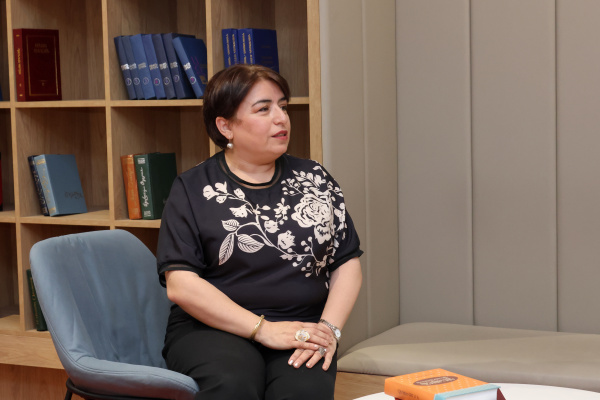
– Yes, of course. After returning from Greece, we selected five students from different faculties who were to participate in student workshops organized in Georgia on May 10-14, 2026. The YSU delegation included seven representatives, two of whom were lecturers and five were second-year bachelor's students from different academic programs. Students from different universities in Armenia and Georgia had the opportunity to develop projects, listen to expert opinions and cooperate with one another. They received guidance on applying the VaKE methodology through interdisciplinary, interfaculty and interuniversity cooperation. I believe this is a very important contribution to our students' values-based thinking, as they discovered the usefulness, necessity and importance of cooperation.

– What stages are planned for the introduction of the VaKE methodology at Yerevan State University?

– A gradual and sustainable model of introduction has been adopted. If I try to present it generally, the picture is as follows:

  • Stage 1. Ongoing or preparatory capacity development. Together with lecturers trained in Salzburg, we began to examine the introduction of the methodology from different perspectives for YSU students, lecturers and teachers.

  • Stage 2. Pilot introduction. From September 2026, VaKE modules will be included and piloted in separate courses at several faculties. In addition, the main course "Values- and Knowledge-Based Education" will be included in the "Social Pedagogy" bachelor's program at the YSU Pedagogy and Education Development Center. Training has also been conducted for teachers from different provinces of Armenia on the VaKE methodology.

  • Stage 3. Evaluation and modification. At this stage, we plan to evaluate the results of the pilot program. We plan to analyze feedback from students and lecturers and prepare methodological manuals in Armenian.

  • Stage 4. Large-scale institutionalization. At this stage, the methodology is expected to be extended to other faculties and, if successful, a component of training for YSU lecturers.

– In which educational programs will it be introduced, and what changes may students and lecturers notice in the learning process as a result of applying the VaKE approach?

As a core course, the methodology will be applied in the "Social Pedagogy" educational program of the Pedagogy and Education Development Center, where the values component is among the modern competences required for the teaching profession.

The real strength of VaKE lies in its interdisciplinary potential, which we will seek to ensure through interfaculty projects and research activities, as some modules based on this methodology will also be delivered at the Faculty of European Languages and Communication.

In terms of changes, classes will no longer be boring for students. They will feel the importance of their voice, learn to express themselves freely and respect the opinions of others, while at the same time acquiring deep academic knowledge.

For lecturers, this is a transformation of their professional approach. The lecturer ceases to be the only "all-knowing" person in the classroom and becomes a guide and supporter, making the learning process lively and creative.

– What challenges may arise during the introduction of the methodology, and how is YSU preparing to overcome them?
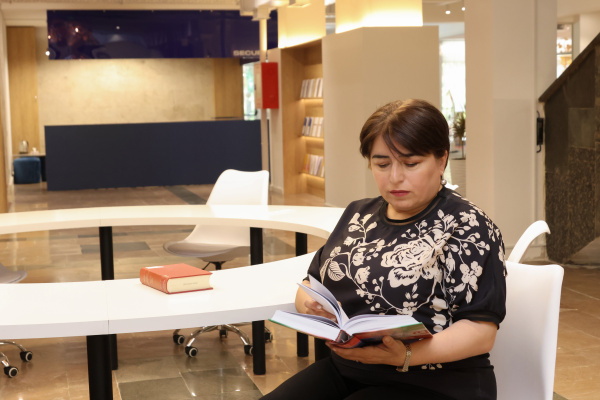
– The introduction of any new and advanced methodology into the education system creates new challenges. The introduction of the VaKE methodology at Yerevan State University is no exception, but these challenges can be overcome through the right strategy.

The first and most common obstacle to applying the method is resistance to change. A significant share of both lecturers and students is accustomed to traditional, calm and comfortable lectures, where roles are clearly distributed: one person speaks, while the others listen or memorize. Moving to the new model requires stepping out of that comfort zone and taking on an active role.

In addition, the issue of time limitations arises. Unlike a standard class, where the material is simply transmitted to the audience, VaKE requires in-depth discussions, debates and analysis, which take considerably more time than an ordinary lecture. Finally, the most delicate and complex issue is the assessment system. How can a student's moral judgment be measured and assessed objectively, without subjectivity or bias?

I believe the assessment will focus exclusively on the quality of the student's argumentation, critical thinking and ability to apply theoretical knowledge in practice and in problematic situations. In this way, the university is creating an environment where innovation is introduced smoothly, while assessment remains as objective and fair as possible.

– In your assessment, what impact can the VaKE methodology have on the quality of education and the development of university culture at YSU in the long term?

– I believe the most visible change will take place in the classroom. Traditional and sometimes one-sided lectures will be replaced by a culture of free discussion based on mutual respect. VaKE turns the classroom into a unique platform where students learn not to remain silent and agree, but to express their own opinions, listen to others and engage in civil debate. This forms an independent and responsible environment with a high level of civic awareness, where a different opinion is not a cause for conflict but a value.


Sona Shahverdyan
ShareFacebookTelegram

Latest News

YSU Legal Clinic presents its experience at European conference

01.07.2026

From values-based education to critical thinking: VaKE methodology at YSU

30.06.2026

YSU students participate in international investment arbitration moot court competition in Rome and Frankfurt

30.06.2026
Show All

Announcement

Invitation to Online Conference: American Research Institute of the South Caucasus

09.17.2026 - 09.19.2026

Call for Papers: International Jubilee Conference "Language at the Crossroads of Cultures and Civilizations"

07.01.2026 - 09.30.2026

Competition Announced to Fill Vacant Positions of YSU Chair Heads

06.29.2026 - 07.13.2026
Show All

Quick access

  • Intranet
  • E-learning
  • Mulberry
  • Online applications
  • Phone book
  • Registrar
  • Documentation

Footer(ENG)

  • Main pages
    • Admission
    • Education
    • Science
    • News
  • Information
    • Frequently asked Questions
    • Vacancies
    • Search for educational programs
    • For the applicants
    • For the students
  • About YSU
    • YSU management
    • YSU symbols
© Yerevan state university 2026
Address: Republic of Armenia, Yerevan, 0025, 1 Alex Manoogian (+37460) 710000 info@ysu.am