July 17, 2026 | 10:27
Education
Events
Graduates
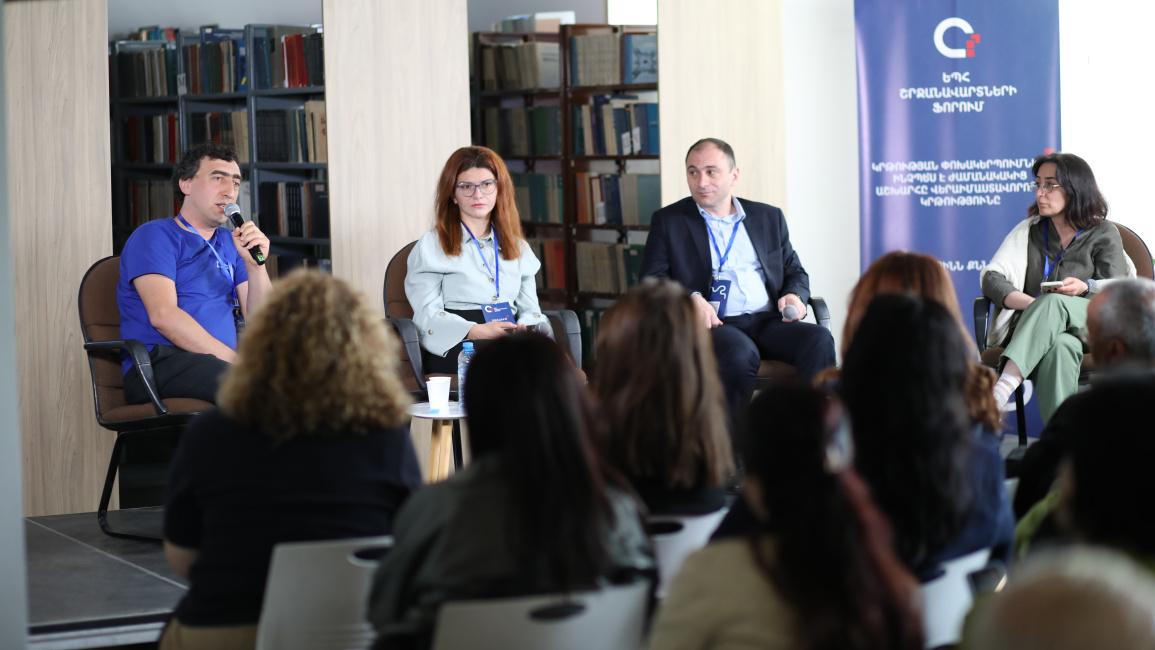
| Lusine Kharatyan | Moderator | Director of the Continuing Education Center, YSU |
| Artur Movsisyan | Speaker | Deputy Chair of Higher Education and Science Committee, RA MoESCS |
| Marina Aghayan | Speaker | Head of the 3D Printing Research Laboratory at the A. B. Nalbandyan Institute of Chemical Physics, RA NAS |
| Smbat Gogyan | Speaker | Director of the Karakusi Educational Foundation |
| Sona Balasanyan | Speaker | Co-head of the Research Lab for Agency and Institutional Change |
During the "Transformations in Education" panel discussion at YSU Alumni Forum 2026, the speakers addressed several key issues concerning education in the 21st century, as well as theoretical approaches to its aims, content, organization and transformation, among other topics.
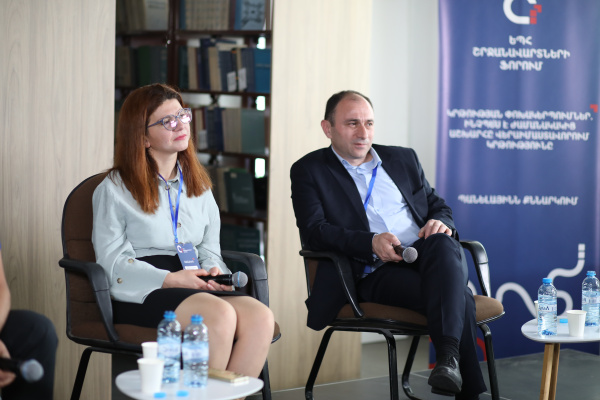
According to Artur Movsisyan, the need to rethink education is directly linked to the rapid technological, social and economic changes taking place in modern society, which impose new requirements on education systems and call for new approaches.
He noted that, in addition to transmitting knowledge, education must create the conditions necessary for the comprehensive development of the individual. In this context, education is a multilayered system encompassing not only the production and transmission of knowledge, but also educational infrastructure, the learning environment, professional cooperation networks and the development of learners' professional and interdisciplinary competencies.
Marina Aghayan emphasized that a defining feature of the transformation of 21st-century education is the growing importance of interdisciplinary and multifaceted approaches.
In her assessment, contemporary scientific progress is increasingly driven by connections among different disciplines and the integration of knowledge, resulting in the emergence of new scientific and professional fields. This reality is creating new expectations for professionals, making the ability to combine knowledge and skills from different fields a priority.
In this context, Aghayan also addressed professional mobility, noting that changing career paths and undergoing retraining have become increasingly common and frequently necessary in today's labour market.
While a profession was often regarded in previous eras as a long-term and stable choice, the transformation of professional identity is now seen as a natural component of an individual's continuous development. Digital technologies and broad access to information resources play an important role in this process, substantially changing the ways knowledge is acquired and applied.
As a result, Aghayan said, educational institutions must reconsider their functions, missions, tools and development strategies.
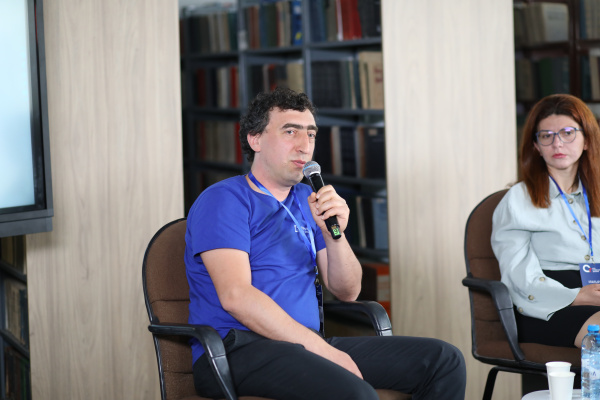
Smbat Gogyan presented an alternative perspective, arguing that the fundamental aims of education have not changed significantly over time.
"I do not think education is being redefined. It continues to be based on the same aims and values," he said.
According to Gogyan, the principal mission of education remains the socialization of individuals, their effective participation in public life and the development of practical knowledge and skills needed in everyday life.
The changes currently taking place primarily concern the methods used to organize education and teaching technologies rather than the fundamental aims of education itself.
Emphasizing that competencies cannot be developed without fundamental knowledge, Gogyan criticized the view that knowledge is becoming increasingly less important. He noted that broader access to information does not necessarily mean that people have developed the ability to use it effectively.
Therefore, although advances in information technology contribute to the modernization of educational processes, in-depth and systematic learning remains essential.
"I can read a couple of texts about volcanoes on Wikipedia and then come here sounding clever. But when there is a volcanic threat, naturally, without fundamental knowledge of geology and geography, I will have nothing to say," Gogyan said by way of illustration.
Sona Balasanyan expressed the view that the rethinking of education is not a new phenomenon but a historically continuous process.
According to her, education systems have always responded to social, cultural, scientific, technological and economic changes by revising their aims, content and methodologies. The transformation and rethinking of education can therefore be viewed as a logical, continuous process accompanying societal and global progress.
Dividing the historical development of education into the periods of classicism, modernism and postmodernism, Balasanyan emphasized that each period had given education new content and an interpretation shaped by the conditions of its time.
Turning to contemporary educational realities, she said a situation was now emerging that, in certain respects, resembled the classical period. The roles of educators and learners are becoming complementary, while the creation and transmission of knowledge are becoming more interactive. However, this process is being organized with new technologies and modern methods.
According to Balasanyan, national, supranational, institutional, non-formal, industrial and post-industrial education models collectively characterize the multilayered nature of contemporary education.
She emphasized that amid global processes, rapid technological development and the widespread use of artificial intelligence, education is constantly being rethought at levels ranging from the personal to the institutional, national, supranational and global.
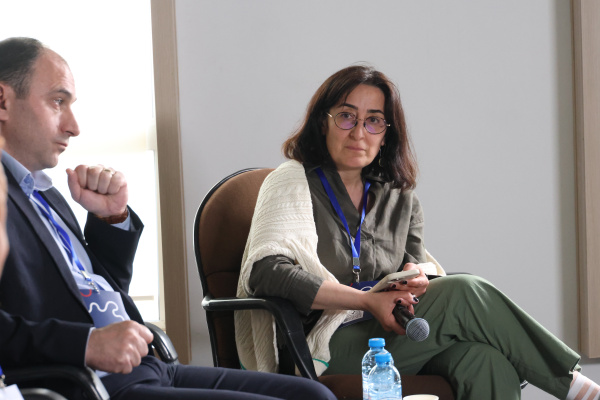
According to Artur Movsisyan, this question is extremely difficult to answer in a rapidly developing and changing world.
One point, however, is clear: in every era, technological development has been accompanied by fears that a considerable proportion of humanity would be left without work. Yet "dead" professions have always been replaced by newly "born" ones.
Artificial intelligence should therefore not be feared, Movsisyan said. It is simply a tool, and its use in education should not be overused.
For more, watch the video.