September 14, 2026 | 10:00
Society
Research
Publications and scientific journals

Their research article, titled "Models and Principles for the Sustainable Development of Mountainous Regions of the Republic of Armenia," has been submitted to an international journal indexed in Scopus and is currently under peer review.
Arsen Grigoryan and Vahagn Grigoryan studied international experience, including that of Nepal, Bolivia and Switzerland, adapting it to Armenia's natural resources and socioeconomic conditions. Their proposed model is based on several interconnected areas: the development of "green" tourism, effective use of local natural and cultural resources, infrastructure improvements and the creation of centralized services.
Despite their rich natural, historical and cultural resources, Armenia's mountainous and foothill communities are facing serious demographic challenges.
The researchers' article focuses on Armenia's abandoned or "fading" settlements that have been designated by the Armenian government as foothill and mountain communities. The authors examined their natural environment, historical and cultural value, socioeconomic conditions, infrastructure and development prospects.
The researchers cite several notable examples.
Tsaghkadzor and Hankavan. According to Vahagn Grigoryan, although Tsaghkadzor is a well-known tourist destination, its permanent population has fallen by more than 700 compared with the Soviet period and now stands at just over 1,100. Explaining the economic reasons behind the decline, he said: "Land here is very expensive. A person can sell their home at an extremely high price and buy a three- or four-room apartment just a few kilometers away in Hrazdan. Residents sell their properties, while investors may, for example, build a hotel or a high-rise building on the site of three houses. As a result, the hospitality industry is developing, but the city is 'fading' in terms of its permanent population. The same trend can be seen in Hankavan, which is also a recreational area. Jobs are increasing, particularly in the service sector, but the settlement is 'fading': fewer than 100 residents remain today."
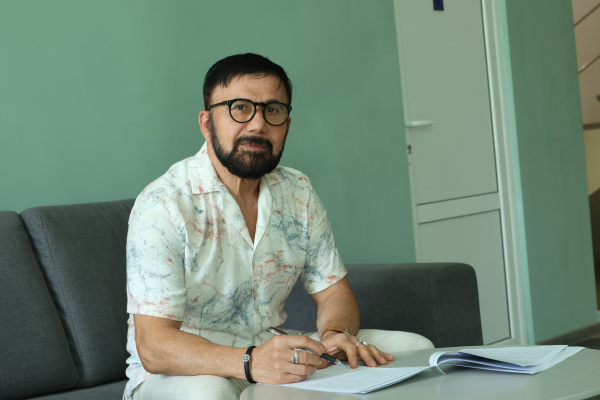
Jermuk. According to Vahagn Grigoryan, the resort town is also affected by its border location and a lack of jobs.
"While Jermuk had around 10,500 residents in 1989, its population has now fallen to 4,000. Although the recreation industry is developing, specialists brought in from elsewhere rather than residents are often employed here," he added.
The researchers believe that despite the flow of tourists, resort towns need to retain their permanent populations. There are various ways to achieve this, they say, including offering vocational training to residents so they can work in the local service sector.
"The mineral water plant in Hankavan could be reopened, forest resources could be used to establish, for example, a medicinal herb production facility, and beekeeping could also be developed. The area also offers excellent conditions for rabbit farming, which would encourage residents to remain in their community. At the same time, educational and cultural centers need to be opened and roads improved," the researchers emphasized.
The researchers stress that the many natural attractions in Armenia's mountainous and foothill areas—including waterfalls, gorges, forests, endemic plant and animal species, lakes, ravines, caves and caverns—are major assets for ecotourism, yet many remain effectively outside tourist routes because of poor roads and a lack of service infrastructure. According to them, improving infrastructure would also promote the development of ecotourism.
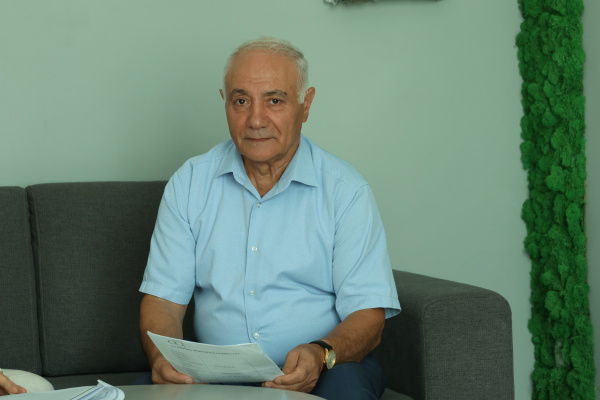
Arsen Grigoryan noted: "Most of our waterfalls are not accessible to international tourists. Take the well-known Shaki Waterfall in Syunik, for example. We do not have a properly maintained road, and a large tourist bus cannot travel along the rocky route. The same can be said of the Trchkan and Gegharot waterfalls, the six waterfalls in Lichk, the Herher Waterfall, as well as the Vahagni Waterfall, which is located in an inaccessible area."
He stressed that Armenia makes extremely poor use of its water resources, even though they could support both agriculture and the development of tourist recreation areas.
"During the Soviet period, 80 reservoirs were built, while in the 30 years since independence we have not managed to complete even two. The Vedi Reservoir is only now being filled, while the Kaps Reservoir remains unfinished. Clean, clear mountain spring water flows down to lower-lying areas and becomes polluted, whereas it could be collected and supplied to the population through pipelines," he said.
Ecotourism and agritourism, both considered forms of "green" tourism, are among the key components of the model proposed by the researchers and can generate substantial income with relatively modest investment.
Vahagn Grigoryan explained the agritourism model as follows: "Any village can develop agritourism by drawing on its human potential, traditions, natural conditions and surrounding historical and cultural heritage. This provides an opportunity to revive life in mountainous areas. Their development also involves reviving a number of traditions and presenting them to the world, such as lacemaking, blacksmithing, pottery and carpet weaving."
Arsen Grigoryan illustrated how agritourism works and why it appeals to international visitors: "A Swiss tourist comes to our home, where we have set up a guesthouse, and takes part in making lavash: rolls out the dough, places the lavash against the wall of the tonir and admires what they have made. They go to milk a cow, cut hay, gather greens from the meadows, then return home and drink homemade milk and matsun and churn butter. They are willing to pay both to see all of this and to take part in it."
The main prerequisite for the model's success is enabling people to remain in their native communities. This requires close cooperation between the state, international donors and residents.
Arsen Grigoryan proposes introducing a centralized service system in small villages.
"In villages with 250-300 residents, where there may be only 30 schoolchildren, there are no kindergartens, cultural centers or household service facilities. Concentrating all these services in one place, however, becomes more cost-effective in terms of both staffing and finances, and the village begins to avoid decline," he emphasized.
Another priority is encouraging young professionals to return to their home villages. Arsen Grigoryan cited the successful experience of one of his students: "A student in the 'Service' program graduates and, instead of remaining in Yerevan, returns to their home village. Together with their parents, they renovate the house, submit a project proposal, receive financial support from the state, establish a guesthouse and promote it on social media. Before long, tourists begin visiting their home. One family's successful example is followed by another. This is precisely the idea behind the model we have developed: to draw people to mountainous and high-altitude areas."
The researchers are currently working on a project to transform the settlement of Verin Tsaghkavan in Armenia's Tavush Province into an ecovillage. The project also envisages "reviving" the local cultural center, which, according to the researchers, will become a recreation and leisure hub for teenagers and young people, also serving the neighboring villages of Chinchin, Varagavan and others.