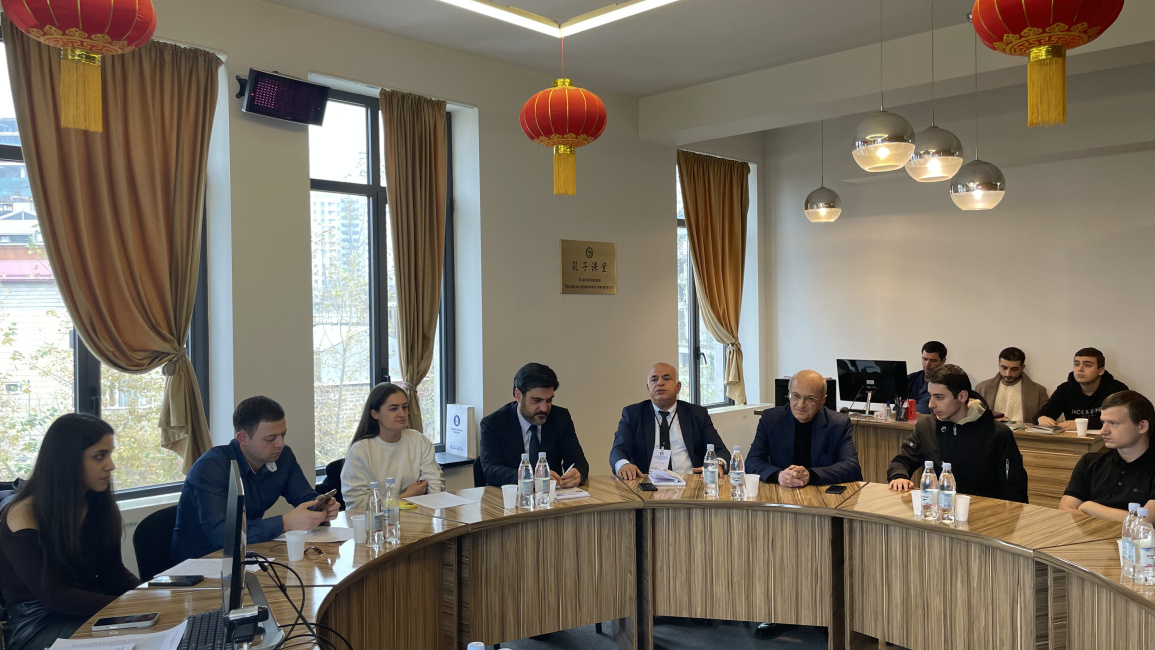
On December 2 of this year, a roundtable discussion on the topic "Transformation of Identities in Post-Soviet Region" took place at the Russian-Armenian University. The event was jointly organized by the YSU Institute of Armenian Studies and the Department of Political Science named after K. A. Mirumyan at the Russian-Armenian University, bringing together leading experts in political science and social sciences.
Hovhannes Sargsyan, researcher in Armenian-Russian relations at the YSU Institute of Armenian Studies and Head of the Department of Political Science named after K. A. Mirumyan at the Armenian-Russian University, noted that the post-Soviet space has a significant foundation of shared identity formed during the eras of the Russian Empire and the Soviet Union. He pointed out that, following independence, state-building processes were accompanied by a rise in nationalism, which in several countries of the South Caucasus manifested as a so-called "colonial syndrome", characterized by distancing from Russia and developing their own national identity.
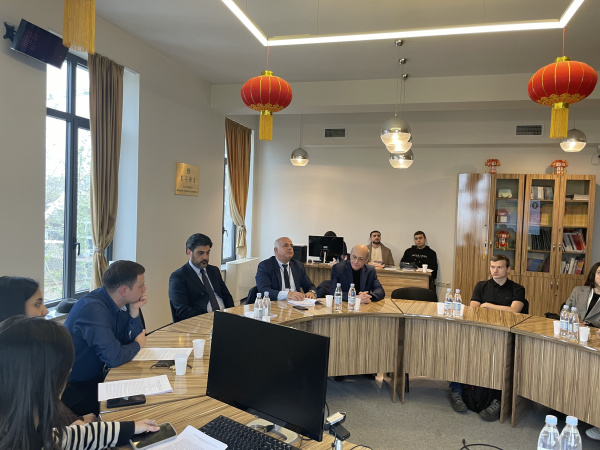
Ashot Yengoyan, PhD in Political Science and Head of the Department of Armenian-Russian Relations at the YSU Institute of Armenian Studies, presented his vision regarding the formation of identity. He emphasized that what is happening today is not merely a transformation of identity, but the construction of identity—a process gaining momentum that can lead both to deeper integration and to increased disagreement among regional states.
"Identity is the nation's self-recognition, grounded in a developed political and ethnic consciousness. During the Soviet period, many ethnic commonalities emerged as nations. The process of forming national consciousness continues today. Its content depends on the interaction between the people and elites. The national vision of identity is formed and propagated by the elites, often shaped by their own interests and perceptions," Yengoyan added.
The event provided participants with an opportunity to discuss issues related to the formation of national identity, the relationship between the state and the nation, and to assess the influence of historical and cultural foundations on current developments in the region.