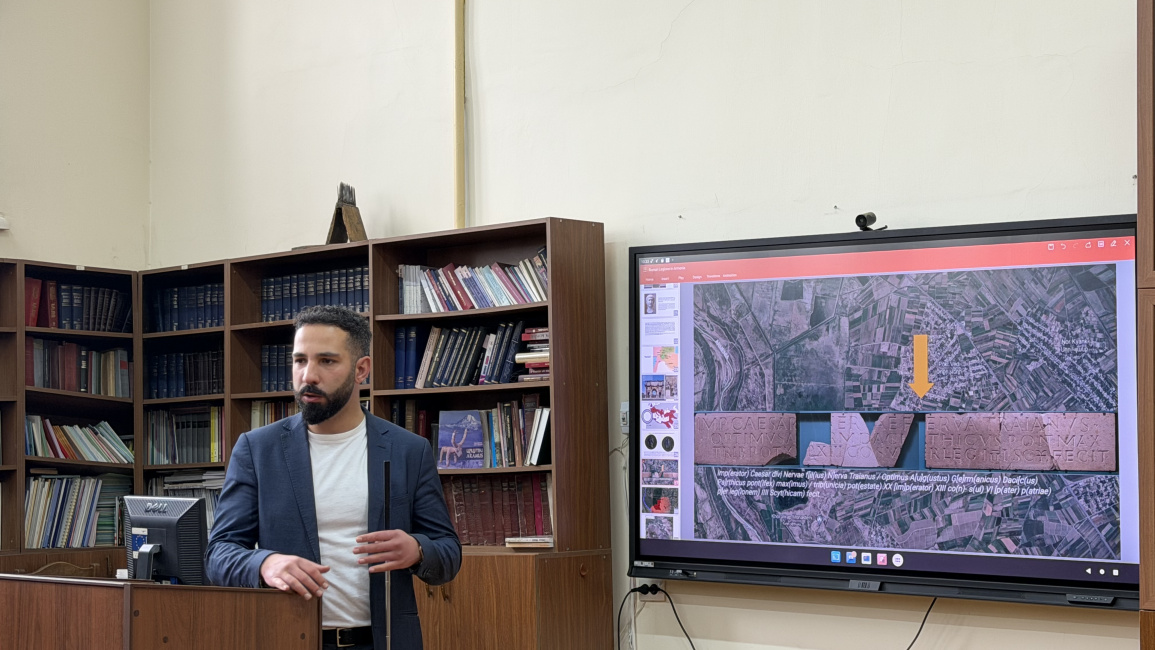
On February 13, as part of the "Ancient and Medieval Archaeology" course at the YSU Faculty of History, Hayk Gyulamiryan, researcher at the Institute of Archaeology and Ethnography of the National Academy of Sciences of Armenia and director of the Wine History Museum of Armenia, delivered a lecture titled "The Presence and Activities of Roman Legions in Armenia According toEpigraphic Inscriptions".
The lecture aimed to present the strategic significance of Roman legions in Armenia through a combination of epigraphic and archaeological sources. The speaker emphasized the role of epigraphic inscriptions as primary sources, which allow researchers to determine with precision the locations, composition, and operational scope of military units.
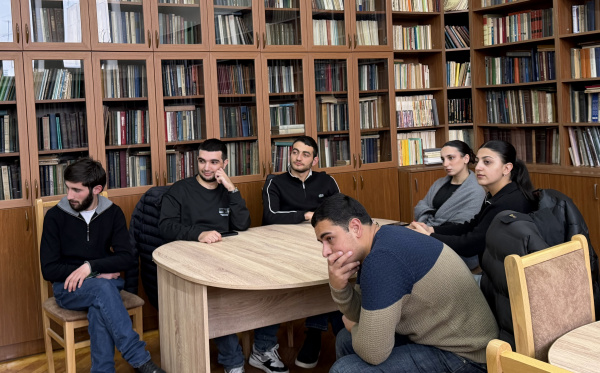
H. Gyulamiryan presented in detail the strategic nuances of Roman imperial policy, emphasizing that the role of the Roman legions in Armenia was not confined merely to border defense. Rather, it constituted a multifaceted activity grounded in the development of infrastructure. The deployment of legions at the country's key strategic points was of a distinctly calculated and strategic nature. All of this was reinforced by powerful engineering infrastructure, as the army undertook large-scale road construction projects.
Regional security and stability were further ensured through border checkpoints and complex fortification systems, which for decades substantiated and consolidated Rome's military-political influence in Greater Armenia.
Consequently, archaeological finds—such as weapons, household items, and seals—enable historians to reconstruct military operations and understand the diplomatic relations established between Rome and Greater Armenia. Epigraphic evidence often serves as the sole reliable source for accurately determining the chronology and geography of legion deployments.