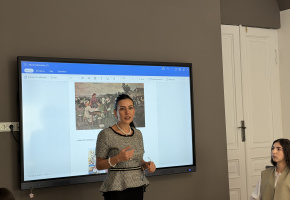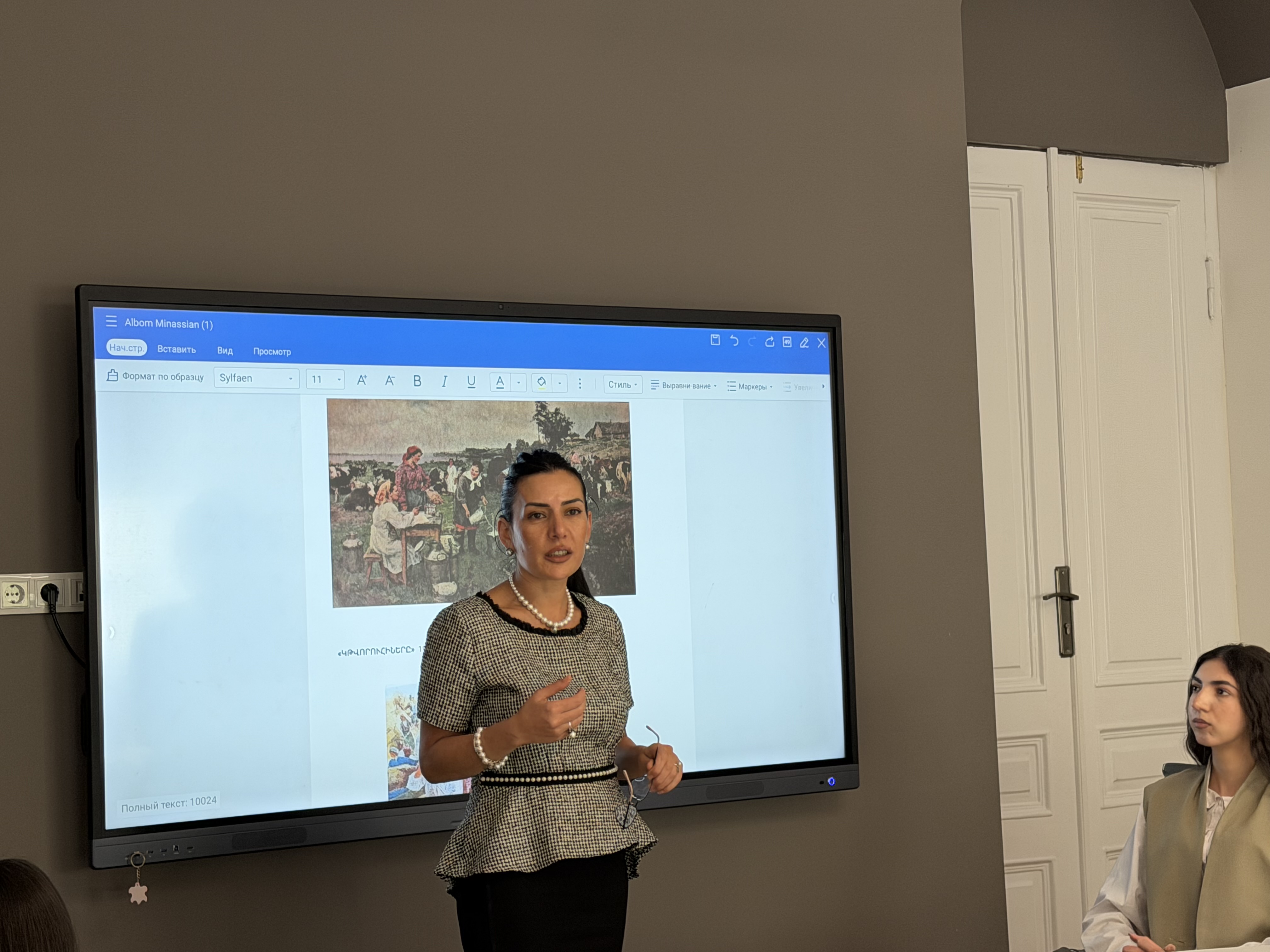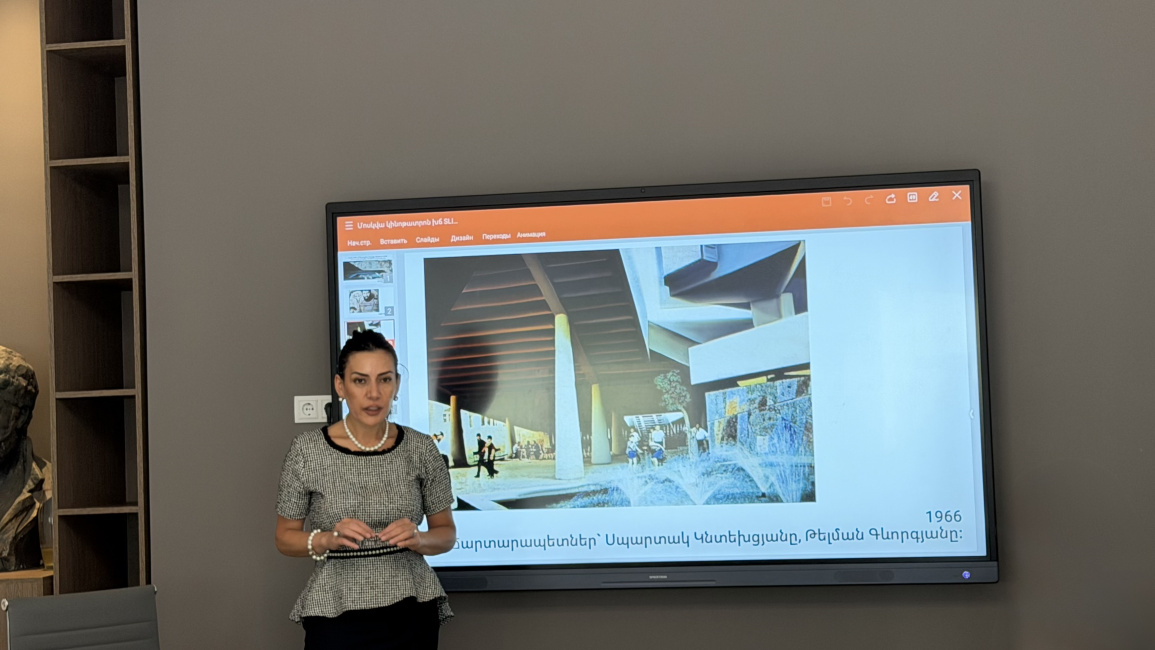
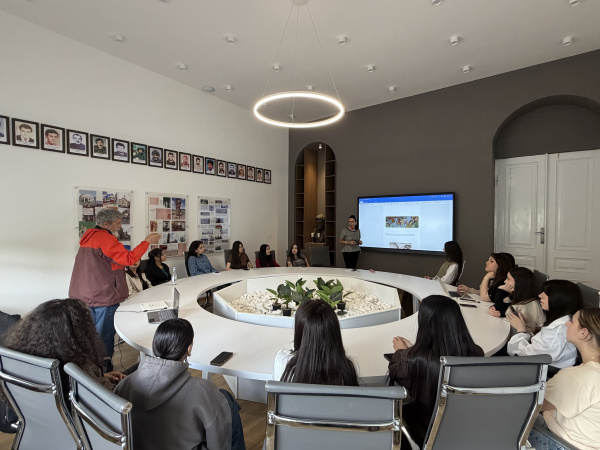
As part of the theoretical seminar series for PhD students and candidates at the YSU Faculty of History, Ovsanna Karamyan, a PhD candidate at the Chair of History and Theory of Armenian Art, delivered a presentation titled "Hovhannes Minasian's 'Rhythms' Mosaic at Summer Hall of Moscow Cinema."
The presentation focused on the architectural and artistic features of the summer hall of Moscow Cinema in Yerevan, describing it as a unique example of the synthesis of monumental art and architecture. Structurally, the summer hall was presented as a complex and distinctive architectural ensemble, of which Hovhannes Minasyan's "Rhythms" mosaic has become an inseparable component.
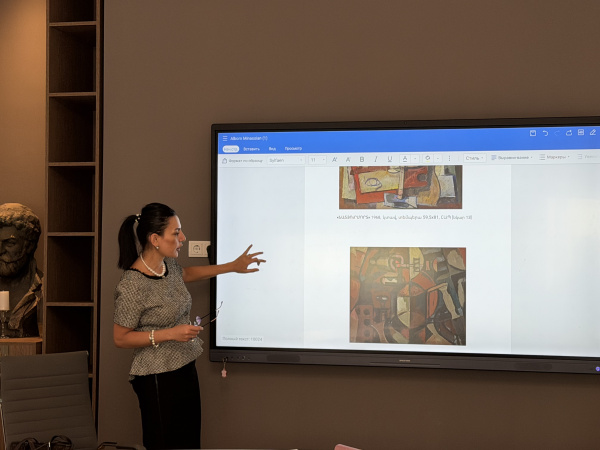
Karamyan noted that the mosaic's abstract composition functions as an active spatial element, extending the building's architectural concept. The "Rhythms" mosaic was presented as an abstract spatial "stone carpet" created using the Greco-Roman mosaic technique, opus tessellatum.
Particular attention was paid to Minasyan's selection of stones and shells, as well as to the harmonious combination of blue-green and ochre-yellow tones, which together create the impression of "petrified music."
The speaker emphasized that Hovhannes Minasyan is the creator of Yerevan's first abstract mosaic. She analyzed the artist's creative method as a conscious application of the principle of the "synthesis of arts," within which the mosaic does not merely decorate the architectural environment but becomes its ideological and spatial continuation.
The presentation also stressed that the mosaic's visual language contributes to the formation of collective memory and civic identity, transforming the summer hall of the Moscow Cinema into a meaningful public space. The YSU researcher additionally highlighted the importance of integrated artistic approaches within the context of Soviet-era monumental art and Armenian cultural discourse.
Presenting the research in an academic setting created an opportunity for a deeper scholarly understanding of the subject, enabling it to be examined within the context of the interaction between monumental art and architecture. It also encouraged professional discussion and expanded the analytical framework surrounding the material under study.
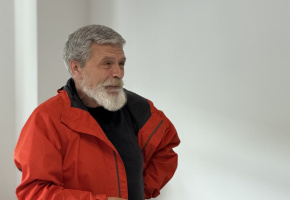
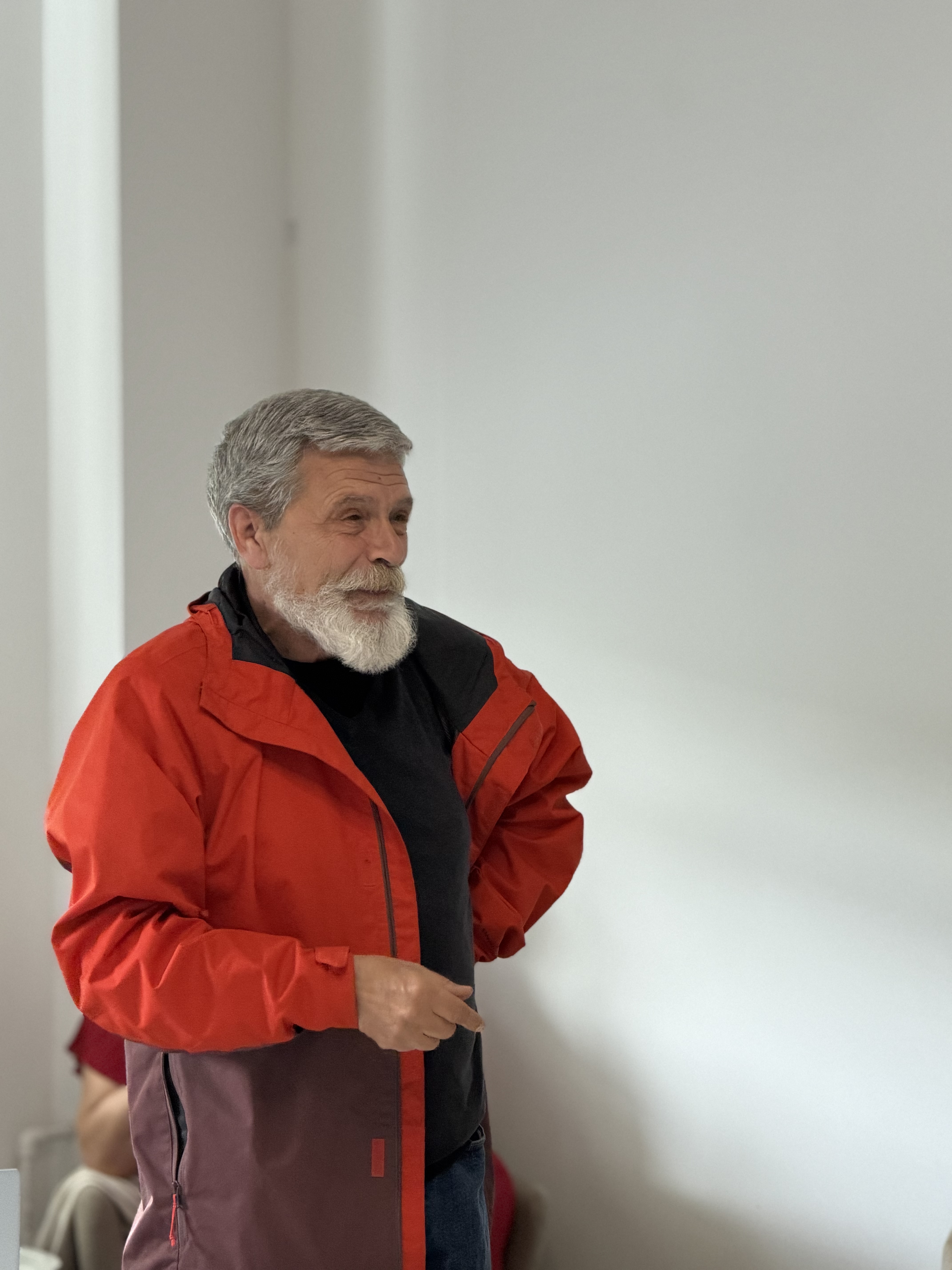
The participation of Hovhannes Minasyan's son in the event added further scholarly and documentary value to the discussion by providing direct insight into the work's historical memory and contemporary academic interpretation, while also helping clarify several disputed issues.