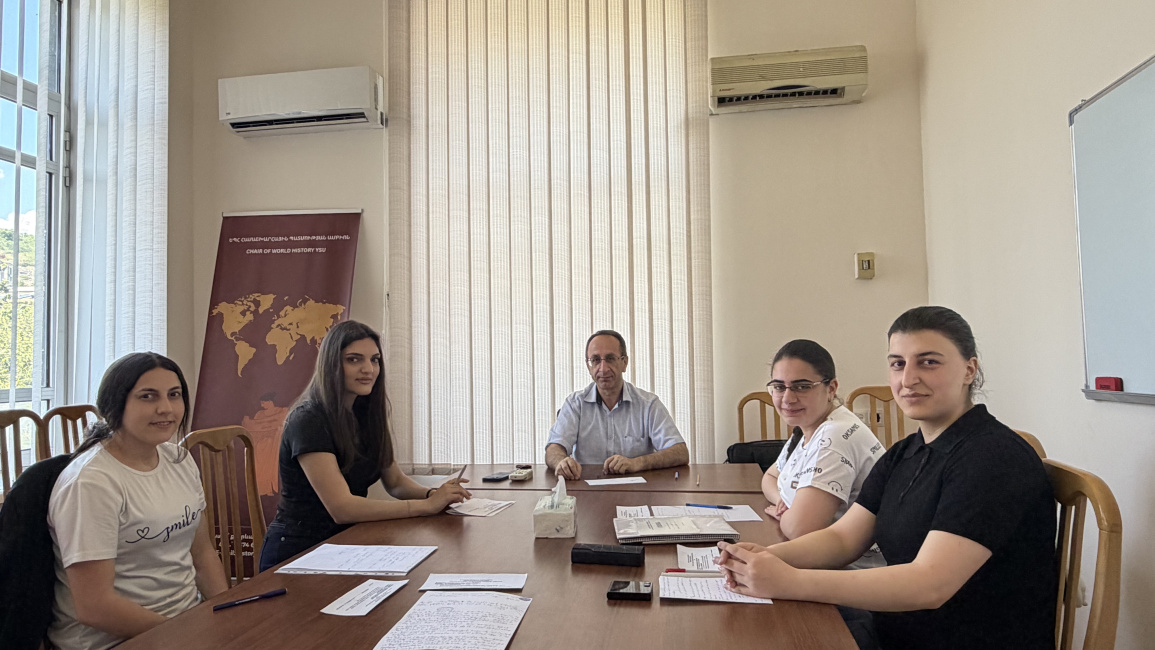
The study of world history begins where the simple recording of facts ends. The "World History" master's program is designed for those seeking to understand the underlying causes of global change and the historical logic behind it.
We spoke with Smbat Hovhannisyan, Associate Professor of the Chair of World History and Candidate of Historical Sciences, about the program's distinctive features, the skills students develop during their studies, current research priorities, and career prospects.
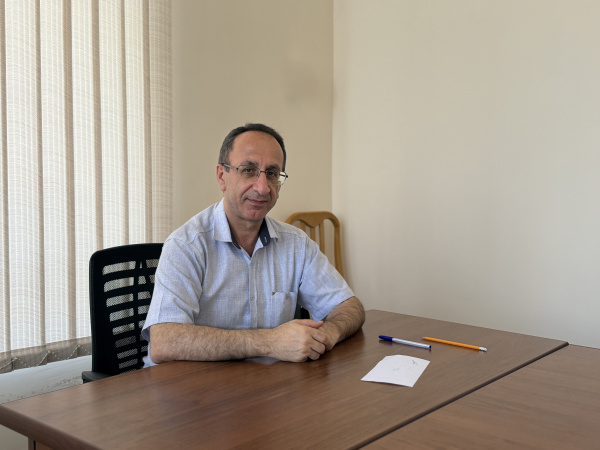
Q: Mr. Hovhannisyan, what are the distinctive features of the "World History" master's program?
A: The "World History" master's program combines classical schools of historical scholarship with modern research methods, using traditional academic depth as the foundation for contemporary analysis. History is approached not as a collection of isolated facts, but as an interconnected system of decisions and consequences. Students learn to understand how regional events gain global significance and how the modern world order has been shaped.
Among the program's key features are:
Innovative methodology. Teaching is based on inquiry-based learning and the connected history paradigm. We teach students not to memorize facts, but to understand and analyze historical logic and global interconnections.
A flexible schedule compatible with employment. Classes are held only three days a week, providing an excellent opportunity to combine study with work.
International mobility and academic networking. Through the Erasmus+ program, our students can spend a semester studying free of charge at leading partner universities in Europe, broadening both their perspectives and professional networks.
Integration of theory and practice. The teaching staff involves not only the university's leading lecturers and researchers, but also practitioners, including diplomats, public-sector professionals, and experts from analytical centers.
Q: What knowledge and professional skills does the program provide during the course of study?
A: Our goal is to prepare not only historians, but also highly qualified researcher-analysts capable of working effectively in academic, public, governmental, and international environments.
Upon completion of the program, students will develop:
Analytical and critical thinking skills. They will learn to examine and interpret complex contemporary geopolitical processes within a broad historical context.
Methodological and research competencies. Students will master modern methods of historical research and academic writing standards while working with local archives, primary sources, and international digital collections.
Project design and management capabilities. They will be able to independently design, coordinate, and manage scientific, educational, and historical-cultural projects.
Academic and international communication skills. Graduates will be prepared to participate in international scholarly forums, publish in peer-reviewed international journals, and engage effectively in professional debates.
Q: Which research areas and topics are currently the most relevant and in demand within the program?
A: We study the issues that have shaped our present and continue to influence the future. The program offers opportunities to specialize in highly relevant areas of world history and international developments, including:
Geopolitics, conflicts, and the contemporary world order. Students analyze the historical foundations of international relations and assess transformations in the current world order, competition among global power centers, and trends in the development of conflicts.
Globalization, civilizations, and colonialism. This area explores the roots of global connections, interstate relations, and cultural interactions through an in-depth examination of imperial history and postcolonial processes.
The social history of technology and innovation. Students can investigate how scientific progress, technological innovation, and Enlightenment ideas have transformed social structures and redefined development paths.
State institutions, transformations, and revolutions. Students gain knowledge of models of political thought and institutional development, from ancient city-states to modern nation-states, while examining the logic of governance systems and socio-political transformations.
Q: What career and professional development opportunities are available to graduates of the program?
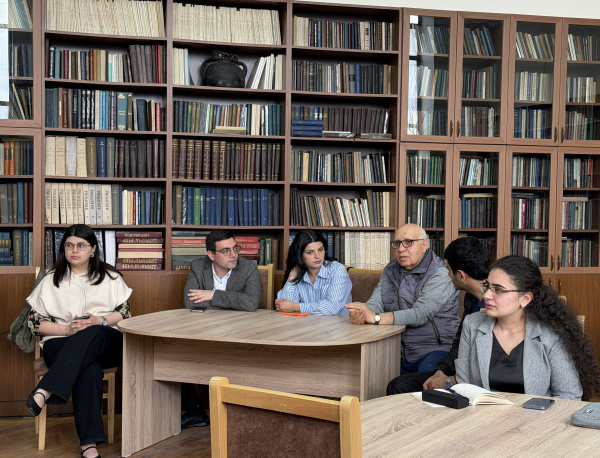
A: This program challenges the stereotype that a historian's professional activity is limited to archives or secondary education. The analytical skills acquired by graduates provide a competitive advantage and open opportunities across a wide range of professional fields, including:
Diplomacy, public administration, and public policy. In-depth historical knowledge and analytical expertise are highly valued in foreign policy, national security, strategic planning, and public governance.
International organizations and development programs. Graduates can contribute to research and collaborative projects conducted by United Nations offices, international development organizations, and human rights foundations.
Think tanks and media. Opportunities exist within independent research centers and the analytical divisions of leading media organizations, where graduates can work as professional commentators on contemporary geopolitical and historical developments.
Academic and educational sectors. Graduates may continue their research careers at institutes of the National Academy of Sciences of the Republic of Armenia and university research centers, or pursue teaching and educational program management.
Q: What advice would you give to applicants interested in world history and considering admission to this master's program?
A: Our main advice is to reconsider traditional perceptions of the historian's profession. History is not a static repository of completed facts; it is a complex set of processes whose impact continues to shape the modern world.
This program requires intellectual curiosity, independent thinking, and a willingness to ask questions continuously. We encourage applicants to come not in search of ready-made answers, but to independently interpret complex phenomena, compare different perspectives, and develop their own analytical toolkit.
If a student is ready to move beyond the passive role of information consumer and become a researcher and analyst, the Chair of World History will provide the academic environment and methodological foundation necessary for that development.
Applications for the first admission stage to the "World History" master's program are being accepted from June 1 to June 26 of this year until 18:00. The first-stage entrance examination will be held on July 1.
Applications for the second admission stage will be accepted from July 6 to August 17 until 18:00. The second-round entrance examination will be held on August 25 at 11:30.
Comprehensive information on the admission process is available in the World History section of the YSU website, including details on program duration and schedule, tuition fees, and contact information.