February 03, 2026 | 13:11
Society
Policy
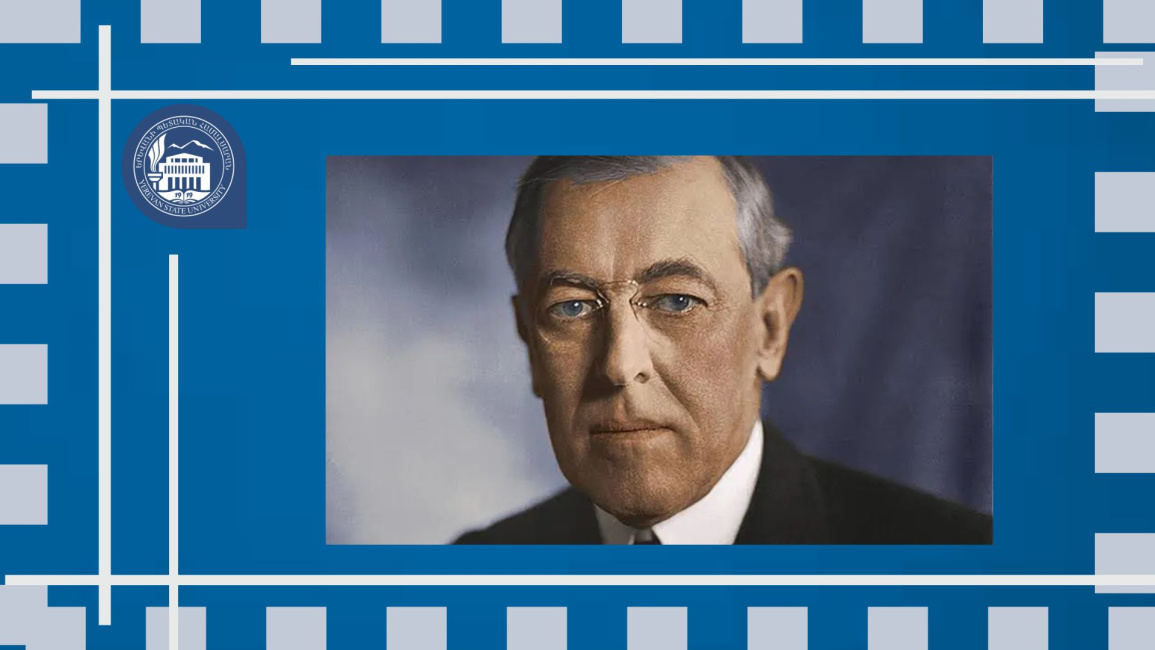
Woodrow Wilson's name is firmly embedded in Armenian historical and political memory along two interconnected axes. The first concerns the delimitation of the Armenian–Turkish border. In this context, in 1920 Wilson assumed the role of arbitrator. He signed the corresponding arbitral award, becoming the author of one of the key documents in the international legal history of the issue. The second axis relates to the large-scale humanitarian movement that emerged during Wilson's era and was encouraged by his public and political influence. This movement aimed to support refugees affected by crises in the Middle East—particularly orphans—through relief programs organized with the participation of American society.
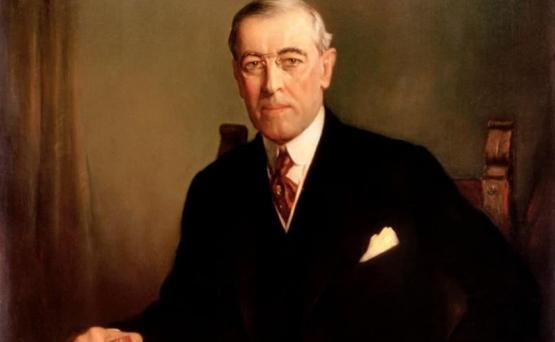
On April 26, 1920, the Supreme Council of the Paris Peace Conference formally appealed to U.S. President Woodrow Wilson, requesting that the United States assume a mandate for Armenia and that Wilson arbitrate the frontier between Armenia and Turkey.
Having accepted responsibility for resolving the issue of the Armenian–Turkish border, Woodrow Wilson officially agreed on May 17, 1920, to assume the role of arbitrator. The arbitral award prepared by a working group led by Professor William Westermann—with the participation of representatives of the State Department, the Department of War, and the President's administration—was signed by Wilson on November 22 of the same year and transmitted to Paris on December 6.
The text of the decision has been preserved and is published in the historical document series of the U.S. Department of State, Office of the Historian.
The humanitarian contribution and legacy of the 28th president of the United States toward the Armenian people are likewise substantial. At his direct initiative, a charitable organization was established to assist Armenians and Assyrians, ultimately saving more than one million refugees, including 132,000 orphans who received care and education in more than one hundred orphanages.
In 1919, Woodrow Wilson was awarded the Nobel Peace Prize.
Through this organization, more than USD 116 million was raised (equivalent to approximately USD 2.5 billion in 2019 values). President Wilson personally and repeatedly appealed to American citizens, business leaders, and organizations to support assistance efforts for Armenians.
As a result of these initiatives, nearly 1,000 U.S. citizens—30 of whom lost their lives while fulfilling their humanitarian mission—volunteered to travel to the Middle East to provide on-the-ground assistance to Armenians, Assyrians, and Greeks.
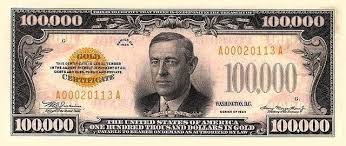
Woodrow Wilson was a co-author of the idea of the League of Nations. Although the organization had a relatively short lifespan, it played a decisive role, saved lives, and laid the groundwork for the United Nations. Wilson's concept of collective security, further developed after the Second World War, became one of the foundational principles of international law, the United Nations, and later the OSCE. Ultimately, this evolution contributed to the formation of the modern principle of the right to self-determination.
Woodrow Wilson was the first U.S. president to hold a PhD in political science.
He was not only a statesman but also a leader who transitioned from academia into public service. In 1886, he earned his PhD at Johns Hopkins University, making him one of the few U.S. presidents to possess the highest academic degree. He later served as president of Princeton University.
On November 23, 2010, an academic conference was held at Yerevan State University, Faculty of History, marking the 90th anniversary of the arbitral award adopted by the U.S. president concerning the Armenian–Turkish border.
If you want your report to be read, keep it within one page.
It takes me one week to prepare a ten-minute speech; three days for a fifteen-minute speech; two days for a half-hour speech; but I can deliver a one-hour speech right now.
If you want to make enemies, try to change something.
Compiled from various sources