Home
envelope
ՀայերենРусскийEnglish

Main Navigation (Eng)

  • Admission
    • Undergraduate admission
    • Master’s degree admission
    • Postgraduate admission
    • Foreign Students
    • Preparatory courses
    • Work Carried out with Applicants
    • YSU STEM High School
  • Education
    • Guide Book for First Year Students
    • Educational programs
    • Granting qualification of a pedagogue
    • Center for Academic Writing
    • Continuing education
    • Academic Calendar
    • Olympiad
  • Science
    • Open science
    • Conferences
    • Library
    • Grants
    • Publishing House
    • Doctoral Thesis Defence Councils
    • HRS4R
  • News and events
    • Events
    • Activities
    • News
    • Newsletter
    • Announcement
    • Photo gallery
    • Video gallery

Secondary Navigation (Eng)

  • About YSU
    • YSU Management
    • YSU Symbols
    • YSU International Cooperation
    • Quality assurance
    • YSU History Museum
    • Vacancies
    • FAQ
  • Structure
    • YSU Faculties and Educational Centers
      • Faculty of Geography and Geology
      • Faculty of Theology
      • Faculty of Oriental Studies
      • Faculty of European Languages and Communication
      • Faculty of Journalism
      • Faculty of Informatics and Applied Mathematics
      • Faculty of Law
      • Faculty of Biology
      • Faculty of Armenian Philology
      • Faculty of International Relations
      • Faculty of History
      • Institute of Physics
      • Faculty of Russian Philology
      • Faculty of Sociology
      • Faculty of Economics and Management
      • Faculty of Philosophy and Psychology
      • Faculty of Chemistry
      • Faculty of Mathematics and Mechanics
      • Pedagogy and Education Development Center
      • Center for European Studies
      • Institute of Pharmacy
      • Information Technologies Educational and Research Center
      • Chair of Civil Defense
      • Chair of Physical Education and Sports
    • Column Wrapper
      • YSU STEM High School
      • YSU Ijevan Branch
    • Scientific Centers and Laboratories
      • American Studies Center
      • Psychology Research Center
      • Research Laboratory of Applied Sociology
      • Center for Mathematical and Applied Research
      • Institute for Armenian Studies
      • Institute for Social and Humanitarian Studies
      • Research Center for Chemistry
      • Research Institute of Biology
      • Research Institute of Physics
      • Research Center for the Institute of Pharmacy
    • Scientific and Educational Centers
      • Observatory
      • Scientific and Educational Center for Control and Monitoring of the Quality of Medicines
      • Specialized cabinet-laboratory for the Design of Very Large Integrated Circuits (Synopsis)
      • Legal Clinic
      • Center for Applied Psychology
      • Research Center-Library of Greek Studies
      • Innovation Center for Microbial Biotechnology and Biofuels
      • Russian Center
      • Center for Russian Studies
      • Distance Learning Laboratory of Sociology
    • Column Wrapper
      • Banner
    • Administrative Divisions of YSU
      • Academic Secretary
      • Center for Doctoral Education
      • General Division
      • YSU History Museum
      • Department of Energy System Operation
      • Financial Analysis Department
      • Human Resources Department
      • Center for Admissions and Affairs with Applicants
      • Vehicle Fleet
      • Business Incubator
      • Byurakan Industrial Practice Base
      • Medical Center
      • Science Policy Department
      • Procurement Planning Department
      • Dilijan Sports and Health Center
      • YSU Archive
      • Publishing House
      • Legal Service
      • Marketing Department
      • International Cooperation Office
      • Tsaghkadzor training and production base
      • Cultural Center
      • Fire Safety Service
      • Alumni and Career Center
      • Hankavan Industrial Practice Base
      • Accounting Department
      • Center for Quality Assurance
      • Department for Special Affairs
      • Guest House
      • Student Dormitory
      • Educational-Methodological Department
      • Marie and Sarkis Izmirlian Library
      • Center for Strategic Planning
      • Rectorate
      • Rector's Office
      • Department of Territory Improvement and Landscape Design
      • Information Technology Department
      • Department of Organization and Control of Economic Activities
  • Structure
  • Alumni and Career
    • Alumni Community
    • Career Center
    • Friends of YSU
  • Student life
    • YSU Student Scientific Society
    • YSU Student Council
    • Art and Culture
ՀայերենРусскийEnglish
envelope

Main Navigation (Eng)

  • Admission
    • Undergraduate admission
    • Master’s degree admission
    • Postgraduate admission
    • Foreign Students
    • Preparatory courses
    • Work Carried out with Applicants
    • YSU STEM High School
  • Education
    • Guide Book for First Year Students
    • Educational programs
    • Granting qualification of a pedagogue
    • Center for Academic Writing
    • Continuing education
    • Academic Calendar
    • Olympiad
  • Science
    • Open science
    • Conferences
    • Library
    • Grants
    • Publishing House
    • Doctoral Thesis Defence Councils
    • HRS4R
  • News and events
    • Events
    • Activities
    • News
    • Newsletter
    • Announcement
    • Photo gallery
    • Video gallery

Secondary Navigation (Eng)

  • About YSU
    • YSU Management
    • YSU Symbols
    • YSU International Cooperation
    • Quality assurance
    • YSU History Museum
    • Vacancies
    • FAQ
  • Structure
    • YSU Faculties and Educational Centers
      • Faculty of Geography and Geology
      • Faculty of Theology
      • Faculty of Oriental Studies
      • Faculty of European Languages and Communication
      • Faculty of Journalism
      • Faculty of Informatics and Applied Mathematics
      • Faculty of Law
      • Faculty of Biology
      • Faculty of Armenian Philology
      • Faculty of International Relations
      • Faculty of History
      • Institute of Physics
      • Faculty of Russian Philology
      • Faculty of Sociology
      • Faculty of Economics and Management
      • Faculty of Philosophy and Psychology
      • Faculty of Chemistry
      • Faculty of Mathematics and Mechanics
      • Pedagogy and Education Development Center
      • Center for European Studies
      • Institute of Pharmacy
      • Information Technologies Educational and Research Center
      • Chair of Civil Defense
      • Chair of Physical Education and Sports
    • Column Wrapper
      • YSU STEM High School
      • YSU Ijevan Branch
    • Scientific Centers and Laboratories
      • American Studies Center
      • Psychology Research Center
      • Research Laboratory of Applied Sociology
      • Center for Mathematical and Applied Research
      • Institute for Armenian Studies
      • Institute for Social and Humanitarian Studies
      • Research Center for Chemistry
      • Research Institute of Biology
      • Research Institute of Physics
      • Research Center for the Institute of Pharmacy
    • Scientific and Educational Centers
      • Observatory
      • Scientific and Educational Center for Control and Monitoring of the Quality of Medicines
      • Specialized cabinet-laboratory for the Design of Very Large Integrated Circuits (Synopsis)
      • Legal Clinic
      • Center for Applied Psychology
      • Research Center-Library of Greek Studies
      • Innovation Center for Microbial Biotechnology and Biofuels
      • Russian Center
      • Center for Russian Studies
      • Distance Learning Laboratory of Sociology
    • Column Wrapper
      • Banner
    • Administrative Divisions of YSU
      • Academic Secretary
      • Center for Doctoral Education
      • General Division
      • YSU History Museum
      • Department of Energy System Operation
      • Financial Analysis Department
      • Human Resources Department
      • Center for Admissions and Affairs with Applicants
      • Vehicle Fleet
      • Business Incubator
      • Byurakan Industrial Practice Base
      • Medical Center
      • Science Policy Department
      • Procurement Planning Department
      • Dilijan Sports and Health Center
      • YSU Archive
      • Publishing House
      • Legal Service
      • Marketing Department
      • International Cooperation Office
      • Tsaghkadzor training and production base
      • Cultural Center
      • Fire Safety Service
      • Alumni and Career Center
      • Hankavan Industrial Practice Base
      • Accounting Department
      • Center for Quality Assurance
      • Department for Special Affairs
      • Guest House
      • Student Dormitory
      • Educational-Methodological Department
      • Marie and Sarkis Izmirlian Library
      • Center for Strategic Planning
      • Rectorate
      • Rector's Office
      • Department of Territory Improvement and Landscape Design
      • Information Technology Department
      • Department of Organization and Control of Economic Activities
  • Structure
  • Alumni and Career
    • Alumni Community
    • Career Center
    • Friends of YSU
  • Student life
    • YSU Student Scientific Society
    • YSU Student Council
    • Art and Culture
  1. Main
  2. News
  3. Women in science: historical perspective
February 11, 2026 | 10:50
Science
Education
Society
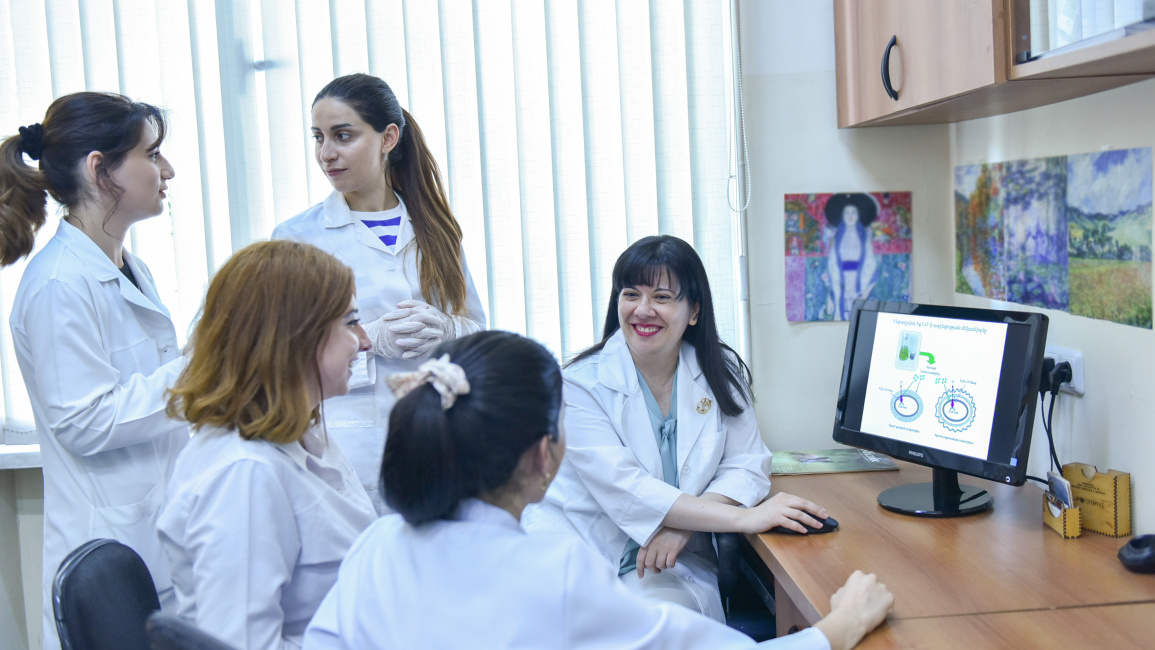
Women in science: historical perspective

On December 20, 2013, the United Nations General Assembly adopted the resolution Science, Technology and Innovation for Development, recognizing the equal and full access of women and girls to achievements in science, technology, and innovation, as well as their participation in the advancement of these fields. Subsequently, by a decision on December 22, 2015, February 11 was designated as the International Day of Women and Girls in Science.

On December 20, 2013, the United Nations General Assembly adopted the resolution Science, Technology and Innovation for Development, recognizing the equal and full access of women and girls to achievements in science, technology, and innovation, as well as their participation in the advancement of these fields. Subsequently, by a decision on December 22, 2015, February 11 was designated as the International Day of Women and Girls in Science.

To promote the contributions of women and girls in science, UNESCO and UN Women collaborate with governments, intergovernmental organizations, civil society partners, universities, and corporations around the world.

Each year on February 11—the day honoring the role of women and girls in science and technology—the United Nations brings together two representative groups from its member states, including both the private sector and leading scientists, to discuss initiatives and programs aimed at increasing women's participation in STEM (Science, Technology, Engineering, and Mathematics). The assembly is co-sponsored by the Permanent Missions of Andorra, Antigua and Barbuda, Armenia, Australia, Bhutan, Chile, Ecuador, Finland, Greece, Latvia, Mexico, Nigeria, Korea, San Marino, and Uzbekistan. Each year, the conference has a different thematic focus. 

In Armenia, the day has been officially celebrated since 2016.


Women in science: brief overview


History shows that, across different eras, women—often working under restrictive conditions and without appropriate recognition—have made significant contributions to the advancement of science, including medicine, mathematics, physics, chemistry, astronomy, and biology.
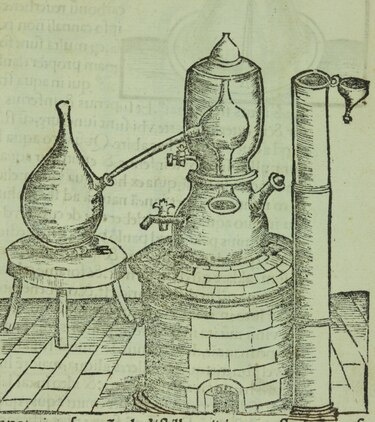
In ancient Egypt, the earliest known female physician was Peseshet, often referred to as the "lady overseer of the female physicians" (c. 2600–2500 BCE). Another notable figure is Mary the Jewess, recognized for inventing several chemical apparatuses, including a double boiler, known today as the bain-marie (French), bagno maria (Italian), or bath maria (Spanish). In ancient Greece, despite strict societal limitations, women participated in medicine and philosophy; Homer mentions Agamede as a healer. In Babylon, around 1200 BCE, two female perfumers—one known as Tapputi-Belatekallim—successfully extracted essences from plants using distillation and filtration techniques. 

During the Middle Ages, monasteries were the primary centers of female education. In these institutions, they learned to read and write, studied medicine, botany, and natural sciences, and transcribed important works from the past. One of the most significant medieval scholars was Hildegard of Bingen, whose writings focused on medicine, the study of nature, and human physiology. From the 1150s, she was also the first known female composer. As the abbess of a Benedictine monastery—later canonized—Hildegard composed music for her mystical poems. The melodies from her collection "Symphonia armonie celestium revelationum" were performed both in her monastery and at liturgical services in neighboring communities.

The early 11th century saw the emergence of the first medieval universities. While some women achieved success, the Middle Ages were largely characterized by cultural biases that limited women's access to education and scientific pursuits. An exception was the University of Bologna, which, from its founding in 1088, permitted women to attend lectures.

Notable medieval female scientists include Maria Winkelmann, who contributed to astronomical research and discovered a comet but was denied official recognition by scientific institutions; Maria Gaetana Agnesi, the first female mathematician in the Western world to gain prominence for her influential mathematics textbook; Émilie du Châtelet, who greatly contributed to the dissemination of Newton's work and the development of physics; and Maria Sibylla Merian, a pioneer in modern botany and entomology.

The first woman formally appointed to an academic post and permitted to teach at a university was the 18th-century Italian scientist Laura Maria Caterina Bassi. She became the first female professor of physics in Europe and only the second woman in the world—after Elena Piscopia—to receive a doctorate in philosophy, awarded by the University of Bologna.

Laura Bassi successfully petitioned for regular salary increases, which she used to fund the purchase of advanced scientific equipment. She earned the highest salary paid by the University of Bologna, amounting to 1,200 lire. At the age of 65, she and her husband were appointed as lecturers to the Chair of Experimental Physics at the Institute of Sciences of Bologna.

The late 19th century was marked by the rise of women's colleges, which expanded employment and educational opportunities for female scientists. During this period, the contributions of Ada Lovelace stand out; she is widely regarded as the world's first computer programmer.

Ada Lovelace, the daughter of Lord Byron, created the world's first computer program for Charles Babbage's mechanical Analytical Engine. The unified programming language Ada was named in her honor.

In the second half of the 19th century, many of the most successful women in STEM were Russian. Although many women had qualified in medicine by the 1870s, opportunities in other fields were restricted. To carry out scientific research, they were compelled to travel to Western Europe, primarily to Switzerland. In her book, Ann Hibner Koblitz writes of these "women of the 1870s": "The higher education of women in continental Europe was largely advanced by this first generation of Russian women. They were the first students in Zurich, Heidelberg, Leipzig, and elsewhere. They were the first doctoral candidates in medicine, chemistry, mathematics, and biology."
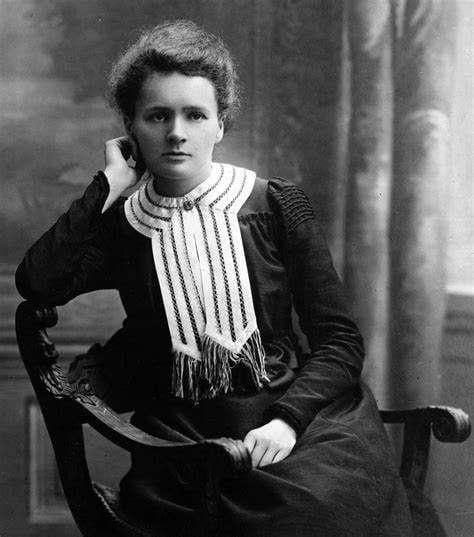
The 20th century was marked by the international recognition of women's scientific achievements. Marie Curie was the first person to receive two Nobel Prizes.

Marie Sklodowska-Curie became the first woman awarded a Nobel Prize in 1903 (Physics) and, in 1911 (Chemistry), became a two-time laureate for her research on radioactivity. 

She was the first woman to teach at Sorbonne University (Paris), a member of 85 scientific societies, and held 20 scientific degrees. She founded the Curie Institutes in Paris and Warsaw, which remain leading centers for medical research. The 96th element in the periodic table, curium (Cm), is named in her honor. 

Notably, when Marie and Pierre Curie were invited to the Royal Institution of Great Britain in 1903 to present their work on radioactivity, only Pierre spoke, as women were prohibited from delivering speeches.

Marie and Pierre Curie's daughter, Irène Joliot-Curie, received the 1935 Nobel Prize in Chemistry with her husband, Frédéric Joliot-Curie, making the Curies the family with the most Nobel laureates to date. 

It is also important to note that some women's contributions, such as Rosalind Franklin's role in elucidating the structure of DNA, remained undervalued for many years.

In the 21st century, numerous international and national educational programs have been launched with the aim of promoting women's participation in science and ensuring equal opportunities. As a result, women are more actively involved in science than ever before. In recent years, significant progress has been observed globally in increasing women's and girls' participation in information and communication technology (ICT) and science more broadly.

According to UNESCO's 2017 report, although women constitute 53 percent of those holding bachelor's and master's degrees worldwide, they account for only 43 percent at the doctoral level in the sciences. 

By mid-2018, female researchers represented 28.8 percent of all researchers globally. The regions with the highest proportions of women researchers are Central Asia (48.1 percent), Latin America and the Caribbean (45.4 percent), Arab States (39.8 percent), and Central and Eastern Europe (39.5 percent). Women are predominantly represented in the fields of education, health, social sciences, and the humanities, while their participation in STEM disciplines remains relatively low.
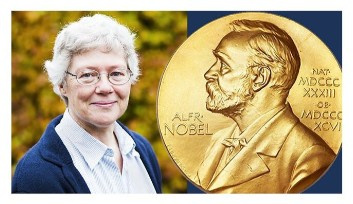
On December 10, 2023, Anne L'Huillier, awarded the Nobel Prize for the discovery of a new form of light, noted in her acceptance speech: "120 years ago, Marie Sklodowska-Curie was the first woman to receive the Nobel Prize in Physics. I am the fifth. In more than 100 years, only two women had received the Nobel Prize in Physics. In the past five years alone, three women have received it. I hope this marks a new trend that will inspire future generations."


Interesting facts


  • On February 11, 1935, aviator Amelia Earhart became the first woman to fly solo across the Atlantic Ocean.

  • Eva Ekeblad was the first woman admitted to the Royal Swedish Academy of Sciences.

  • Annie Scott Dill Maunder studied sunspots and improved solar photography techniques. She also designed a small, portable wide-angle camera with a 1.5-inch (38 mm) lens.

  • In the 1940s, Tina Asatiani, together with Academician Artem Alikhanyan, discovered and studied the nature of narrow particle streams produced by nuclear processes. Asatiani developed an electronic method to reduce the recovery time of Wilson cloud chambers. She also invented a device for measuring the coordinates of charged particles—the charged particle coordinate detector—which is used in accelerator experiments and cosmic ray detection. Moreover, Asatiani discovered the structural phenomenon of multi-halo families.

  • From 1967, Tina Asatiani worked at the ARUS Experimental Center of the Yerevan Physics Institute. Using wide-aperture spark chambers, Asatiani and her colleagues conducted the first experiment at ARUS, demonstrating the functioning of radiation beams. She also carried out the first photo-production experiment of mesons at the center.

  • Thanks to the efforts of Honored Teacher of the Republic of Armenia Rima Khachatryan, between 1975 and 2015, a dozen medical colleges were established across various provinces of Armenia, and two nursing schools were founded affiliated with clinics in Yerevan.

  • The structural strength calculations for the Soviet СХА-1 biplane were performed by the department led by Elizaveta Shahkhatuni, known as the "Steel Lady" at the Novosibirsk branch of the design bureau.


Satenik Badalyan
ShareFacebookTelegram

Latest News

ԵՊՀ-ում հյուրընկալվեց Հայաստանում ԱՄՆ գործերի ժամանակավոր հավատարմատար Դեյվիդ Ալենը. ուրվագծվեցին ընթացիկ և հետագա...

04.03.2026

Ինչո՞ւ զբաղվել գիտությամբ. քննարկում ԵՊՀ-ում

04.03.2026

YSU Gold Medal awarded to Professor Eduard Yeghiazaryan

03.03.2026
Show All

Announcement

Invitation to Online Conference: American Research Institute of the South Caucasus

09.17.2026 - 09.19.2026

Invitation to Participate in International Conference "Armenia: Crossroads of Centuries and Worlds"

06.18.2026 - 06.19.2026

Call for Applications: Research Academy on Human Rights Research in Armenia

03.04.2026 - 03.20.2026
Show All

Quick access

  • Intranet
  • E-learning
  • Mulberry
  • Online applications
  • Phone book
  • Registrar
  • Documentation

Footer(ENG)

  • Main pages
    • Admission
    • Education
    • Science
    • News
  • Information
    • Frequently asked Questions
    • Vacancies
    • Search for educational programs
    • For the applicants
    • For the students
  • About YSU
    • YSU management
    • YSU symbols
© Yerevan state university 2026
Address: Republic of Armenia, Yerevan, 0025, 1 Alex Manoogian (+37460) 710000 info@ysu.am