Home
envelope
ՀայերենРусскийEnglish

Main Navigation (Eng)

  • Admission
    • Undergraduate admission
    • Master’s degree admission
    • Postgraduate admission
    • Foreign Students
    • Preparatory courses
    • Work Carried out with Applicants
    • YSU STEM High School
  • Education
    • Guide Book for First Year Students
    • Educational programs
    • Granting qualification of a pedagogue
    • Center for Academic Writing
    • Continuing education
    • Academic Calendar
    • Olympiad
  • Science
    • Open science
    • Conferences
    • Library
    • Grants
    • Publishing House
    • Doctoral Thesis Defence Councils
    • HRS4R
  • News and events
    • Events
    • Activities
    • News
    • Newsletter
    • Announcement
    • Photo gallery
    • Video gallery

Secondary Navigation (Eng)

  • About YSU
    • YSU Management
    • YSU Symbols
    • YSU International Cooperation
    • Quality assurance
    • YSU History Museum
    • Vacancies
    • FAQ
  • Structure
    • YSU Faculties and Educational Centers
      • Faculty of Geography and Geology
      • Faculty of Theology
      • Faculty of Oriental Studies
      • Faculty of European Languages and Communication
      • Faculty of Journalism
      • Faculty of Informatics and Applied Mathematics
      • Faculty of Law
      • Faculty of Biology
      • Faculty of Armenian Philology
      • Faculty of International Relations
      • Faculty of History
      • Institute of Physics
      • Faculty of Russian Philology
      • Faculty of Sociology
      • Faculty of Economics and Management
      • Faculty of Philosophy and Psychology
      • Faculty of Chemistry
      • Faculty of Mathematics and Mechanics
      • Pedagogy and Education Development Center
      • Center for European Studies
      • Institute of Pharmacy
      • Information Technologies Educational and Research Center
      • Chair of Civil Defense
      • Chair of Physical Education and Sports
    • Column Wrapper
      • YSU STEM High School
      • YSU Ijevan Branch
    • Scientific Centers and Laboratories
      • American Studies Center
      • Psychology Research Center
      • Research Laboratory of Applied Sociology
      • Center for Mathematical and Applied Research
      • Institute for Armenian Studies
      • Institute for Social and Humanitarian Studies
      • Research Center for Chemistry
      • Research Institute of Biology
      • Research Institute of Physics
      • Research Center for the Institute of Pharmacy
    • Scientific and Educational Centers
      • Observatory
      • Scientific and Educational Center for Control and Monitoring of the Quality of Medicines
      • Specialized cabinet-laboratory for the Design of Very Large Integrated Circuits (Synopsis)
      • Legal Clinic
      • Center for Applied Psychology
      • Research Center-Library of Greek Studies
      • Innovation Center for Microbial Biotechnology and Biofuels
      • Russian Center
      • Center for Russian Studies
      • Distance Learning Laboratory of Sociology
    • Column Wrapper
      • Banner
    • Administrative Divisions of YSU
      • Academic Secretary
      • Center for Doctoral Education
      • General Division
      • YSU History Museum
      • Department of Energy System Operation
      • Financial Analysis Department
      • Human Resources Department
      • Center for Admissions and Affairs with Applicants
      • Vehicle Fleet
      • Business Incubator
      • Byurakan Industrial Practice Base
      • Medical Center
      • Science Policy Department
      • Procurement Planning Department
      • Dilijan Sports and Health Center
      • YSU Archive
      • Publishing House
      • Legal Service
      • Marketing Department
      • International Cooperation Office
      • Tsaghkadzor training and production base
      • Cultural Center
      • Fire Safety Service
      • Alumni and Career Center
      • Hankavan Industrial Practice Base
      • Accounting Department
      • Center for Quality Assurance
      • Department for Special Affairs
      • Guest House
      • Student Dormitory
      • Educational-Methodological Department
      • Marie and Sarkis Izmirlian Library
      • Center for Strategic Planning
      • Rectorate
      • Rector's Office
      • Department of Territory Improvement and Landscape Design
      • Information Technology Department
      • Department of Organization and Control of Economic Activities
  • Structure
  • Alumni and Career
    • Alumni Community
    • Career Center
    • Friends of YSU
  • Student life
    • YSU Student Scientific Society
    • YSU Student Council
    • Art and Culture
ՀայերենРусскийEnglish
envelope

Main Navigation (Eng)

  • Admission
    • Undergraduate admission
    • Master’s degree admission
    • Postgraduate admission
    • Foreign Students
    • Preparatory courses
    • Work Carried out with Applicants
    • YSU STEM High School
  • Education
    • Guide Book for First Year Students
    • Educational programs
    • Granting qualification of a pedagogue
    • Center for Academic Writing
    • Continuing education
    • Academic Calendar
    • Olympiad
  • Science
    • Open science
    • Conferences
    • Library
    • Grants
    • Publishing House
    • Doctoral Thesis Defence Councils
    • HRS4R
  • News and events
    • Events
    • Activities
    • News
    • Newsletter
    • Announcement
    • Photo gallery
    • Video gallery

Secondary Navigation (Eng)

  • About YSU
    • YSU Management
    • YSU Symbols
    • YSU International Cooperation
    • Quality assurance
    • YSU History Museum
    • Vacancies
    • FAQ
  • Structure
    • YSU Faculties and Educational Centers
      • Faculty of Geography and Geology
      • Faculty of Theology
      • Faculty of Oriental Studies
      • Faculty of European Languages and Communication
      • Faculty of Journalism
      • Faculty of Informatics and Applied Mathematics
      • Faculty of Law
      • Faculty of Biology
      • Faculty of Armenian Philology
      • Faculty of International Relations
      • Faculty of History
      • Institute of Physics
      • Faculty of Russian Philology
      • Faculty of Sociology
      • Faculty of Economics and Management
      • Faculty of Philosophy and Psychology
      • Faculty of Chemistry
      • Faculty of Mathematics and Mechanics
      • Pedagogy and Education Development Center
      • Center for European Studies
      • Institute of Pharmacy
      • Information Technologies Educational and Research Center
      • Chair of Civil Defense
      • Chair of Physical Education and Sports
    • Column Wrapper
      • YSU STEM High School
      • YSU Ijevan Branch
    • Scientific Centers and Laboratories
      • American Studies Center
      • Psychology Research Center
      • Research Laboratory of Applied Sociology
      • Center for Mathematical and Applied Research
      • Institute for Armenian Studies
      • Institute for Social and Humanitarian Studies
      • Research Center for Chemistry
      • Research Institute of Biology
      • Research Institute of Physics
      • Research Center for the Institute of Pharmacy
    • Scientific and Educational Centers
      • Observatory
      • Scientific and Educational Center for Control and Monitoring of the Quality of Medicines
      • Specialized cabinet-laboratory for the Design of Very Large Integrated Circuits (Synopsis)
      • Legal Clinic
      • Center for Applied Psychology
      • Research Center-Library of Greek Studies
      • Innovation Center for Microbial Biotechnology and Biofuels
      • Russian Center
      • Center for Russian Studies
      • Distance Learning Laboratory of Sociology
    • Column Wrapper
      • Banner
    • Administrative Divisions of YSU
      • Academic Secretary
      • Center for Doctoral Education
      • General Division
      • YSU History Museum
      • Department of Energy System Operation
      • Financial Analysis Department
      • Human Resources Department
      • Center for Admissions and Affairs with Applicants
      • Vehicle Fleet
      • Business Incubator
      • Byurakan Industrial Practice Base
      • Medical Center
      • Science Policy Department
      • Procurement Planning Department
      • Dilijan Sports and Health Center
      • YSU Archive
      • Publishing House
      • Legal Service
      • Marketing Department
      • International Cooperation Office
      • Tsaghkadzor training and production base
      • Cultural Center
      • Fire Safety Service
      • Alumni and Career Center
      • Hankavan Industrial Practice Base
      • Accounting Department
      • Center for Quality Assurance
      • Department for Special Affairs
      • Guest House
      • Student Dormitory
      • Educational-Methodological Department
      • Marie and Sarkis Izmirlian Library
      • Center for Strategic Planning
      • Rectorate
      • Rector's Office
      • Department of Territory Improvement and Landscape Design
      • Information Technology Department
      • Department of Organization and Control of Economic Activities
  • Structure
  • Alumni and Career
    • Alumni Community
    • Career Center
    • Friends of YSU
  • Student life
    • YSU Student Scientific Society
    • YSU Student Council
    • Art and Culture
  1. Main
  2. News
  3. Joint ethnographic studies of YSU researchers and students published in one volume
February 23, 2026 | 15:52
Research
Publications and scientific journals
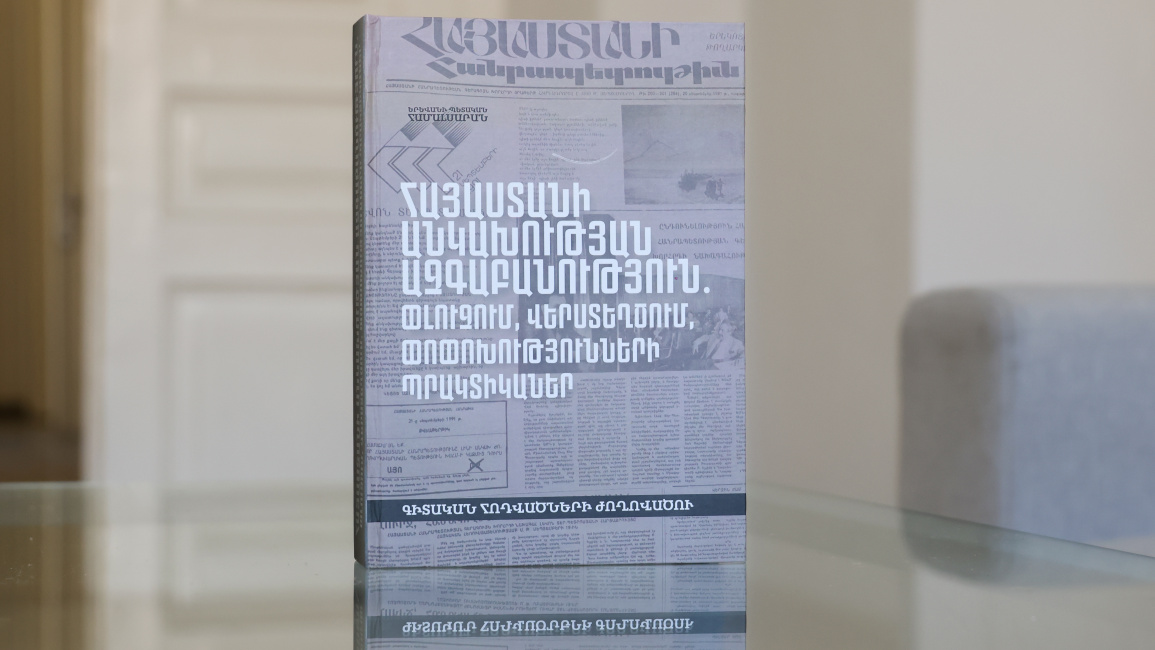
Joint ethnographic studies of YSU researchers and students published in one volume

With the endorsement of the YSU Academic Council, a collection of scholarly articles titled "Ethnology of Armenia's Independence: Collapse, Re-Establishment, Practices of Change" has been published. The volume is devoted to the ethnological dimensions of independence and examines the period from the events of 1988 to the proclamation of the Republic of Armenia's independence in 1991, addressing economic transformations, the blockade, the energy crisis, migration, and related issues.

The collection of scholarly articles "Ethnology of Armenia's Independence: Collapse, Re-Establishment, Practices of Change" includes the work of 18 researchers. Students from the Faculty of History were also involved in the research by conducting field ethnographic studies and archival research.

The editors of the volume are Mikayel Gabrielyan, Dean of the YSU Faculty of History, and lecturer Ruzanna Tsaturyan. We spoke with them about the research objectives and the particular emphases in those studies.

– Mr. Gabrielyan, what was the purpose of conducting these studies? To what extent were students involved in this work?

– Whenever the need arose to present the last three and a half decades, it became evident that there was no comprehensive work covering the period leading to the proclamation of Armenia's independence as an ethnographic whole. Yet an ethnological examination of Armenia's independence is of paramount importance, as it encompasses realities grounded in social, value-based, ideological, conceptual, and civilizational foundations. This approach helps students to understand the principal characteristics of independence as an ethnological and anthropological phenomenon. The students so actively participated in the studies that they became co-authors of the articles.
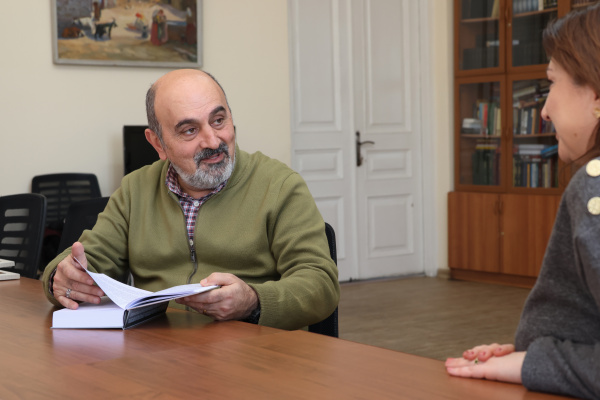
The articles detail how Armenia achieved independence across various spheres—such as the renaming of places, the discourse of independence, agrarian reforms in the Republic of Armenia, and other domains.

The primary objective was to show that independence is not merely a matter of economics, history, philosophy, or psychology; it is life itself—everyday life and daily realities lived by and through people. Another of our objectives was to help the new generation understand independence from a human perspective. For example, what was it like to live with only two or four hours of electricity per day? What was it like to attend classes when there was no public transportation in Yerevan? What was it like to sit in an unheated classroom or to prepare for examinations by candlelight? Numbers and events constitute the skeleton of independence; this is its "flesh and blood". 

– Your research focuses on agrarian reforms. What issues have you addressed, and what ethnographic emphases have you made?

– In my research, I have shown how the transformation of the agrarian sector took place in the Republic of Armenia in 1991—not from an economic standpoint, but from an anthropological perspective. For instance, individuals who had lived for seventy years in the Soviet Union, and who seemed to have forgotten about their lands, later began to demand the return of their ancestral orchards that had been confiscated during the collectivization of the 1930s.

I have also examined the closeness and unity among neighbors and relatives, and how possessing nearby plots of land and cooperating with one another during those "difficult years" became a distinctive mechanism of survival, security, and protection. Furthermore, I have examined how issues in border regions were addressed, particularly the efforts to prevent outsiders from becoming landowners.  

– How were issues regulated in border areas during that period?

– In border regions, for example, in the Noyemberyan district, the land privatization process was carried out by lottery. The process was organized in a way that everyone would receive at least a small plot of land in areas not directly adjacent to the border. The aim was to ensure that each family would have at least a small piece of land to cultivate and thereby sustain their children.

In other words, if someone received a land only at the border—land they could not go to or work on—this was considered unacceptable. Therefore, the lottery system was organized so that each person would also receive a plot farther from the border. These processes had begun as early as 1988, when tensions— including gunfire and attacks—were already occurring in some border villages. 

– Mr. Gabrielyan, as the editor of the volume, could you also introduce the research that addresses the ethnography of Armenia's borders during the years of independence?
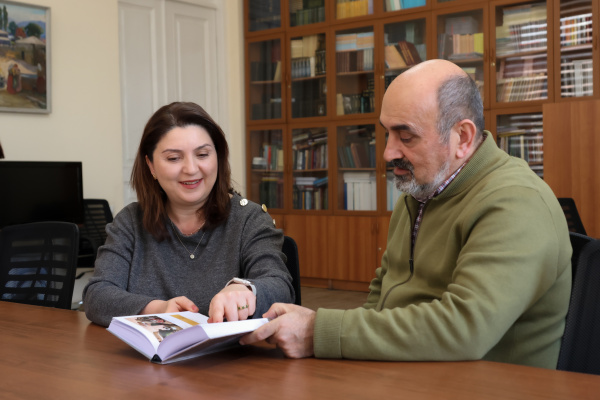
– In an article by our colleague Artak Dabaghyan, a lecturer at the Chair of Archaeology and Ethnography, he addresses issues related to the state border and border changes in general. During the Soviet period, there was no official Armenian-Azerbaijani or Armenian-Georgian border. However, after the proclamation of independence in 1991, individuals suddenly found themselves in situations where a state border now lay between their village and a neighboring Georgian village, and the freedoms they had previously disappeared. 

Dr. Harutyun Marutyan has examined the Karabakh movement. During those years, tens of thousands of people from Artsakh were living in Armenia, but they could not return to the Nagorno-Karabakh Autonomous Oblast (NKAO), as all measures were taken to prevent Armenians with higher education from finding employment or realizing their potential there; instead, they were expected to relocate to Baku or Sumgait. In times of danger, they would come to Yerevan and never return. Even between the 1960s and 1980s, it was difficult for researchers—such as ethnographers conducting fieldwork—to enter the NKAO. This required extensive documentation, formal requests to the relevant committees of the Azerbaijani Communist Party, and, in many cases, ethnographers were outright prohibited from entering the NKAO.

– Ms. Tsaturyan, beyond editing the collection, you conducted research on the energy crisis during Armenia's early years of independence and the ways women navigated and overcame it. Looking back on your work, what were the most significant insights you discovered, and how did students participate in your study?

– My research examined how daily life changed during the collapse of the Soviet Union and the proclamation of Armenia's independence—during a transitional period when one system had fallen but a new one had not yet been formed. In particular, I focused on the strategies people developed to cope with these difficulties.

Three students participated in the research. They conducted numerous ethnographic interviews to document people's memories of the transitional period and the social phenomena characteristic of that time. For example, the students had never seen lamps powered by filtered fuel, fujika or wood stoves that were an integral part of daily life during Armenia's post-Soviet energy crisis.
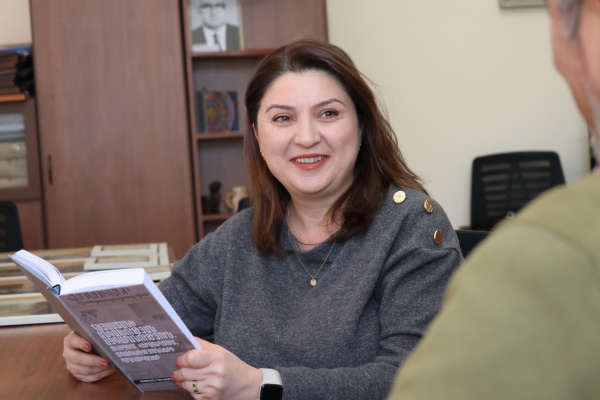
We studied how women found alternative ways to manage the energy crisis and cope with rolling blackouts. In terms of household organization, people returned to traditional methods. In traditional literature, the tandoor was described as the center of the home, where the family gathered. We observed that, during the crisis years, in apartment buildings, the wood stove became the center of the household; everyone would gather around it to cook and warm themselves. During this period, there was a revival of traditional cooking: for example, people resumed making arishta—a practice that had been replaced by vermicelli during Soviet times. They also began baking bread and, in some cases, restored old village watermills that had long been inactive. For my students, this was especially fascinating—they felt connected to a past that seemed distant precisely because it was so different, even though it was only 30 years ago.

We were also interested in how people described what is sometimes referred to as "the dark and cold" years. Some called this period the "years of plunder", others the "years of independence", and others still referred to it as the "years of devastation", the "cold years", or the "years of movement"—demonstrating a wide variety of interpretations.

– The title of your research suggests that women's experiences are at the center. What is your conclusion in this regard?

– Women acted as the "shock absorbers" of the crisis. In other words, they were the first to bear the impact of the crisis and the first to devise ways to cope with it. They were responsible not only for the well-being of their families—children and spouses—but also for maintaining the welfare and social atmosphere of the wider community. It was important for us to understand how women managed to cope and demonstrate resilience. The economy had collapsed, industry had collapsed, jobs were scarce, and unemployment was very high. Yet, in this situation, women showed remarkable flexibility in finding new ways to work. This was also partly because, at that time, questions of authority and decision-making for women were less contested than they were for men.

We also examined women's strategies during the energy crisis, specifically how they organized household tasks with precise timing during rolling blackouts, when electricity was available for only two to three hours a day.

We studied the social dynamics that emerged, such as watching TV series together, which helped restore social connections. Economic hardship created clear divisions between the poor and the wealthy. Relatives of poorer families often withdrew support, leaving neighbors as the primary source of help. People came together to navigate financial difficulties, solve community problems, and coordinate shared leisure activities.

In Armenia, every individual made certain sacrifices for the greater good. People developed strategies for resilience and patience, maintaining endurance until life returned to a more stable course.


Nara Martirosyan
ShareFacebookTelegram

Latest News

Few minutes that can save lives: blood donation drive at YSU

17.03.2026

Միջազգային գիտական համագործակցության նոր հեռանկարներ. ԵՊՀ գիտնականը՝ Չինաստանում

17.03.2026

YSU Charles Aznavour Cultural Center's "Universitian" theater studio wins "Universiade-2026" competition

16.03.2026
Show All

Announcement

Invitation to Online Conference: American Research Institute of the South Caucasus

09.17.2026 - 09.19.2026

Invitation to Participate in International Conference "Armenia: Crossroads of Centuries and Worlds"

06.18.2026 - 06.19.2026

Grant Competition for Invited Professorship at Yerevan State University

04.10.2026 - 05.20.2026
Show All

Quick access

  • Intranet
  • E-learning
  • Mulberry
  • Online applications
  • Phone book
  • Registrar
  • Documentation

Footer(ENG)

  • Main pages
    • Admission
    • Education
    • Science
    • News
  • Information
    • Frequently asked Questions
    • Vacancies
    • Search for educational programs
    • For the applicants
    • For the students
  • About YSU
    • YSU management
    • YSU symbols
© Yerevan state university 2026
Address: Republic of Armenia, Yerevan, 0025, 1 Alex Manoogian (+37460) 710000 info@ysu.am