March 26, 2026 | 14:30
Education
Competitions

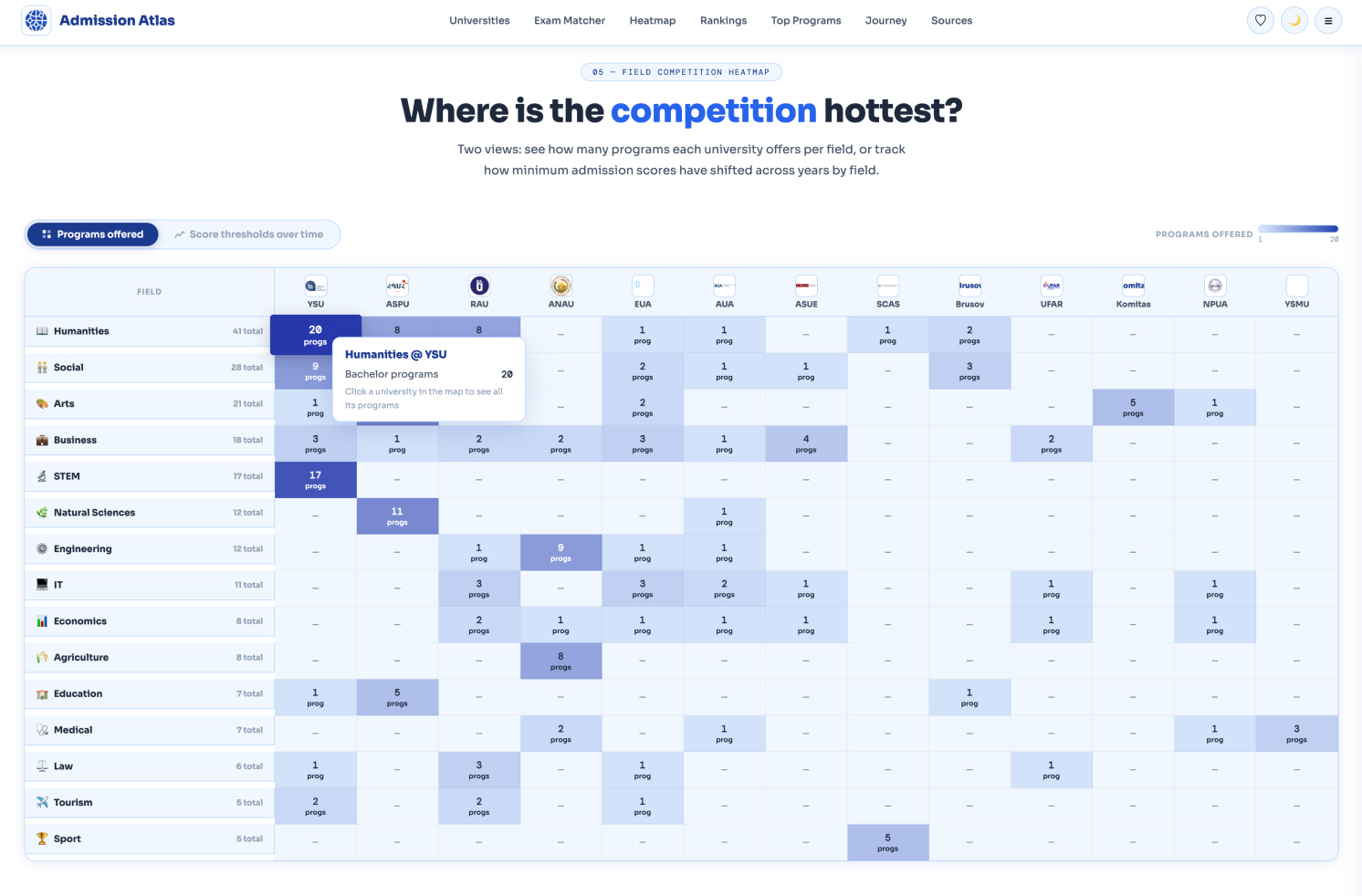
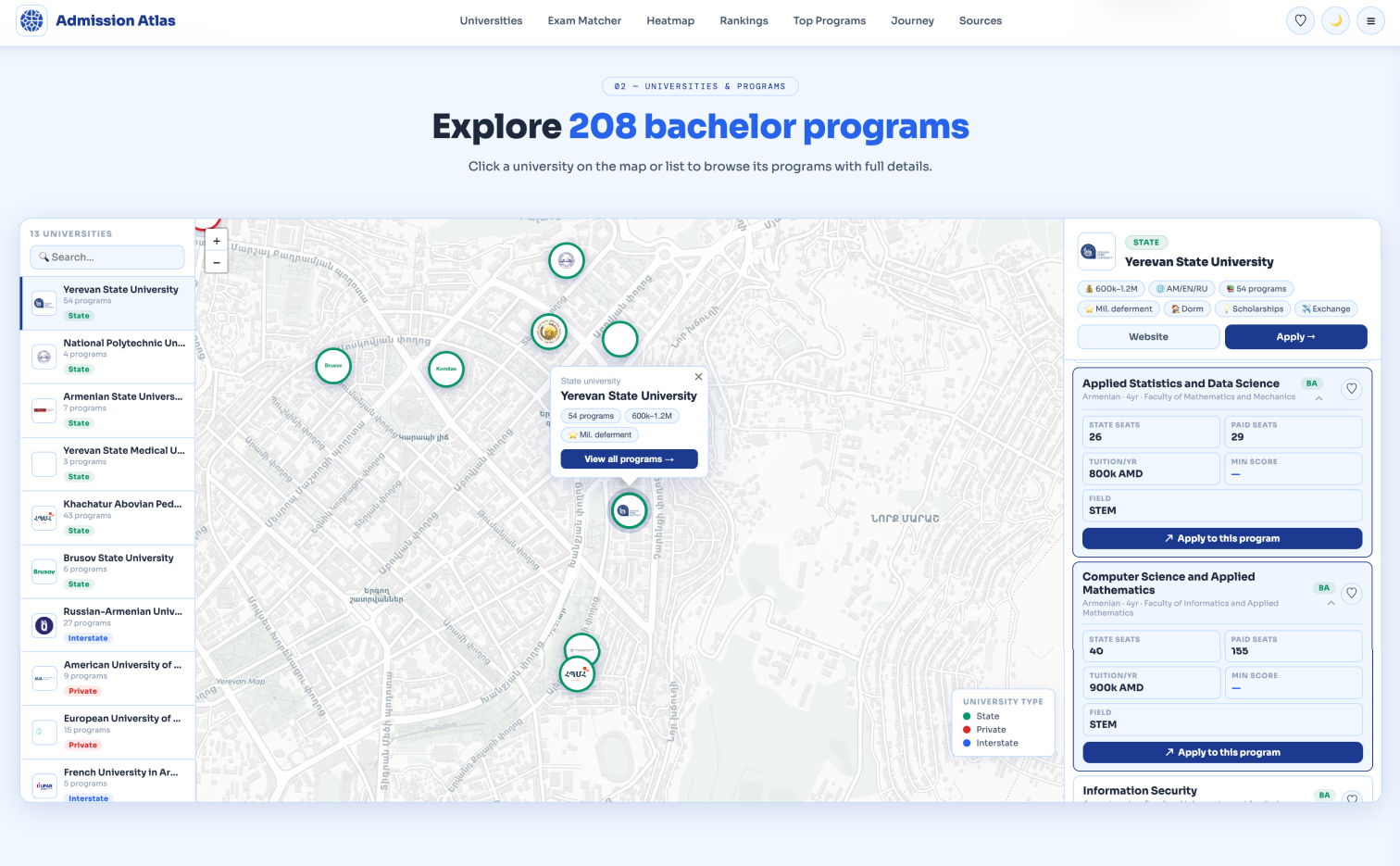
Astghik's project, titled "University Admission Atlas," is an open-data platform built on undergraduate admission statistics. For the competition, data aggregated from official sources was presented through interactive visualizations. The core objective is to transform complex, fragmented data into clear, accessible, and actionable information for applicants, parents, and educational policymakers alike.
"I had long envisioned this project. The annual Open Data Armenia competition provided an excellent opportunity to present it and bring it to life," the awardee said. She emphasized that the primary goal is to make Armenian university admission data accessible, transparent, and comprehensible within a single platform.

According to Astghik, admission-related information is currently dispersed across dozens of websites and official documents, making it difficult to obtain a comprehensive overview.
"The 'University Admission Atlas' aggregates and structures data from approximately 20 official sources, converting it into a unified, interactive visual platform," she noted.
We spoke with Astghik Petrosyan about the project's primary challenges, objectives, and underlying vision.
Q: Astghik, what specific challenges does your data visualization address? Which data sources did you use, and how complex was the processing phase?
A: Through this project, I aim to address the following key areas:
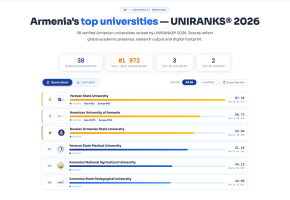
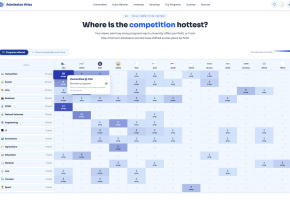
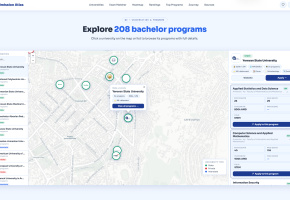
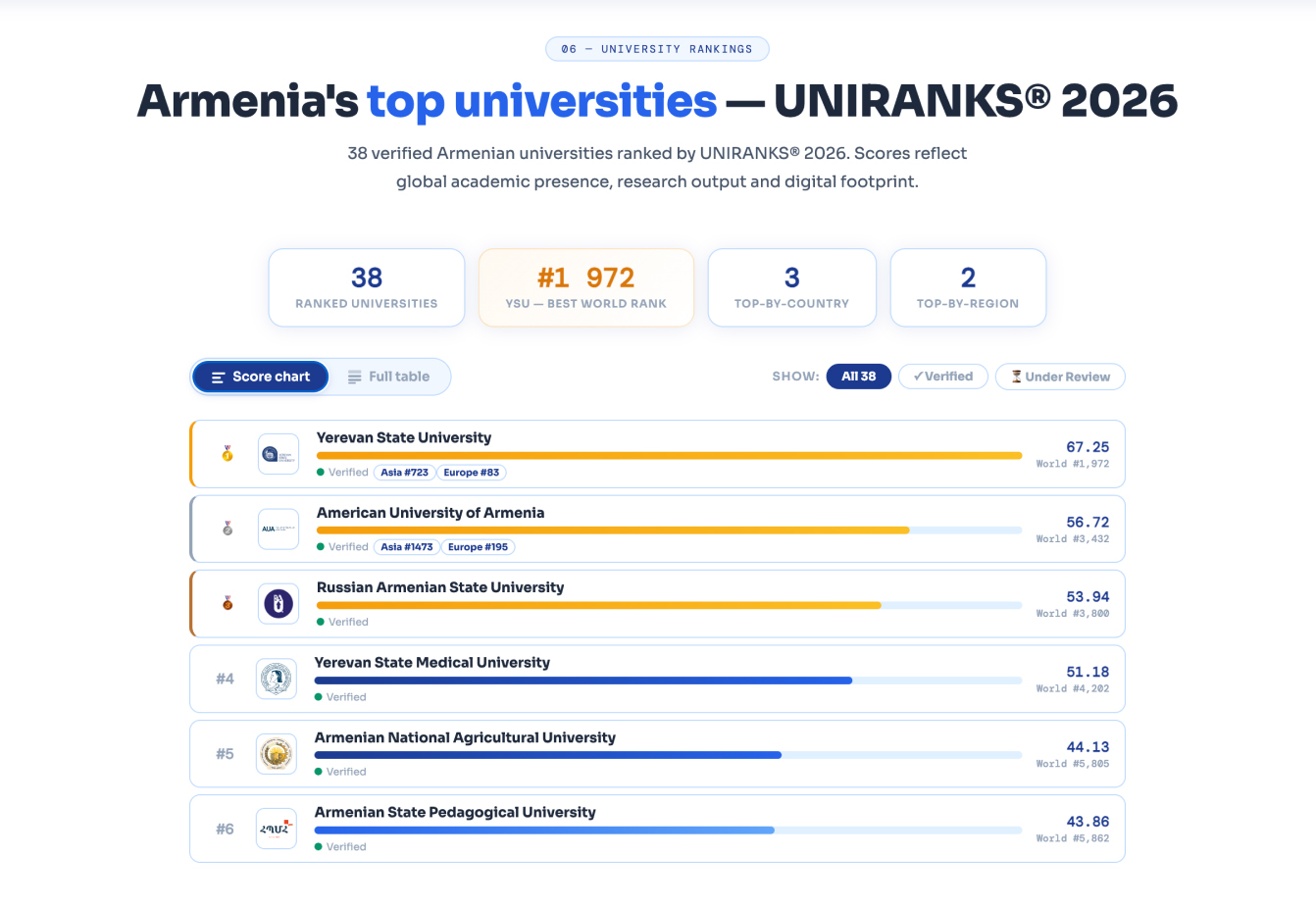
data centralization: Creating a single, unified platform that brings together key indicators from all universities, including academic programs, examination requirements and formats, historical admission competition data, cutoff scores, tuition fees, and current university rankings.
simplification: The project presents the database in a systematic and accessible format through interactive charts, comparative tools, and digital storytelling techniques.
support for applicants: Enabling applicants and their parents to understand professional competition and labor market demands better, thereby facilitating informed, evidence-based decision-making.
strategic development: I view this project as an evolving digital tool with the potential to become a national-level information and analytical platform.

For this project, I used more than 20 official sources, including official university websites, applicant guides, the dimord.am platform, and various decrees and guidelines published by the Armenian Ministry of Education, Science, Culture and Sport.
The most challenging phase was data collection and standardization. The primary difficulty lay in the fact that information was presented in vastly different formats—from tables to scanned PDF documents unsuitable for machine reading—requiring extensive effort to consolidate into a unified and comparable structure through data normalization. This process now allows users to compare, for example, tuition fees or cutoff scores for similar faculties across different universities on one platform without discrepancies.
Q: Which tools or technologies did you use during the implementation of the project?
A: Throughout the development phase, I used AI tools, including Claude Code, Gemini, ChatGPT, and Perplexity. These tools helped optimize data cleaning, accelerate source discovery, and refine content presentation. This integration significantly accelerated the overall pace of the work.
Q: What was the most challenging stage of creating the project?
A: The most complex aspect was developing the data architecture—the process of transforming information from diverse sources and various formats into a single, logical, and comparable system.
Q: In your opinion, what is the defining quality of effective data visualization?
A: The most vital attribute of high-quality visualization is utility. It should not merely display data; rather, it must help the user make informed and timely decisions.
Q: Astghik, did you expect this success, or did it come as a surprise? What was the award you received?
A: Achieving recognition and receiving an award is, of course, gratifying, encouraging, and carries a sense of responsibility. However, my primary objective in participating was not the award itself, but rather the opportunity to showcase my professional capabilities, receive feedback from field experts, and subject my ideas to a unique form of peer review.
By securing second place, I gained further conviction that the project holds genuine value and will be beneficial to both individuals and educational institutions. The award included a monetary prize, which I intend to reinvest into the further development of the project and the expansion of its technical capabilities.
This achievement has bolstered my professional confidence and opened new perspectives for evolving the project into a more comprehensive and impactful tool for the education system.
Q: How do you assess the development of data visualization practices in Armenia?
A: The practice of data visualization in Armenia is currently undergoing a significant upswing. We are seeing compelling individual projects, yet the field has not yet matured into a systemic tool.
In my view, the next critical step must be the transition from simple infographics toward a culture of data-driven decision-making. While we already have a significant base of open data, much of it still requires digitalization and standardization. The true value of this data will only be realized when it is qualitatively improved and becomes an accessible, comprehensible tool for both citizens and policymakers.
The "University Admission Atlas" is a step in that direction. It serves to demonstrate that the proper "cleaning" and presentation of data can shift behaviors and facilitate more effective, well-founded, and forward-looking decisions within the educational sector.
Astghik aims to expand the "University Admission Atlas" into a comprehensive national platform. The goal is to include all universities and colleges in Armenia, serving as a vital resource for informed decision-making for every applicant, as well as a robust information-analytical platform for the institutions responsible for sector policy.