April 20, 2026 | 10:30
Science
Education
Research
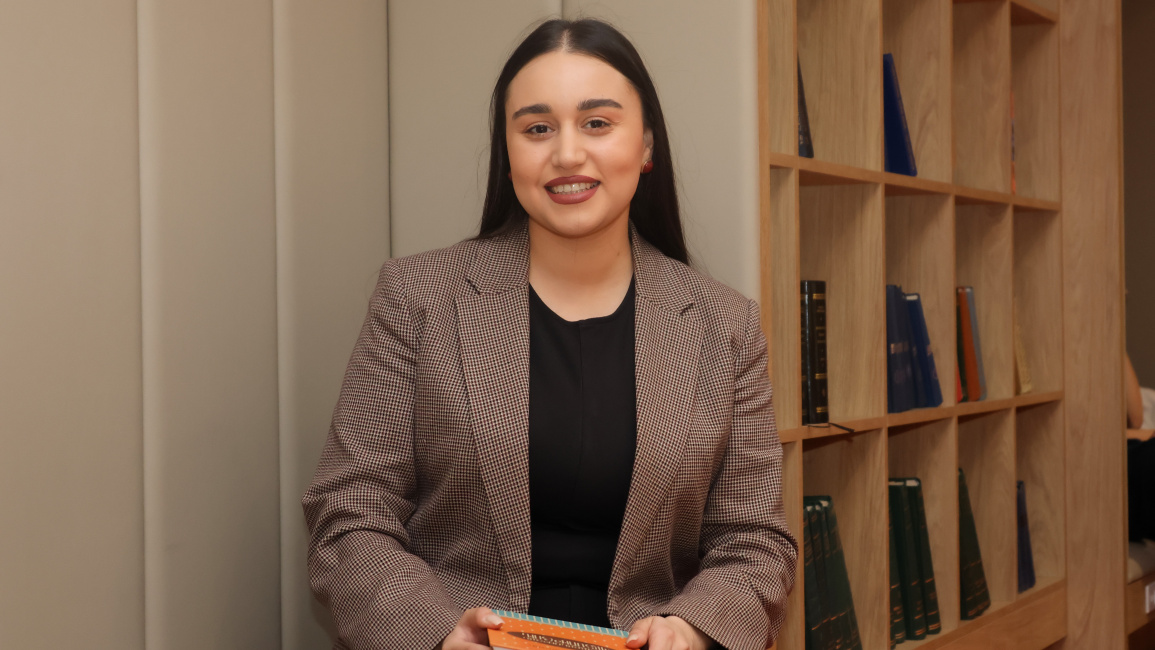
Following Armenian traces in Venice
I traveled to Italy to conduct research on Classical Armenian (Grabar) and broader Armenian studies. I should note that my academic efforts received significant recognition there: professors with extensive experience and research backgrounds in the field spoke with admiration about the Armenian language, which encouraged me to continue my research.
My studies in Italy significantly developed my academic approaches, especially in acquiring new knowledge and organizing experimental work or research studies. The environment at Ca' Foscari University was truly conducive to scholarly activity—everything I needed was right at hand: vast scholarly literature and research materials fully accessible to students. Particularly valuable to me was the availability of rich and diverse resources related to Armenian studies, including books, articles, and archival sources. Italy—especially Venice—is a unique environment for exploring Armenian studies.
For centuries, the city has been regarded as one of the influential centers of Armenian culture and scholarship, where significant scholarly traditions have taken shape. The role of San Lazzaro degli Armeni Island is especially important, as it is home to the Mekhitarist Congregation. Being there gave me the opportunity not only to explore Armenian studies from a theoretical perspective but also to engage directly with this scholarly heritage.
Academic life abroad
Classes often required active participation and individual research, which was particularly challenging when working remotely. I am pleased to note that my beginner-level knowledge of Italian was entirely sufficient, as the classes were conducted in English, and locals were always willing to help. My best friend there was a Chinese student with whom I created wonderful memories, and we have remained friends to this day.
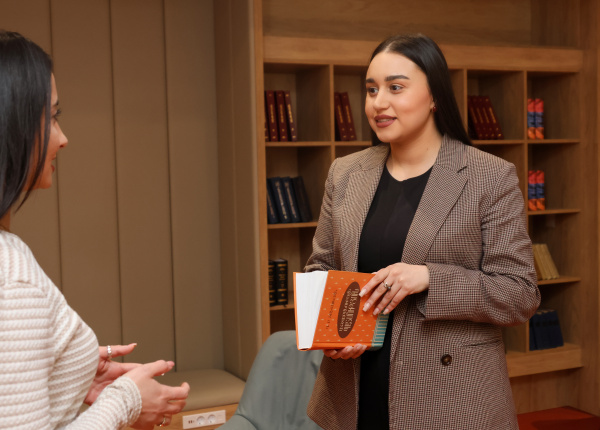
My professors played an important role throughout my studies. Even before applying to the exchange program, I had reached out to Professor Sona Harutyunyan at Ca' Foscari University, who provided me with an overview of the Armenian studies activities at the university. Her academic guidance helped me better understand the nuances of my research topic and the broader academic standards in the field today. At the same time, I had the opportunity to work with Italian Professor Paolo Lucca, who conducts research on Armenian studies and teaches Grabar and classical languages at Ca' Foscari University. Our daily, in-depth discussions helped me develop new methodological approaches and more comprehensive perspectives on my research. Throughout this period, I also maintained regular discussions with my dissertation supervisor, Professor Anna Abajyan.
Thanks to this experience, I explored my professional prospects, as well as international best practices and approaches.
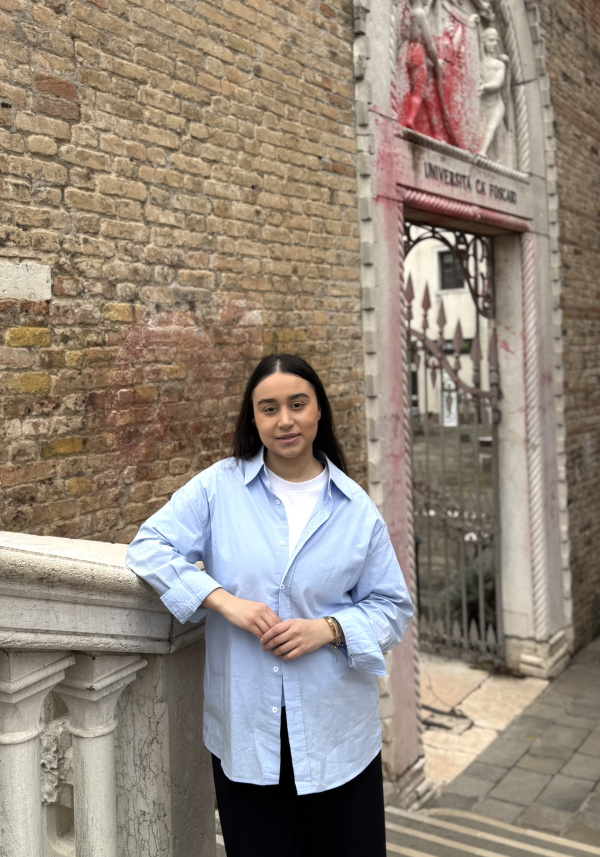
I am "in love" with Grabar. For me, it is not just a language, but a cultural and spiritual heritage, each layer of which brings immense joy to uncover. Grabar allows me to travel back in time, to understand my roots and identity, and to answer questions about who I am and where I come from. Studying it feels like a way of serving my people and the Republic of Armenia. This is how I strive to appreciate, preserve, and pass on our language and cultural and scholarly heritage to future generations. I am confident that what I am doing now will play a meaningful role in preserving and developing the Armenian language.
It was precisely with these intentions that I guided myself in Italy, trying not to miss any opportunity. During my studies, I visited San Lazzaro degli Armeni Island in Venice and participated in an international conference held at the Mekhitarist monastery dedicated to the 275th anniversary of the death of Abbot Mekhitar. I also explored the Mekhitarists' activities in Vienna by visiting the Mekhitarist Monastery there, made study visits to the Universities of Vienna and Ghent, and authored two scholarly articles.
I also took part in several courses that equipped me with modern and innovative approaches to linguistics. Unfortunately, such relevant and specialized courses are only beginning to be introduced in our educational system, so the courses I attended in Italy provided me with a more comprehensive understanding of modern linguistics.
It was my second day in Venice. Before leaving, I had decided that once I had settled in and received my class schedule, I would begin exploring the city—and that exploration had to start with Armenian traces. I had made notes for myself about where to go and what to see. I was walking toward one of the university buildings to submit and sign the necessary documents. I stopped for a second to check my phone to make sure I was at the correct address, then suddenly, I turned left and saw that my steps had brought me to the courtyard of the Moorat-Raphael College.
I could not hold back my tears, because my impressions of this powerful institution had "followed" me since my school years. For a moment, I closed my eyes, imagining Daniel Varoujan, Vahram Papazian, and Armenian studies scholars Heinrich Hübschmann and Brosset entering through those doors, and scholars like Alishan, Hatsuni, and Avgerian teaching Armenian to their students. From that day on, I arranged my schedule each week to ensure I could walk along the college street.
It felt like a source of inspiration. I was also deeply moved when I saw Daniel Varoujan's memorial plaque in the lobby of Ghent University's library, engraved with lines from his poem "Nemesis."
Anything connected with Armenians and Armenian identity feels magical and deeply dear—especially when you are far from home.

The PhD student at the Chair of the Armenian Language History and General Linguistics is currently researching the historical semantic development of the Grabar lexical layer in modern Eastern Armenian, with particular attention to legal, military, and socio-political terminology. Combining her linguistic expertise with her second specialization in law—she is also studying at the YSU Faculty of Law—she aims to develop an interdisciplinary approach.
At the same time, she teaches at the Birthright Armenia Foundation and works at the Corruption Prevention Commission, applying her knowledge in practice. Continuous development, clear goal-setting, and their consistent implementation hold a central place in her work.
"Every morning when I wake up, I think about what new progress I can make that day. Although I am very demanding of myself, I often acknowledge my achievements with satisfaction. My formula for daily progress is setting goals and consistently achieving them. I prioritize my efforts accordingly. At the moment, I am focused on my research work. I want to conduct studies that are as useful and relevant as possible and include them in my dissertation. I do everything to ensure that my workload does not interfere with my studies and continuous engagement with science," she concludes.