April 23, 2026 | 16:00
Research
Publications and scientific journals

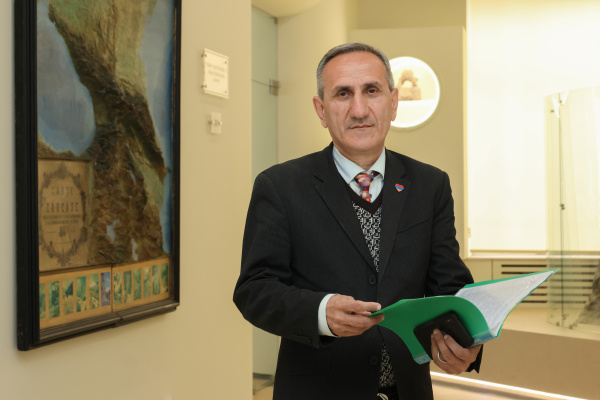
Kamo Aleksanyan noted that Meghri once had 30–31 settlements, whereas today only 15 remain. "Over the past 100 years, around 15–16 settlements have been abandoned. Currently, the population of Meghri stands at approximately 11,000," he said.

Underscoring the multifaceted nature of depopulation, the YSU associate professor said: "Particularly during the Soviet period, the consolidation of villages and the rapid development of the mining industry led to population concentration in the town of Agarak. Other contributing factors include the lack of cultural life, as well as natural disasters—landslides, mudflows, and earthquakes have also played a role," Aleksanyan explained. He added that environmental degradation, including biodiversity loss, deforestation, overgrazing, violations of irrigation norms, and soil degradation, has further contributed to the abandonment of settlements. He emphasized that Meghri and Agarak are currently the largest settlements.
According to his research, the most recently abandoned settlement in Meghri is Aygedzor, which was deserted in the early 2010s following the closure of a local gold mine and the resulting unemployment.
"Residents of the remaining villages face numerous challenges. Paradoxically, despite being located near the gas pipeline from Iran, some settlements are not connected to the gas grid, for a variety of reasons," Aleksanyan said. "Another major issue is market access; farmers have to transport their produce to Yerevan, covering a distance of 400 kilometers, as the local cannery lacks sufficient capacity to process the entire harvest. In addition, the region also faces a shortage of qualified medical professionals."
Aleksanyan believes that, given the difficulty of immediately resettling abandoned settlements, alternative development pathways should be explored, particularly through tourism.
"Meghri has enormous potential, with historical bridges, church ruins, and the unique Meghri Fortress with its six towers. Abandoned areas could be used as sites for tourist camps and extreme tourism," he said, referring to possible ways of preserving existing villages.
He added that the development of small-scale agricultural processing enterprises, dried fruit production facilities, and winemaking could help keep people in villages. "For example, cotton cultivation—once in high demand in Meghri—could be revived, with products exported to Iran and Russia," Aleksanyan suggested.
He also referred to a state-supported housing program offering 16 million drams to border communities, as well as improved incentives for doctors and military personnel, as measures that could revitalize the region and even encourage the resettlement of abandoned villages.
Emphasizing Meghri's strategic and geopolitical importance, Aleksanyan concluded: "If Yerevan is the heart of Armenia, then Meghri is its main artery."
Aleksanyan's article, titled "Issues of Abandoned and Existing Settlements in Meghri Over the Past Century," has been published in the NAS RA journal Lraber.