April 30, 2026 | 16:11
Library
Publications and scientific journals
Events
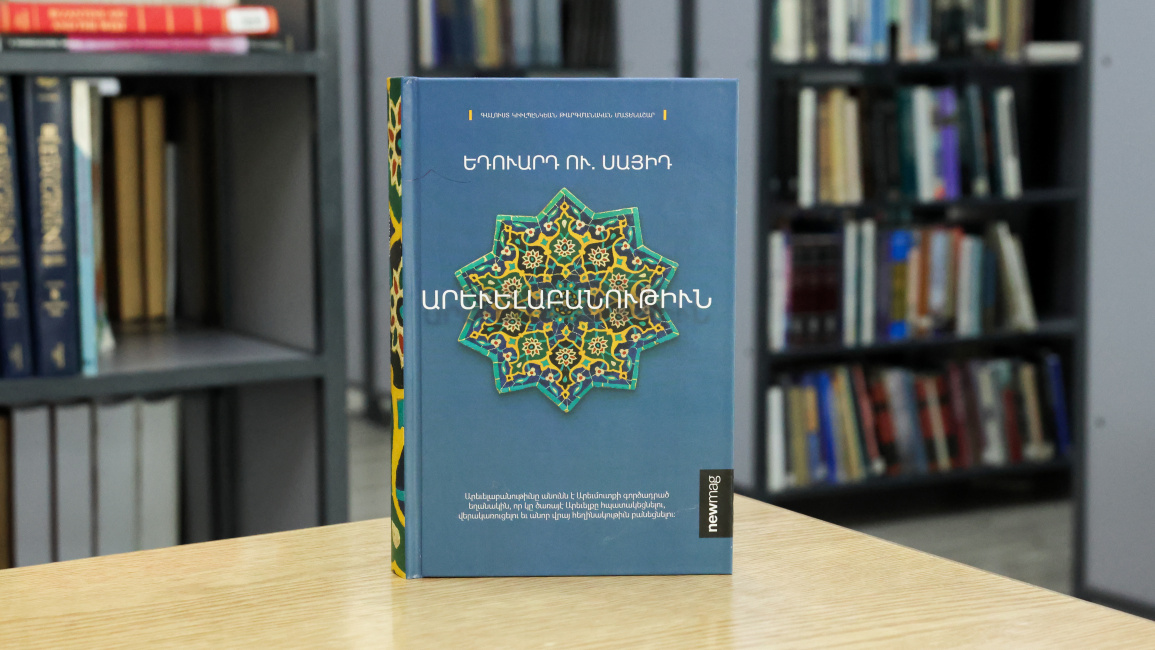
First published in 1978, Edward W. Said's Orientalism is widely regarded as a foundational work in postcolonial studies and remains highly relevant in the humanities and civilizational research. In the book, the author explains what constitutes the real East.
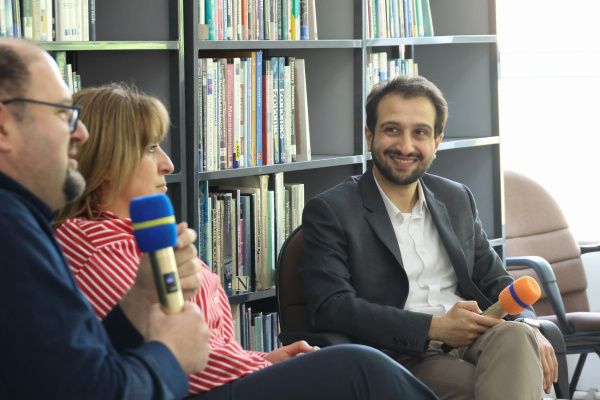
The discussion was moderated by Tigran Grigoryan, senior specialist in contemporary art and publishing at the Ministry of Education, Science, Culture and Sports of Armenia and an art historian. Speakers included Hayk Kocharyan, Head of the YSU Chair of Arabic Studies and PhD in Historical Sciences; Mariam Elmasyan, Arabist and lecturer at the YSU Faculty of Oriental Studies; and Samvel Karabekyan, Arabist, linguist, and PhD in Philological Sciences.
Characterizing Orientalism, Grigoryan noted that the book triggered a "true literary and scholarly earthquake" in the 1970s, fundamentally reshaping approaches to understanding the East.
"This work brought sweeping changes to the perception of the East across disciplines—from literature to media studies, from historical interpretation to philology and economics. I believe it is an essential desk book for specialists in the humanities," he said.
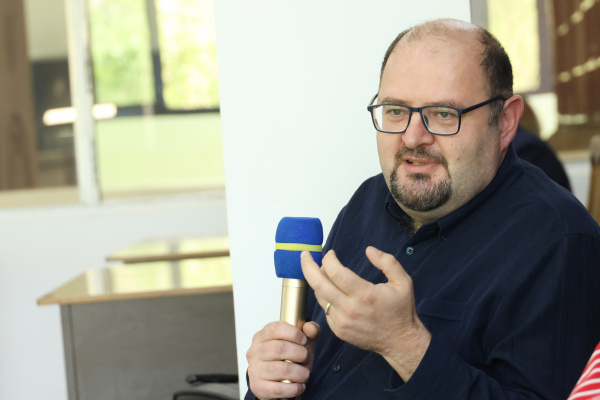
Kocharyan addressed the revolutionary nature of the book and the challenge Said posed to the West, and, referring to the Armenian rendering of the title Orientalism, noted: "Every term has the right to exist. Whether it becomes widely applicable or not will be determined by time. Said changed everything, as for the first time someone stood up and said: 'Enough—stop looking down on us.'"
Kocharyan also emphasized that Said, despite being a U.S. citizen raised in an American environment, consciously chose a Palestinian identity.
"His sense of being 'out of place' and the impact of the 1967 war were pivotal to his worldview. The book does not age because it is written with 'open eyes,' free from 'patriotic hysteria,' and compels constant reflection," he said.
The speaker also highlighted the timing of the book's publication and its coincidence with global upheavals, noting that the Iranian Revolution transformed perceptions of Islam from a "static phenomenon" into a "militant political factor."
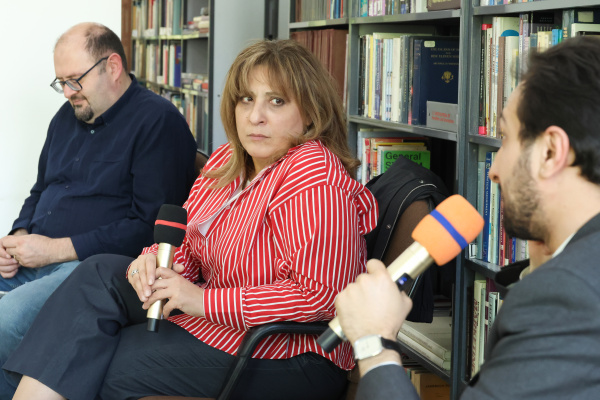
Elmasyan focused on how Said's critique enabled the East to speak in its own voice. According to her, for a long time the West portrayed the East as an exotic, timeless space, drawing on imagery from One Thousand and One Nights.
"With Said's work, a form of 'resistance literature' emerged. It allowed Eastern authors to speak on their own behalf, to become subjects, and to dismantle the stereotypes embedded in Western representational systems," she noted.
The Armenian edition of the book was published as part of the Calouste Gulbenkian translation series. The discussion held at the university aimed to promote critical approaches to East–West relations, contemporary political developments, and questions of identity.