May 07, 2026 | 14:41
Education
Student

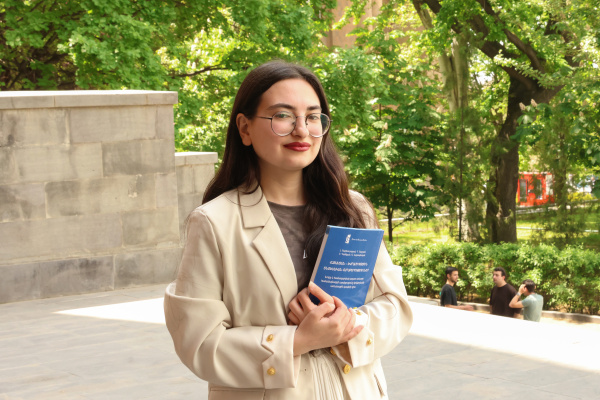
Gayane Davtyan, a fourth-year student at the Faculty of Economics and Management, says her decision to become an economist was neither sudden nor entirely predetermined. Her father's profession as an economist also played a role in shaping her career choice.
"What attracts me most to this field is that numbers are not just numbers; behind them are real decisions and consequences," she says.
Her first impressions upon entering university were mixed: excitement on the one hand and uncertainty on the other. The new environment and unfamiliar faces initially posed challenges, but over time the university became a familiar and welcoming space. During her years at YSU, Gayane has not only gained in-depth professional knowledge but has also combined her studies with work, participated in various programs and built valuable practical experience. According to her, this multifaceted journey has helped her see economics as a practical tool in real life.
Student life: balancing engagement and time management
Gayane's daily routine is now largely divided between work and her graduation paper. As a result, time management has become her top priority as a student.
"The most difficult part is managing time effectively, especially when you combine study and work," she says.
At the same time, she associates student life with active engagement: meeting new people, participating in programs and gaining experience.
Personal approach to learning
Gayane has developed her own learning method, focusing not on memorization but on understanding core concepts.
"I use a lot of examples, and sometimes I explain the material to myself," she says.
This approach has proven particularly useful in challenging yet practical subjects such as Econometrics, which she considers one of the most interesting disciplines. The course is not only theoretical but also applied, allowing students to use theoretical knowledge with real data and conduct analyses.
From classrooms to professional practice
"University education helps greatly because it builds a theoretical foundation that is later applied and developed through professional practice," says the YSU student, who also began working as an accountant during her university years. According to her, the experience has had a significant impact on her professional growth.
"Work has taught me responsibility, organization and real practical knowledge," she emphasizes.
At the same time, she notes that while university education provides essential theoretical grounding, real professional competencies are formed through work experience.
Junior PayTech Forum: experience and challenges

One of the important parts of Gayane's university experience is her participation in the Junior PayTech Forum, an educational and competitive program in financial technology. Within the framework of the program, students develop and present business ideas, solve real-world problems and work with professional mentors. She learned about the initiative through her faculty and decided to participate out of curiosity.
The YSU student presented the "AgroInvest" fintech project, which is based on the concept of tokenizing future agricultural harvests. The project aims to enable farmers to access financing through digital tokens backed by future yields, while offering investors transparent and secured assets.
"The idea emerged after discussing several options. We chose this one because it addresses one of the key challenges in agriculture — the lack of accessible financing for farmers. At the same time, the project is based on modern blockchain technologies, which contribute to the security and transparency of investments," she explains.
According to Gayane, the greatest challenge during the program was time management.
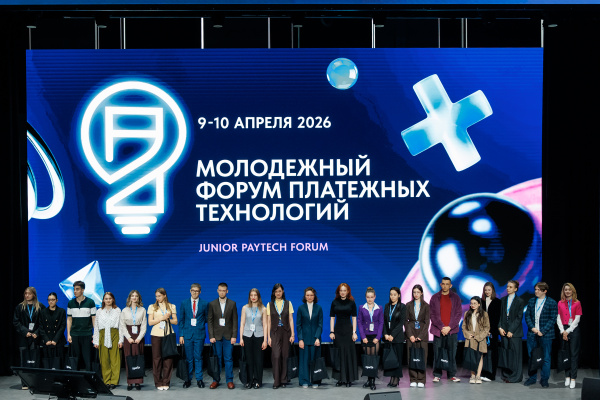
"It was quite difficult to balance work, studies and participation in the program, but it was definitely worth it. Reaching the semifinal stage became a strong source of motivation. It felt as though the real journey was only just beginning. After that, we started preparing more actively and with greater focus, trying to present our project in Moscow in the best possible way," she recalls.
In Moscow, Gayane had the opportunity to present the business idea to a professional jury and defend the project's viability and significance through a question-and-answer format. Reaching the semifinal stage and presenting on an international platform became not only an important achievement for her, but also a motivation for new goals and further professional development.
For her, the experience went beyond competition — it became an opportunity to develop business thinking, teamwork and public presentation skills.
Motivation, goals and future
"I am inspired by people who have achieved success through their work," Gayane says, adding that her daily motivation comes from a desire for self-development. When speaking about the future, however, she remains cautious.
"It is difficult to say anything definitively because goals can change over time," she says.
Nevertheless, her main focus is clear: to continue developing professionally, deepen her expertise, and take part in international programs.
Being student: choice and responsibility
For Gayane, student years are not limited to classes and exams. They are also a period of experience, work, self-discovery and important decisions, during which not only a profession is shaped, but also an approach to life.
In her view, analytical thinking, responsibility and effective time management are essential to success in the field — skills developed not only in the classroom, but also through practical experience and everyday work.