June 26, 2026 | 15:16
Volunteering, practice and internship
Education
Student
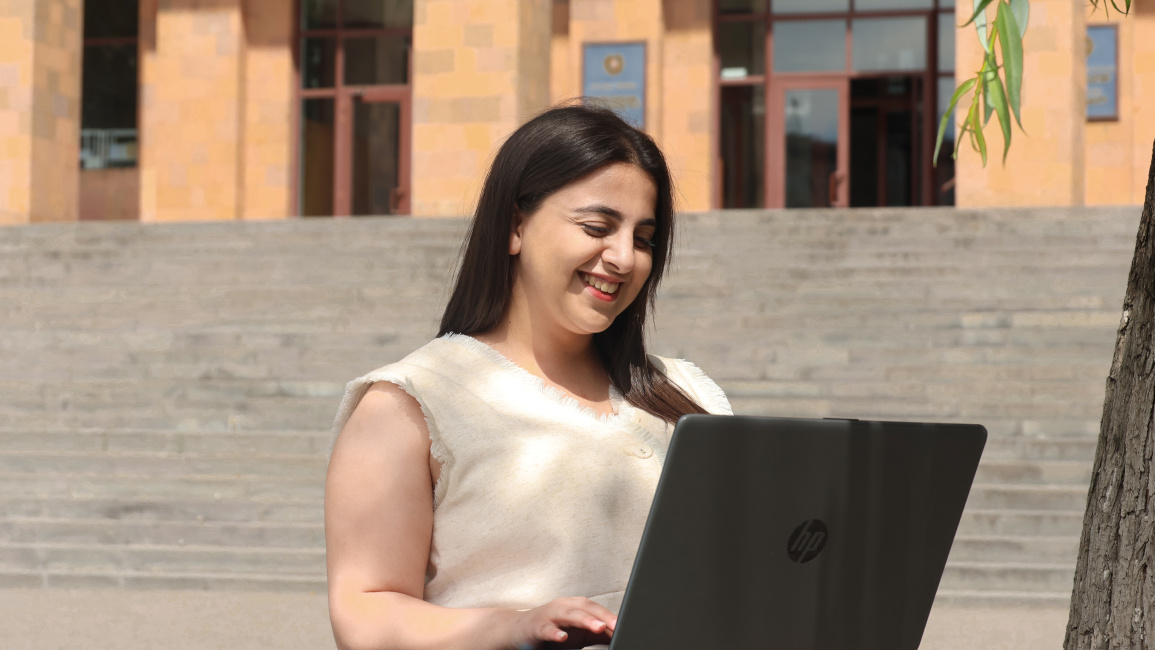
We spoke with Anna about her graduation paper, her internship at leading pharmaceutical companies and her plans for the future.
– Anna, what was the topic of your graduation paper, and why did you choose it?
– The topic of my graduation paper was "The Role of the Pharmaceutical Economics and Management Course in Improving Students' Critical Thinking." I was very interested in how this course can help future specialists develop analytical skills.
Since I had not yet had the opportunity to conduct a large-scale practical study at the Institute of Pharmacy, I reviewed a broad range of scientific literature for my graduation paper. I studied about 256 scientific articles and selected 46 key papers to determine which educational approaches are most effective.
– What did your analysis show? Which educational approaches are the most effective?
– In about 90% of the articles I studied, the authors emphasized the importance of active learning methods. This does not simply mean listening to lectures every day. It means dialogue, teamwork and, in particular, case-based learning.
For example, students may be given a specific problem from pharmacy or manufacturing practice and asked to critically analyze how they would act in that situation. This helps develop critical thinking.
– Together with your classmates, you completed a two-week internship at Arpimed, Liqvor and PharmaTech pharmaceutical companies. During the internship, did you encounter equipment you had not used at the university before?
– Almost all the equipment used during the internship was familiar to me. For example, I had already worked with a machine used for preparing capsules. I was proud to see that the same equipment we had used at the university was also being used in production.
– Which theoretical knowledge gained at the institute was most applicable during the internship?
– The most applicable knowledge was in pharmaceutical chemistry, dosage form technology, pharmacology, drug quality control and biochemistry.
Topics related to sterility, drug storage conditions, quality assessment and drug interactions were especially useful because they were directly applied in the work process and helped connect theoretical knowledge with practical work.

– How were drug production and storage processes organized at the companies where you completed your internship?
– At those institutions, drugs were stored in accordance with established standards, with the necessary temperature and sanitary conditions maintained. The processes of receiving, classifying and storing medicines were organized according to specific procedures.
I personally took part in the drug preparation process, observed the preparation of capsules, tablets and ointments, and was also involved in arranging medicines, monitoring storage conditions and carrying out certain document circulation processes.
– What new practical skills or knowledge did you gain during the internship?
– During the internship, I gained several new practical skills and insights. I learned how to work with documentation and with the processes of receiving and recording medicines. I also gained a better understanding of how drug preparation, packaging and storage are organized in real-world conditions.
The internship also helped me better understand the importance of teamwork, responsibility and workplace discipline.
– We know that you are already working in your field. What do you do at your workplace?
– I currently work in the Peptide Engineering Laboratory of the Armbiotechnology Scientific and Production Center, where targeted synthesis of protected amino acids, peptides and peptidomimetics is carried out, along with the development and optimization of synthesis methods.
This work allows me not only to apply the knowledge I gained at the university but also to gain valuable experience in research.
– How did the internship influence your future career plans? For example, do you want to stay in the same workplace, or are you planning to change direction?
– The internship had a major impact on the development of my professional outlook. It helped me more clearly understand which area of pharmacy interests me most.
Working in the research field has convinced me that I want to continue developing in this direction. In the future, I aim to take part in new research projects, deepen my professional knowledge and contribute to the development of pharmaceutical science.
– What is your professional dream?
– I would like to discover the components of a drug that can treat cancer and create that medicine. I know that developing a single new drug may require about 10 years of hard work.
Although this is more closely related to chemistry and biochemistry, pharmacy is closely connected with both fields. I have the fundamental knowledge I gained at the university, and I am ready to devote many years to science to reach that goal.
– What do you consider your strengths as a future specialist, and in which areas do you see a need for further education or improvement, such as soft skills, foreign languages or specialized knowledge?
– I consider responsibility, hard work, the ability to learn quickly and attention to detail to be among my strengths. I also value teamwork and effective communication.
I believe every specialist should continue learning, so I strive to improve my professional knowledge, foreign language, and research skills.